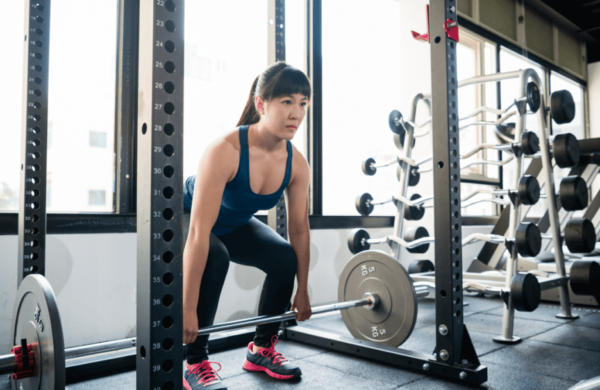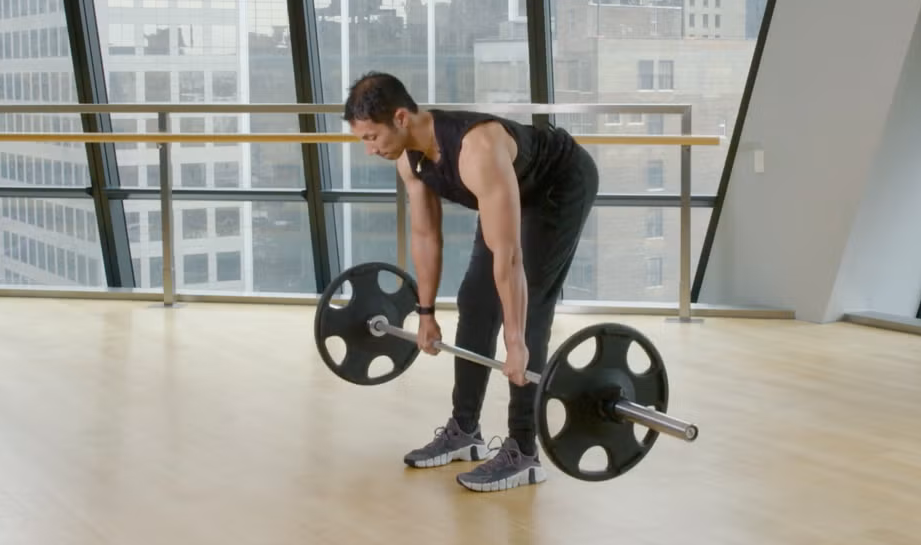
THE JEFFERSON CURL
A Controlled Spinal Flexion Strengthener for Lower-Back Resilience, Hamstring Mobility & Posterior-Chain Mastery
The Jefferson Curl is one of the most misunderstood and underused posterior-chain exercises in modern training — especially in bodybuilding circles.
While compound movements like deadlifts, RDLs and rows build a massive back through heavy loading, the Jefferson Curl builds strength, mobility and tissue capacity in a way those classic lifts simply can’t.
It deliberately trains slow, segmental spinal flexion, combined with a deep hamstring stretch and full posterior-chain control.
This makes the Jefferson Curl a powerful tool for:
- Lower-back durability
- Hamstring lengthening under load
- Erector strength through a full range
- Deep posterior mobility
- Injury resilience
- Balancing a heavy deadlift-focused hypertrophy program
- Improving hinge mechanics
For bodybuilders, it’s not used for direct muscle growth (although it can contribute), but rather for creating a more mobile, resilient posterior chain that can tolerate more volume from the big lifts — which ultimately improves mass-building potential.
Biomechanics & Muscles Worked
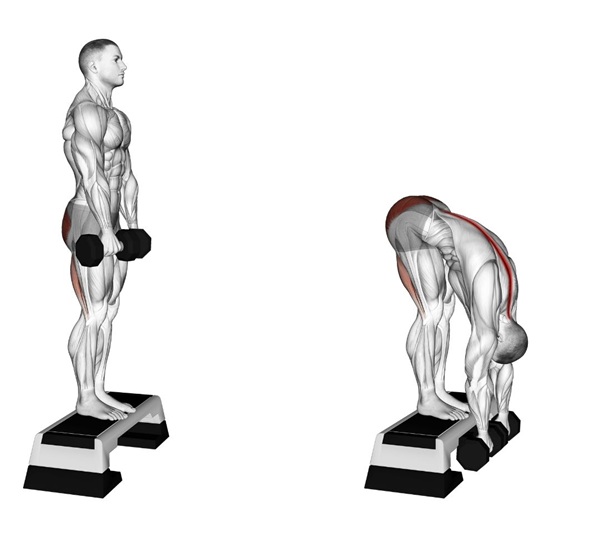
The Jefferson Curl moves slowly through a top-down spinal flexion pattern, where each vertebra flexes in sequence:
- Cervical spine
- Thoracic spine
- Lumbar spine
- Hips hinge last as the hamstrings lengthen
On the way up, you reverse that order, re-extending vertebra by vertebra.
Primary Muscles Trained
- Spinal Erectors (Lower Back Focus)
The erectors resist the load as your spine rounds through flexion, creating eccentric tension along the entire length.
Unlike deadlifts — which train anti-flexion — this trains controlled flexion, strengthening the spine through ranges that are normally weak.
- Hamstrings
Few exercises load the hamstrings this deep into their stretched range while maintaining spinal flexion.
This improves:
- Hamstring flexibility
- Hamstring strength at long lengths
- Injury resistance
- Glutes
The glutes stabilize the pelvis and assist in the re-extension phase.
- Upper Back & Thoracic Spine
The thoracic extensors work eccentrically as you curl down, preventing you from collapsing under load.
- Forearms & Grip
Holding a dumbbell, kettlebell or barbell forces the grip to stabilize the position.
Why the Jefferson Curl Is Valuable for Bodybuilders
Most bodybuilders train the lower back through:
- Heavy deadlifts
- Rack pulls
- RDL variations
- Back extensions
These are all excellent anti-flexion exercises — they teach you to resist spinal rounding under load.
The Jefferson Curl, however, trains the opposite:
Controlled flexion under light to moderate load.
This builds connective tissue resilience and reduces the risk of injury when heavy hinge work pushes your back toward rounding.
For physique athletes, the benefits are unique:
- It increases your deadlift/RDL tolerance
The more comfortable your spine and hamstrings become through flexion, the more volume you can handle in the big hypertrophy lifts.
- It improves mobility for deep RDL ranges
Bodybuilders with tight posterior chains often lose tension at the bottom of RDLs.
The Jefferson Curl fixes this by improving your ability to maintain tension in extreme stretch positions.
- It bulletproofs the lower back
Building strength in end ranges makes the spine more resilient, not less — when done correctly.
- It enhances muscular control
Bodybuilders who struggle with mind-muscle connection in the erectors or hamstrings find this exercise dramatically increases awareness.
How to Perform the Jefferson Curl (Bodybuilder’s Step-by-Step Guide)
Setup
You can use:
- A light barbell (5–20 kg)
- A kettlebell
- A dumbbell
Stand on a small platform or step to allow for full range.
Step 1 — Start Tall and Brace Lightly
- Feet hip-width
- Knees soft
- Grip the weight with arms straight
- Take a breath in and lightly brace
This is not a maximal brace — you need enough relaxation to flex the spine segmentally.
Step 2 — Begin with the Neck
Let your chin slowly drop toward your chest.
This initiates cervical flexion and begins the top-down sequence.
Step 3 — Roll Down Vertebra by Vertebra
Think:
“Melt down one segment at a time.”
Flex through:
- Upper thoracic
- Mid thoracic
- Lower thoracic
- Lumbar spine
Your arms stay relaxed, letting the weight pull them straight.
Step 4 — Allow the Hips to Fold Last
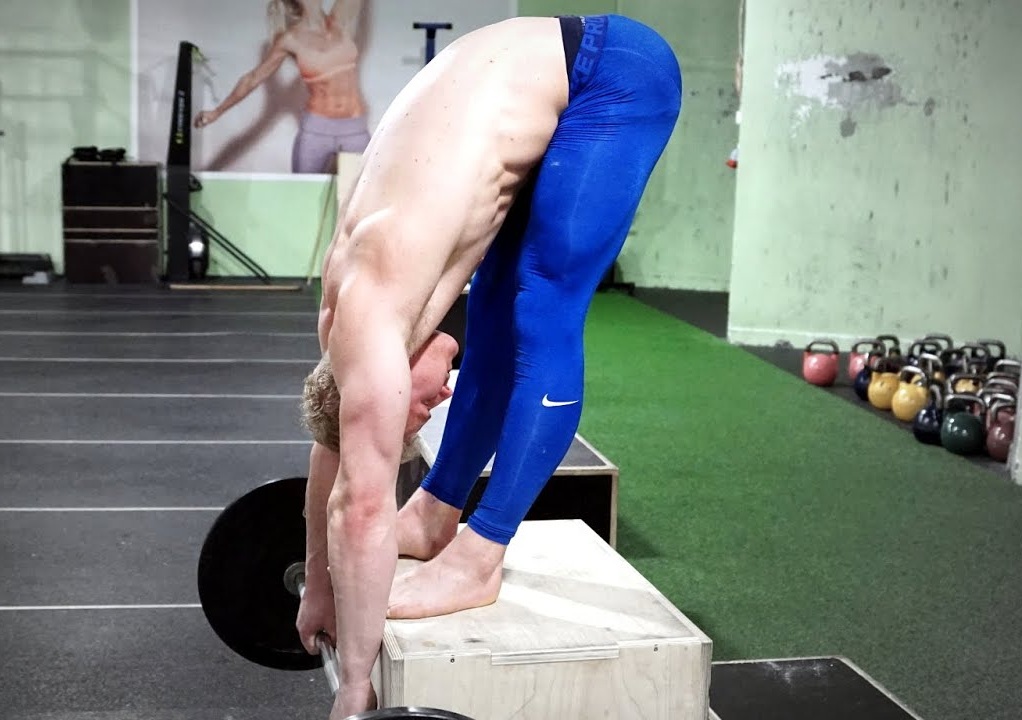
Once the spine is fully flexed, hinge deeper by folding hips backward.
You should feel:
- A massive hamstring stretch
- A rounded but controlled spine
- Weight stretching toward the floor
Do not turn it into an RDL — the spine stays rounded.
Step 5 — Pause and Breathe at the Bottom
Hold for 1–3 seconds.
This is where the magic happens — deep posterior-chain loading.
Step 6 — Curl Back Up Slowly
Reverse the sequence:
- Lumbar extends slightly
- Then thoracic
- Then cervical last
You return to a tall, stacked posture with control.
Common Technique Mistakes (And Easy Fixes)
Mistake 1 — Turning it into a hip hinge
If your back stays straight and only your hips fold, you’re doing an RDL.
Fix: Round the spine intentionally.
Mistake 2 — Going too heavy
The Jefferson Curl is a “light to moderate load” exercise.
Fix: Start with 2–10 kg.
Mistake 3 — Rushing the reps
This is a slow movement — think 4–6 seconds down, 4–6 seconds up.
Mistake 4 — Locking the knees
Hyperextended knees reduce hamstring contribution.
Fix: Keep a small bend (5–15 degrees).
Mistake 5 — Forcing range too fast
Flexibility and tolerance come gradually.
Fix: Stay in comfortable discomfort, not pain.
Programming the Jefferson Curl for Bodybuilders
Frequency
1–2× per week is perfect.
Timing
Best placed after heavy lifting, not before.
Ideal spots:
- After deadlifts
- After RDLs
- After back day
- As part of a posterior-chain finisher
- As a mobility/strength hybrid session
Reps & Sets
Use slow, controlled reps:
- 3×5–8 reps for strength/mobility
- 2–3×10–12 reps for flow and control
Loading Guide
Start with:
- A light dumbbell (2–5 kg)
- Or a kettlebell (4–12 kg)
Only increase load when:
- Movement feels smooth
- There is no sharp discomfort
- You have full range of motion
Advanced lifters may eventually use:
- 20–40 kg
- A loaded barbell
- Heavier kettlebells
But the goal is control, not weight.
Variations
- Single-Leg Jefferson Curl
Massive hamstring challenge.
Great for bodybuilders with leg asymmetry.
- Elevated Jefferson Curl
Allows deeper range when flexibility improves.
- Snatch-Grip Jefferson Curl
Increases upper-back stretch and grip involvement.
- Tempo Jefferson Curl
Extreme time under tension:
6 seconds down, 6 seconds up.
Who Should Use the Jefferson Curl?
Excellent for:
✔ Bodybuilders
✔ Strength athletes
✔ Lifters with tight hamstrings
✔ Anyone doing heavy spinal loading
✔ Athletes needing more posterior mobility
✔ Lifters wanting lower-back resilience
Use Caution If:
- You have acute disc injury
- You have uncontrolled pain in flexion
- You cannot tolerate loaded stretching
- You cannot maintain a slow pattern
(This is a tool to be respected, not rushed.)
Practical Bodybuilding Takeaways
- The Jefferson Curl is not a mass-builder — it’s a capacity-builder.
- It strengthens the spine where it’s normally weak: in deep flexion.
- It increases hamstring range in a way stretching alone never will.
- It reduces injury risk in heavy hinge patterns.
- It builds control, mobility and posterior durability.
- It allows you to tolerate more deadlift/RDL volume — which does grow muscle.
- It’s one of the most powerful long-term back-health exercises bodybuilders can use.
This is the lower-back exercise that makes all your other lower-back exercises better, safer and stronger.