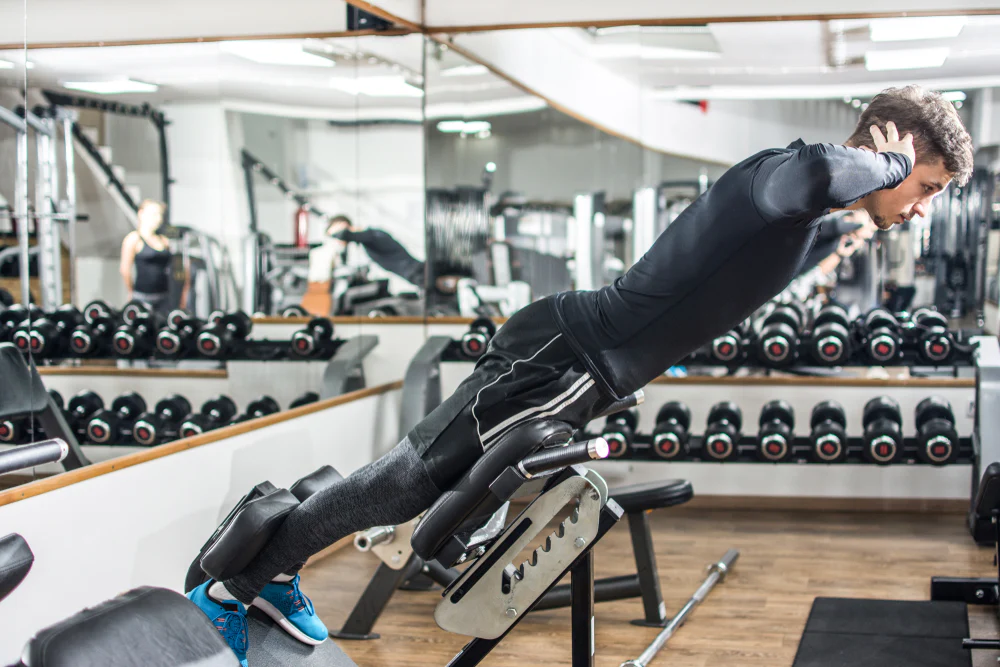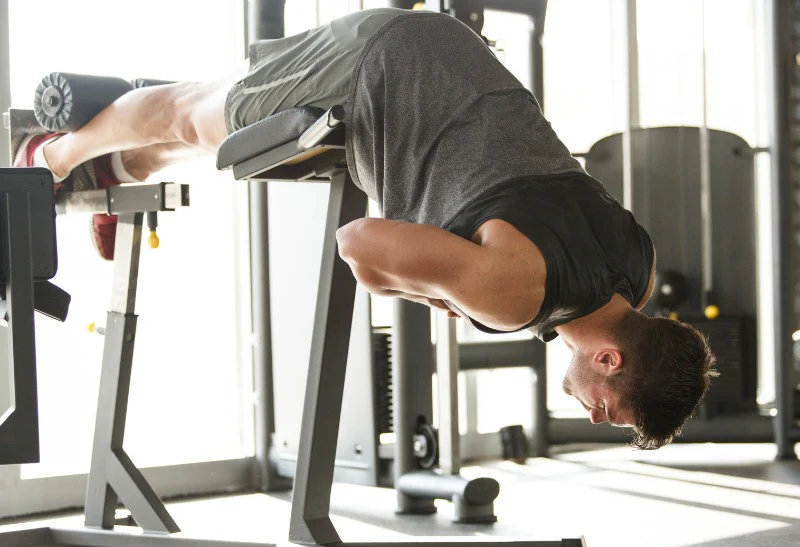
The Good Morning (Barbell or Safety Bar Variation)
Primary Focus: Lower Back (Erector Spinae)
Secondary Focus: Glutes, Hamstrings, Upper-Back Stabilizers
Category: Lower Back / Posterior Chain Strength
The Good Morning is one of the most potent posterior-chain strength builders in all of resistance training — and it has a reputation to match.
When performed correctly, it reinforces rock-solid hip-hinge mechanics, builds the erector spinae like few other lifts can, and creates raw, functional strength that directly carries over to squats, deadlifts, athletic performance, and overall spinal stability.
Yet the Good Morning is also one of the most misunderstood lifts. People fear it because they’ve seen it done poorly — rounded backs, overloaded bars, or sloppy speed reps.
But the truth is this: when executed with discipline, a Good Morning is safer than most heavy deadlift variations, and arguably a more targeted strength builder for the lower back.
Bodybuilders use it to thicken the spinal erectors and stretch-load the hamstrings. Powerlifters use it to reinforce squat positioning and build the “anti-rounding” strength required for max deadlifts.
And general lifters use it to bulletproof their hips and lower back. The key is controlled mechanics and progressive loading — not ego lifting.
Muscles Worked
Primary
- Erector Spinae (Lower Back)
The limiting factor for most people — and the main growth stimulus this exercise provides.
Secondary
- Glute Max — powerful hip extension
- Hamstrings — stretch-loaded under the hinge
- Adductors — stabilizing hip hinge
- Core (Obliques / TVA) — resisting collapse or rotation
- Upper Back & Lats — keeping the chest up and bar stable
Good Mornings build the entire posterior chain, but the lower back takes the bulk of the load, making it one of the best spinal erector hypertrophy movements you can perform.
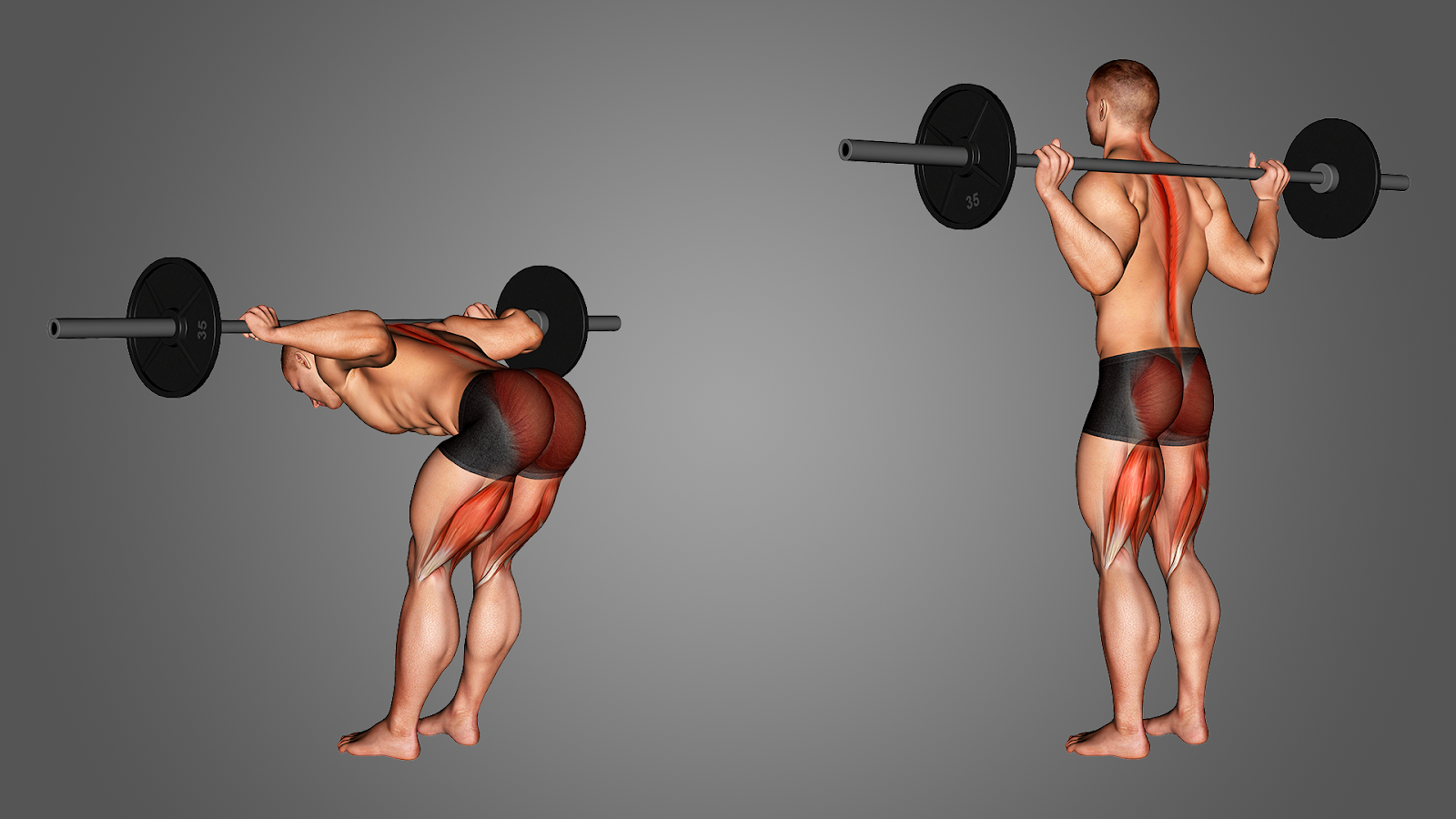
How to Perform the Good Morning (Perfect Form)
- Bar Positioning
You can choose one of two bar setups:
High-Bar (Olympic Style)
- More upright torso
- More strain on lower back and spinal erectors
Low-Bar (Powerlifting Style)
- Slightly more hip-dominant
- More glute/hamstring involvement
- Often easier for heavier loads
Safety Bar Good Mornings are also extremely popular because the pad holds the bar stable without relying on shoulder mobility.
- Stance Setup
- Feet shoulder-width
- Toes slightly out
- Soft knee bend
- Brace your core before moving
Imagine screwing your feet into the ground to lock your hips in place.
- Initiate With a Hip Hinge
Push your hips back like you would in an RDL.
- Keep shins nearly vertical
- Maintain a neutral spine
- Chest stays “proud”
- Weight stays on mid-foot and heel
Do NOT bend your knees excessively — this isn’t a squat.
- Descend Until You Feel a Strong Stretch
Your torso will lean forward significantly — this is normal.
Stop when your hamstrings hit a deep stretch without rounding the spine.
Ranges vary:
- Some people stop just above parallel
- Some reach parallel torso-to-ground
- Some reach slightly below parallel
Your mobility determines the limit — not ego.
- Drive Hips Forward to Return to Standing
Contract:
- Glutes
- Hamstrings
- Lower back
Keep the bar travelling in a straight line above your mid-foot.
No swinging, jerking, or snapping the torso upward.
- Reset & Repeat
Every rep begins with a fresh top-position brace.
Good Morning Technique Variations
- Barbell Good Morning
The classic — best for strength and load progression.
- Safety Bar Good Morning
- Most beginner-friendly
- Better bar stability
- Allows greater focus on hinge mechanics
Exceptional for powerlifters.
- Banded Good Morning
- Great for high reps
- Spine-friendly
- Burns the posterior chain without heavy loading
Perfect accessory or warm-up.
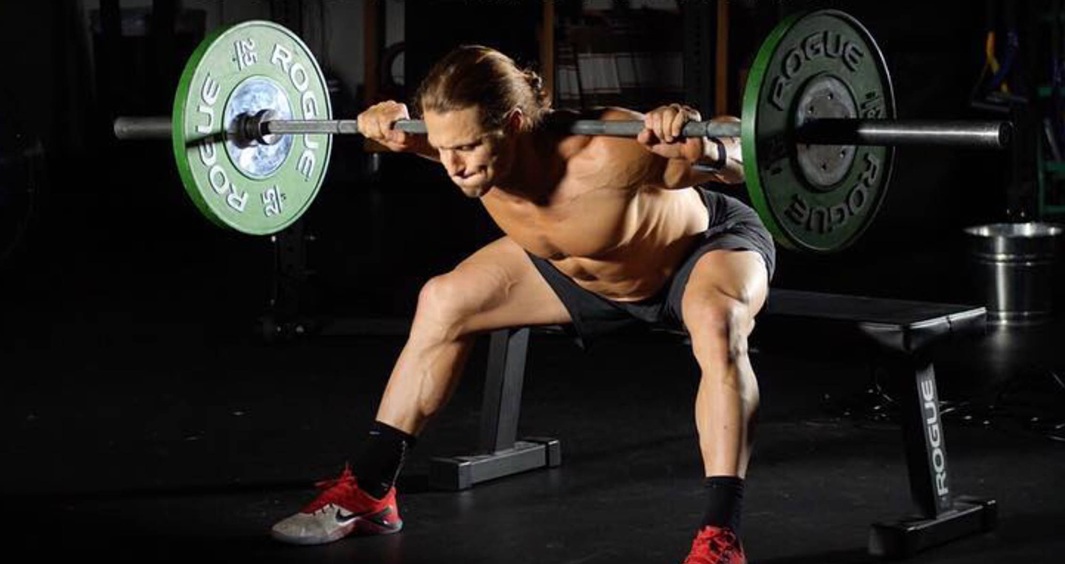
- Seated Good Morning
- Removes the hip hinge
- Places emphasis directly on lumbar extension
- Brutal lower-back isolator
Advanced lifters love this for pure erector development.
Common Mistakes & How to Fix Them
❌ Rounding the Lower Back
Fix:
- Lift lighter
- Brace harder
- Limit range of motion until mobility improves
❌ Turning It Into a Squat
Knees bending excessively removes tension from hamstrings and lowers back.
Fix: push hips BACK, not down.
❌ Going Too Heavy Too Soon
The Good Morning is not an ego lift.
Fix: increase load slowly — 5–10 lb jumps at most.
❌ Rushing the Descent
The eccentric is where the growth happens.
Fix: 2–3 second controlled lowering phase.
❌ Letting the Bar “Drift” Forward
This torques the spine dangerously.
Fix: keep bar directly over mid-foot.
Programming Guidelines
For Hypertrophy (Muscle Growth)
- Sets: 3–4
- Reps: 8–12
- Load: moderate
- Tempo: slow eccentric
- Rest: 2 minutes
Your spine responds well to controlled, moderate reps.
For Strength / Powerlifting Carryover
- Sets: 3–5
- Reps: 3–6
- Load: light-to-moderate (50–65% of squat max)
- Rest: 2–3 minutes
- Bar Choice: safety bar preferred
The goal is technique reinforcement, not maxing out.
For Lower-Back Endurance & Health
- Sets: 2–3
- Reps: 12–20
- Load: light
- Goal: high-volume erector conditioning
Great for long-term spinal resilience.
Progression Options
- Increase ROM (deeper hinge)
- Increase load slowly over time
- Add pauses at the bottom
- Use a Safety Bar for heavier progression
- Add bands for peak tension
Who Should Use Good Mornings?
Bodybuilders
- Build a thick, “corded” lower back
- Add density to the erector spinae
- Improve hinge strength for RDLs and rows
Powerlifters
- Reinforce squat pattern under load
- Strengthen anti-flexion for heavy deadlifts
- Improve lockout power
Athletes
- Hip power
- Posterior chain strength
- Hamstring stiffness (speed enhancement)
Everyday Lifters
- Fix weak lower backs
- Improve hinge mechanics
- Better posture and spinal stability
Why This Exercise Matters
The Good Morning forces your lower back to handle load in a way few exercises do — with precision, control, and tension spread across the entire posterior chain.
It builds a resilient spine, powerful hips, and a thick, muscular lumbar region that directly carries over to every performance-based lift.
When you want a lower back that looks strong and performs even stronger, the Good Morning is non-negotiable.