Spiderman Plank
Dynamic Anti-Rotation Core Builder for Oblique Strength, Stability, and Athletic Control
The Spiderman Plank is a dynamic plank variation that blends isometric core stability with controlled unilateral movement, forcing the obliques, deep core, and hip flexors to work together under continuous tension.
Unlike static plank variations that emphasize endurance alone, the Spiderman Plank introduces intentional instability and rotation pressure, making it a powerful tool for building oblique strength, trunk control, and real-world core resilience.
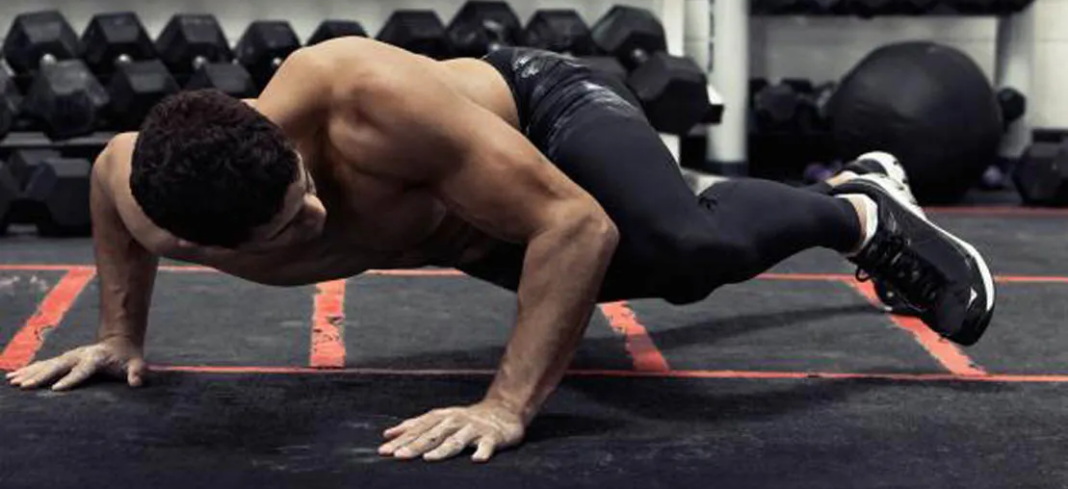
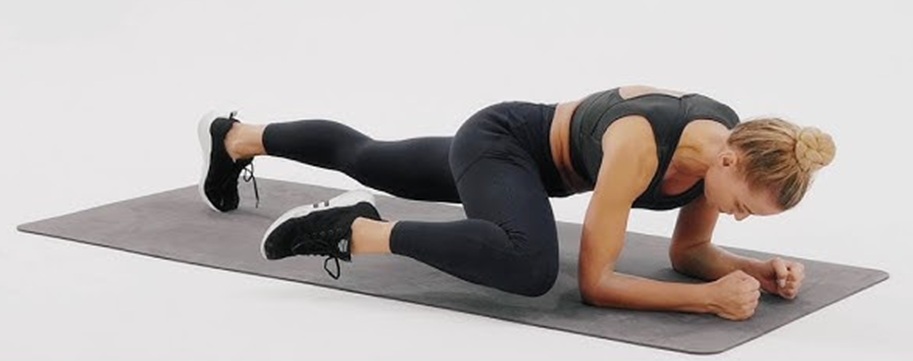
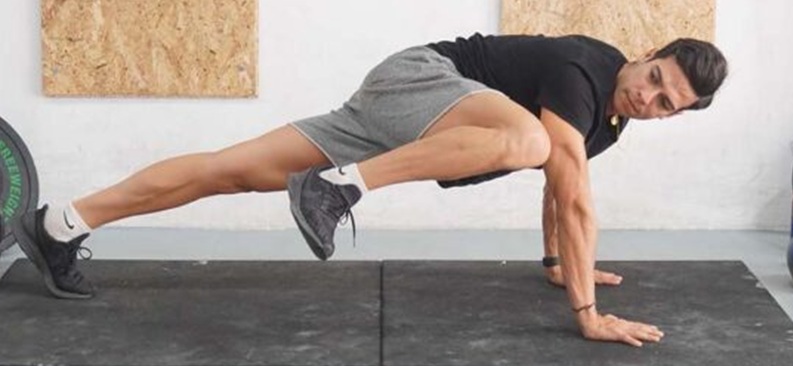
At a glance, the movement appears simple: hold a plank while driving one knee toward the same-side elbow.
In practice, however, the exercise demands precise spinal positioning, disciplined pelvic control, and coordinated force transfer across the torso.
Every repetition challenges your ability to resist rotation, prevent lumbar extension, and maintain shoulder stability—qualities that directly carry over to heavy compound lifts and athletic performance.
From a hypertrophy and performance standpoint, the Spiderman Plank occupies a unique niche. It is not a maximal loading exercise, nor is it purely endurance-based.
Instead, it excels as a time-under-tension oblique builder that reinforces structural integrity while still providing enough mechanical challenge to stimulate muscular adaptation when performed correctly and progressed intelligently.
For lifters seeking visible oblique development, improved trunk stiffness, or better control under load, the Spiderman Plank is far more than a warm-up drill—it is a legitimate core-building movement.
Primary Muscles Worked
The Spiderman Plank places its highest demand on muscles responsible for anti-rotation, lateral stabilization, and pelvic control.
Obliques (Internal and External)
The obliques are the primary drivers of this exercise. As the knee moves toward the elbow, the torso experiences rotational torque that must be resisted.
The obliques contract isometrically to prevent the hips from twisting or sagging, while also contributing dynamically to bring the leg forward under control.
Transverse Abdominis (TVA)
The TVA acts as the deep stabilizing corset of the core. Its role is to maintain intra-abdominal pressure and keep the spine neutral throughout the movement. Without proper TVA engagement, the pelvis tilts anteriorly and the lower back collapses.
Rectus Abdominis
While not producing spinal flexion, the rectus abdominis works isometrically to resist lumbar extension. This constant tension contributes to overall core thickness and strength over time.
Hip Flexors (Iliopsoas and Rectus Femoris)
Driving the knee toward the elbow requires active hip flexion. When performed slowly and under control, the hip flexors contribute meaningfully without overpowering the core.
Shoulders and Scapular Stabilizers
The anterior deltoids, serratus anterior, and rotator cuff muscles stabilize the shoulders as bodyweight shifts from side to side. Proper scapular protraction is essential for maintaining a strong plank base.
Secondary Muscles and Stabilizers
Several additional muscle groups contribute to execution quality and overall tension.
- Gluteus Medius – Stabilizes the pelvis during unilateral leg movement
- Erector Spinae – Maintains spinal alignment under load
- Quadriceps – Assists in knee drive and plank rigidity
- Adductors – Help control leg path and midline stability
These secondary contributors are often overlooked but play a key role in keeping the movement strict and effective.
What the Spiderman Plank Is Best For
The Spiderman Plank excels in areas where traditional ab exercises fall short.
- Oblique hypertrophy through sustained anti-rotation tension
- Core stability under dynamic conditions
- Improved trunk control for compound lifts
- Athletic carryover for sprinting, cutting, and rotational sports
- Teaching proper plank mechanics with movement
It is particularly effective for lifters who already have basic plank strength and want to progress toward more demanding core patterns without jumping straight into advanced rotational loading.
Proper Spiderman Plank Setup
A strong setup determines whether the exercise targets the obliques effectively or degenerates into a loose, hip-driven movement.
Begin in a high plank position with hands directly under your shoulders and feet set slightly wider than hip-width. A wider stance increases stability and allows better control during knee drive.
Your body should form a straight line from the back of your head to your heels. Actively squeeze your glutes and lightly tuck your pelvis to eliminate excessive lumbar arching. Think of pulling your ribcage down toward your hips.
Brace your core as if preparing to take a punch. This pre-tension sets the stage for effective force transfer and prevents unwanted spinal movement.
Execution: Step-by-Step Breakdown
From the high plank position, shift your weight slightly to one side without letting your hips rotate.
Slowly drive your right knee forward and outward toward your right elbow. The movement should be controlled and deliberate, not rushed. Focus on pulling the knee using your obliques rather than swinging it forward with momentum.
As the knee approaches the elbow, pause briefly while maintaining full-body tension. Your shoulders should remain level, your hips square to the floor, and your spine neutral.
Return the leg to the starting position under control, re-establishing a stable plank before switching sides.
Alternate sides for the prescribed number of repetitions or time.
Key Coaching Cues
- “Crush the floor with your hands”
- “Brace first, then move”
- “Keep the hips square”
- “Slow knee, strong core”
- “No sag, no twist”
These cues help reinforce intent and prevent common breakdowns.
Common Mistakes and How to Fix Them
Hip Rotation
Allowing the hips to twist toward the moving knee dramatically reduces oblique engagement. Fix this by slowing the tempo and widening your stance.
Lower Back Sag
Sagging indicates poor TVA engagement. Actively squeeze the glutes and think about pulling your belly button slightly inward.
Rushing the Reps
Speed turns the movement into a cardio drill. Slow down and emphasize tension over tempo.
Shoulder Collapse
Letting the shoulders sink compromises stability. Push the floor away and maintain active scapular protraction.
Spiderman Plank for Oblique Hypertrophy
While the Spiderman Plank is not a traditional “loaded” exercise, hypertrophy is still achievable through time under tension, control, and progression.
To bias muscle growth:
- Use slow eccentrics on the knee drive
- Add pauses at peak contraction
- Extend set duration rather than chasing reps
- Maintain maximal tension throughout
When treated as a strength movement rather than a filler exercise, the obliques receive a meaningful growth stimulus.
Programming Recommendations
Reps: 6–12 controlled reps per side
Time-Based: 30–60 seconds per set
Sets: 2–4
Rest: 45–75 seconds
For hypertrophy-focused core sessions, place the Spiderman Plank after heavier compound lifts or as a primary oblique movement before isolation work.
Progressions and Variations
Once the standard version is mastered, progressions help maintain overload.
Slow Tempo Spiderman Plank
Increase time under tension with 3–4 second knee drives.
Elevated Feet Spiderman Plank
Elevating the feet increases anti-extension demand.
Resistance Band Spiderman Plank
Attach a light band to the foot to increase hip flexion resistance.
Weighted Vest Spiderman Plank
Adds global load without altering movement mechanics.
Each progression should be introduced only once strict form is consistent.
Who Should Use the Spiderman Plank
This exercise is ideal for:
- Lifters seeking stronger, thicker obliques
- Athletes needing dynamic trunk control
- Individuals transitioning from static planks to advanced core work
- Anyone aiming to improve spinal stability under movement
It may not be appropriate for individuals with acute shoulder or hip issues without modification.
Final Thoughts
The Spiderman Plank is a deceptively challenging core exercise that rewards precision, patience, and intent. When executed correctly, it develops oblique strength, deep core stability, and coordinated movement patterns that carry over directly to heavy lifting and athletic performance.
Rather than treating it as a conditioning drill, approach the Spiderman Plank as a hypertrophy-capable stability movement.
Control every repetition, respect the tension, and progress it thoughtfully. Done right, it becomes a cornerstone exercise in any serious core-training arsenal—and a worthy addition to an authority-level muscle-building resource.