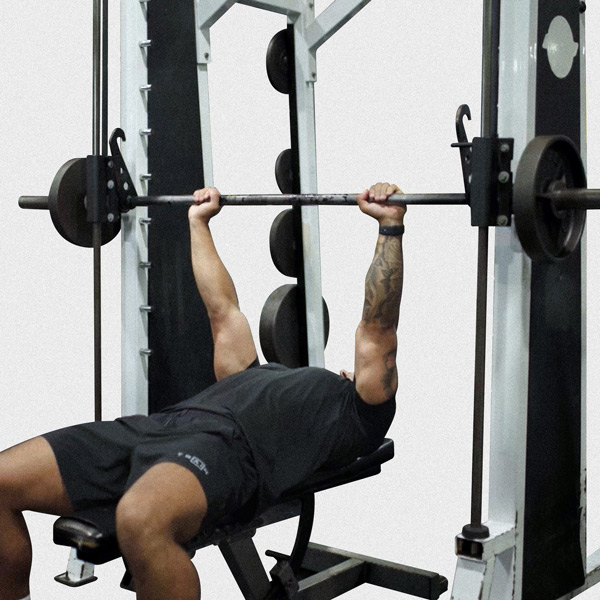
The Smith Machine Bench Press (Flat Variation for Stability, Strength, & Chest Isolation)
Introduction: Why the Smith Machine Bench Press Still Matters
In a world where lifters argue endlessly about “free weights vs machines,” the Smith Machine Bench Press stands strong as one of the most productive chest-building tools available — especially for bodybuilders.
This isn’t just a “beginner’s alternative” to the barbell bench.
It’s a precision chest hypertrophy movement that removes stabilizer limitations, controls bar path, and allows intense overloading without risk.
The Smith Machine Bench Press is a favorite among physique athletes because:
- The fixed bar path locks you into a perfect chest-optimized groove
- You can push closer to failure without a spotter
- It allows more chest tension and less front-delt involvement
- It’s amazing for drop sets, rest-pause sets, and forced reps
- It reduces injury risk while increasing output
If you’re serious about chest development — not just ego lifting — this is an essential tool.
Muscles Worked
Primary:
- Pectoralis major (sternal/mid fibers)
- Pectoralis major (clavicular/upper fibers depending on bench angle)
Secondary:
- Triceps
- Anterior deltoids (less than free-weight bench press due to fixed bar path)
- Serratus anterior
How to Perform the Smith Machine Bench Press
Setup
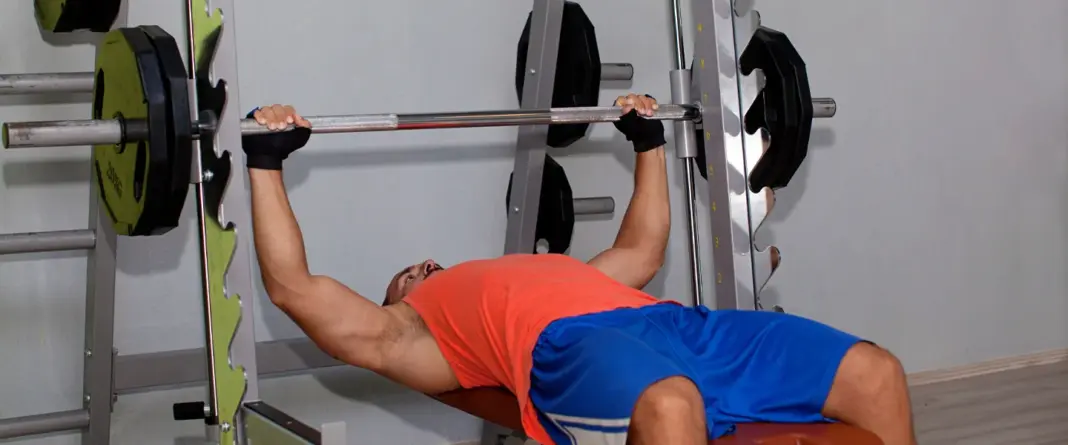
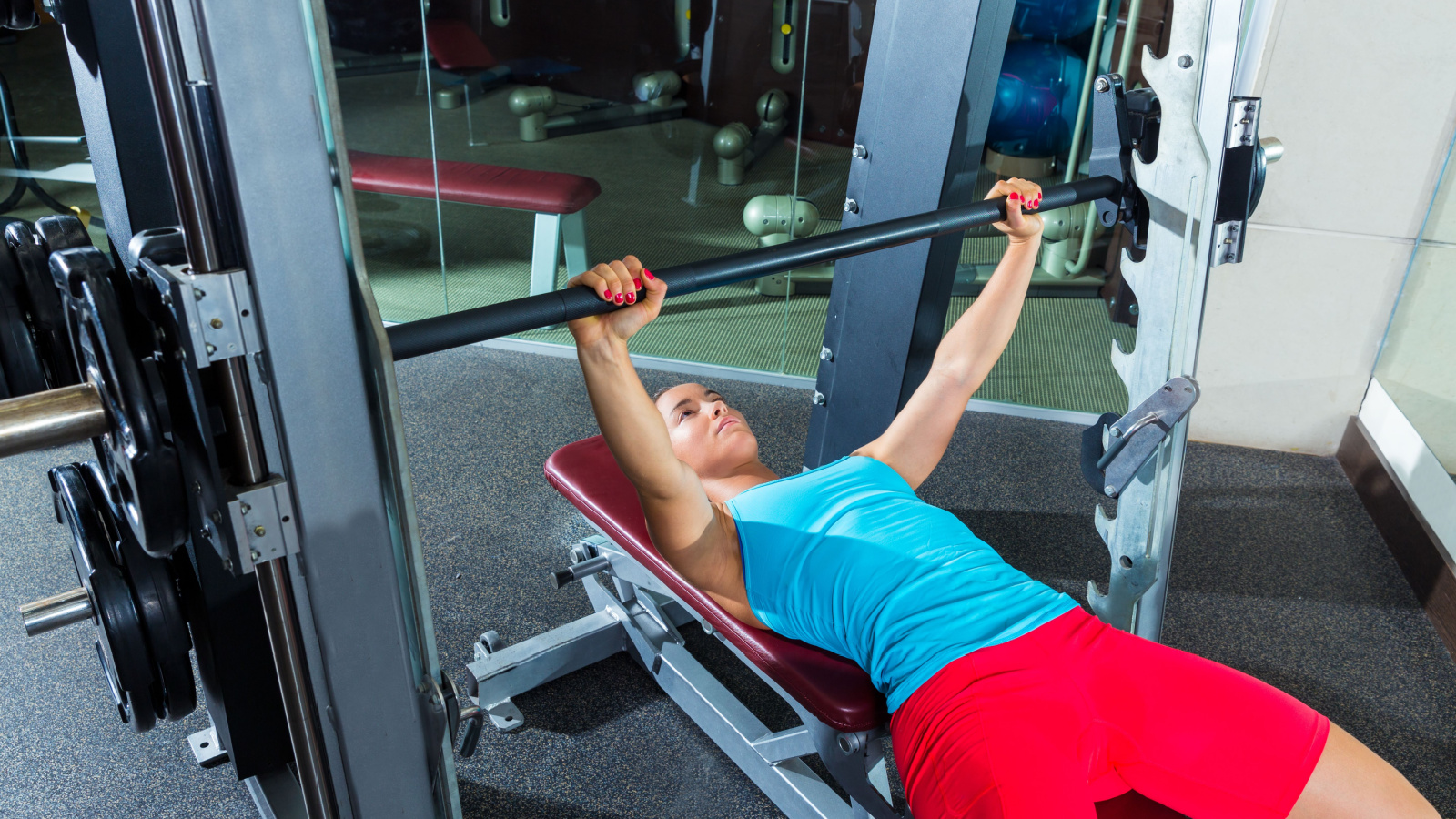
- Set the bench in the center of the Smith rack.
- Adjust your body so the bar lines up with mid-chest (nipple line or slightly below).
- Grip the bar just outside shoulder width.
- Pinch shoulder blades together and set your ribcage high.
- Plant your feet firmly — slight arch is ideal for pressing mechanics.
Execution
- Unrack the Bar
Rotate your wrists to unlock the safeties.
Keep your elbows slightly tucked (~45–60 degrees).
- Lower with Intent
Lower the bar to the mid-chest line with full control.
Keep forearms vertical and wrist stacked over elbow.
The Smith path ensures consistency — embrace it.
- Drive Up Through the Chest
Press the bar upward while keeping shoulders pinned down and back.
Avoid flaring elbows excessively.
- Lock Out Smoothly
Don’t slam the joints — use chest contraction to complete the rep.
Breathing
- Inhale during the eccentric (lowering phase)
- Exhale during the press
Key Technique Cues
- “Chest up, shoulders down.”
This maximizes pec recruitment and limits delt takeover.
- “Stack wrists directly over elbows.”
If wrists drift forward/backward, you lose power and tension.
- “Press slightly in an arc.”
Even with a fixed bar path, think about sweeping the bar backward slightly toward the top.
- “Grip the bar hard to generate full-body tension.”
- “Lower slowly, explode upward.”
Classic hypertrophy tempo for maximum fiber recruitment.
Common Mistakes & Fixes
❌ Setting the bench too high or too low under the bar
This ruins alignment and shoulder mechanics.
Fix: Bar should line up with your mid-chest.
❌ Pressing with flared elbows
Overstresses shoulders, reduces chest activation.
Fix: Tuck at 45–60 degrees.
❌ Using the Smith Machine to ego lift
The fixed path tempts lifters to overload recklessly.
Fix: Use a weight you control perfectly.
❌ Not retracting shoulder blades
This increases delt involvement.
Fix: Keep scapula locked the entire set.
❌ Not using full ROM
Shortening the movement reduces gains.
Fix: Touch chest lightly; lock out the top each rep.
Training Variations
- Wide-Grip Smith Press
- More outer-pec emphasis
- Larger stretch
- Great for mass building
- Close-Grip Smith Press
- More triceps
- More inner-chest line
- Safer than close-grip barbell
- Dead-Stop Smith Press
Pause the bar on safety stops at chest level.
Builds explosive power and pure chest strength.
- Reverse-Band Smith Bench
Use resistance bands to deload bottom portion.
Helps overload lockout and reduce shoulder stress.
- 1.5 Reps Smith Bench
Lower → half rep → full rep
Insane tension and metabolic stress.
Programming Guidelines
Hypertrophy (Chest Mass Focus)
- 3–5 sets
- 6–12 reps
- 1–2 RIR (reps in reserve)
- Moderate to heavy load
Strength / Progression Blocks
- 4–6 sets
- 4–6 reps
- Use slow negative + explosive press
Pump / Finisher Sets
- 2–3 sets
- 12–20 reps
- Drop sets, rest-pause, or forced reps work extremely well
Where It Fits into a Chest Day
Best Used As:
- A heavy primary press
- A safe overload movement
- A machine-based strength builder after free-weight bench
- A final compound before fly finishers
Example sequence:
- Barbell Bench Press
- Smith Machine Bench Press
- Dumbbell Press
- Cable Fly
- Machine Fly
Or for a machine-heavy day:
- Smith Press (heavy)
- Seated Chest Machine
- Incline Cable Press
- Pec Deck
- Cable Crossovers
Who Should Use This Exercise?
Perfect For:
✔ Bodybuilders chasing higher output sets
✔ Lifters training alone (no spotter needed)
✔ Anyone wanting predictable, stable pressing
✔ Lifters with inconsistent bar paths on free-weight bench
✔ Those wanting to safely push near failure
Not Ideal For:
❌ Powerlifters (bar path is fixed, not competition-specific)
❌ Anyone with wrist pain uncorrected by grip width adjustments
Advanced Bodybuilding Tips
- Press “up and in” to meet the pec fibers’ natural direction.
Yes, the bar path is fixed — but your intent changes activation massively.
- Use longer eccentrics (3–4 seconds).
More time under tension = more hypertrophy.
- Try mid-range partials after failure.
The Smith machine makes partial reps extremely safe.
- Push your sets harder here than with free weights.
Stability is taken care of — you can focus 100% on output.
- Use the Smith machine for progression blocks.
If your chest stalls, cycle in 6–8 weeks of Smith pressing — it’s extremely effective.
Practical Summary
- The Smith Machine Bench Press is a phenomenal chest builder thanks to its stability, safety, and perfect bar path.
- It allows bodybuilders to train heavier, closer to failure, and with more chest isolation than the barbell bench.
- A versatile tool for strength, hypertrophy, and high-intensity techniques.