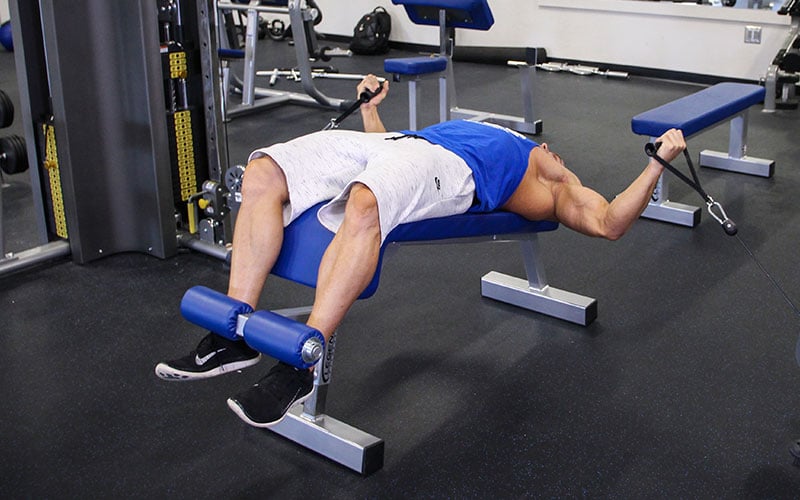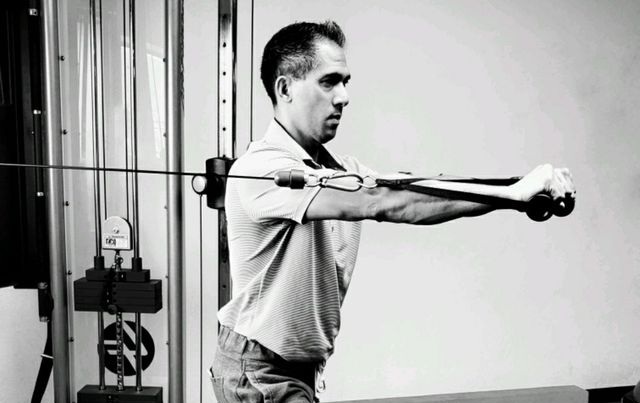
Single-Arm Cable Press (Unilateral Chest Line & Symmetry Builder)
A precision bodybuilding movement for symmetry, definition, and deep chest line development.
Introduction: Why the Single-Arm Cable Press Matters
While most lifters rely heavily on barbells and dumbbells for chest pressing strength, these movements have limitations when it comes to symmetry, pec line development, and unilateral strength balance. That’s where the single-arm cable press enters the picture — a movement that offers:
- unmatched constant tension
- customizable pressing angles
- precise pec targeting
- freedom of shoulder movement
- unilateral activation and control
Bodybuilders value this movement because it helps develop the inner chest, enhance the left-to-right symmetry of the pecs, and carve out the lines around the shoulders and sternum that really show on stage.
This exercise allows you to sculpt your chest the way an artist smooths clay — one side at a time, with complete control over the angle and tension.
Muscles Worked
Primary:
- Pectoralis major — both the clavicular (upper) and sternal (mid) fibers depending on angle
- Inner chest (sternal line)
Secondary:
- Anterior deltoid
- Serratus anterior
- Obliques and core stabilizers
- Triceps (minor involvement)
Why It’s Special:
Cable tension remains constant throughout the entire pressing motion — unlike dumbbells where tension drops at the top, or barbells where tension decreases near lockout.
The single-arm version also introduces a significant anti-rotation core challenge, making each rep feel smoother, stricter, and more connected to the chest.
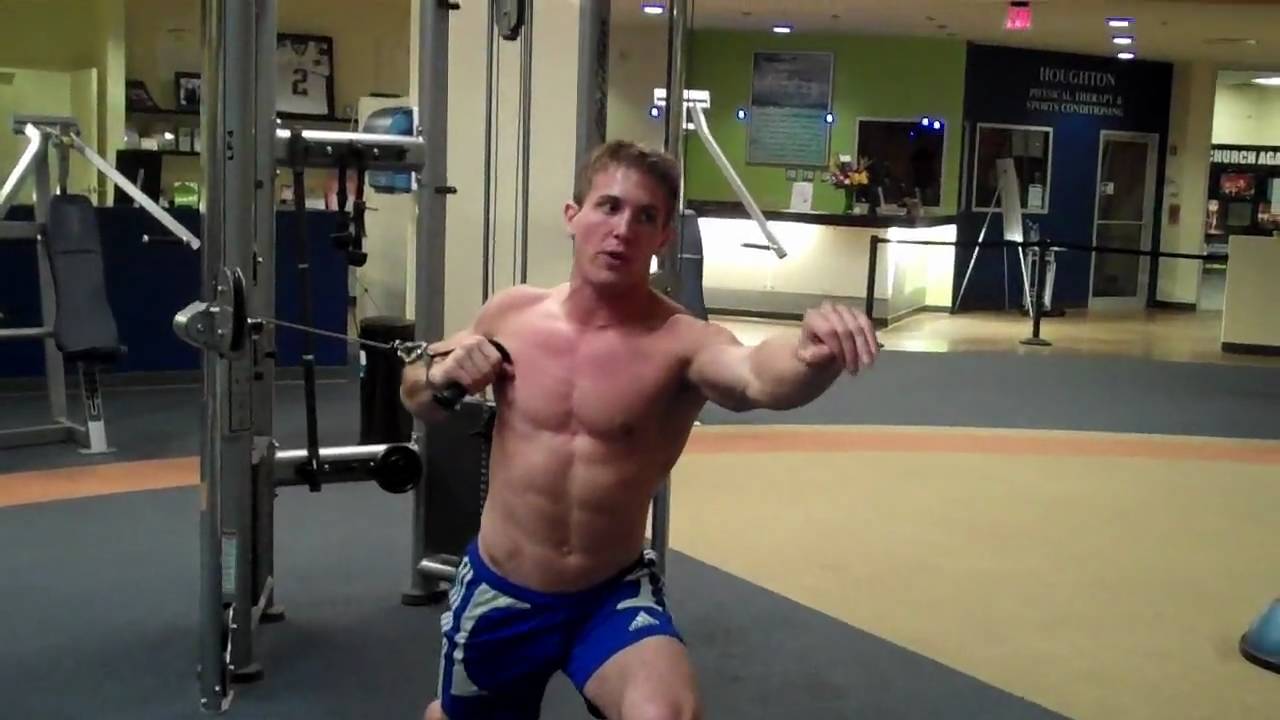
How to Perform the Single-Arm Cable Press
Setup
- Set a cable pulley at mid-chest height (adjust later for angle variations).
- Stand in a staggered stance — same foot forward as the pressing arm.
- Hold the handle with your palm facing down or slightly inward.
- Take one step forward so the cable pulls slightly from behind you.
- Engage your core; avoid twisting as you press.
Step-by-Step Execution
- Begin With the Handle at Chest Height
Your elbow should be just behind your torso, not flared excessively outward.
Think: Shoulder packed down, chest open.
- Press Forward on a Slightly Inward Arc
You’re not pressing straight ahead; the path is a slight curve, mimicking a natural arm sweep.
Keep your wrist neutral — don’t lead with the hand.
- Squeeze the Chest Hard at Full Extension
This is where cables outperform dumbbells and barbells.
Hold the contraction for 1 full second.
- Control the Return
Let the elbow return slowly behind your torso, creating a full stretch.
This is a key hypertrophy driver.
- Repeat Without Torso Rotation
Don’t twist your body to push more weight — this is a pec isolation exercise, not a rotational press.
Breathing
- Inhale as you bring the handle back toward your torso.
- Exhale as you press and contract.
- Keep the core tight the whole time — this is a stability-dependent movement.
Essential Technique Cues
- “Press inward, not just forward.”
This maximizes pec contraction and inner-chest work.
- “Keep your ribs down, not flared.”
Prevents anterior deltoid dominance.
- “Freeze your torso in place.”
If the torso rotates, the pec loses tension.
- “Lead the movement with the elbow, not the hand.”
Ensures you press through the pec line, not the shoulder.
- “Stretch as far back as your shoulder allows comfortably.”
The stretch is half the benefit.
Common Mistakes & Fixes
❌ Using Too Much Weight
This is #1. Lifters turn it into a rotating core press.
Fix: Drop weight until the pec does all the work.
❌ Pressing Straight Out
Makes it an anterior deltoid exercise.
Fix: Add a slight inward arc.
❌ Torso Rotation
Reduces pec involvement drastically.
Fix: Squeeze glutes + brace abs. Keep hip square.
❌ Elbow Too Low
This turns it into a triceps extension.
Fix: Keep elbow at sternum height.
❌ Not Controlling the Stretch
The best growth stimulus is lost here.
Fix: 2–3 seconds eccentric.
Variations & Angle Adjustments
- High-to-Low Single-Arm Cable Press
Angle: Upper position → press downward
Focus: Lower chest and outer pec fibers
Feels like: A hybrid between a decline press and a dip pattern
- Low-to-High Single-Arm Cable Press
Angle: Pulley low → press upward
Focus: Upper chest and clavicular tie-in
Feels like: A one-arm incline press + fly hybrid
- Seated Single-Arm Cable Press
- Eliminates leg drive
- Forces perfect isolation
- Ideal for bodybuilding isolation blocks
- Single-Arm Iso-Hold Press
Press one side while holding the other in the contracted position.
Massive inner chest pump.
- Split-Stance Power Cable Press (More Athletic Version)
More rotation allowed, but this is not ideal for pure hypertrophy-focused chest work.
Programming Guidelines
Hypertrophy (Best Use)
- 3–4 sets
- 10–15 reps per side
- 1–2 RIR
- Slow eccentrics + 1-second peak contraction
This rep range maintains quality tension without overloading joints.
Strength-Endurance / Conditioning
- 2–3 sets
- 15–20 reps
- Great finisher to flush the chest.
As a Secondary Movement
Best placed after your heavy bilateral press.
Example:
- Flat DB Press
- Single-Arm Cable Press
- Cable Fly Variation
- Machine Chest Press Finisher
Upper Chest Emphasis?
Use low-to-high angle.
4–5 sets of 12–15 reps hits the clavicular line like nothing else.
Who Should Use This Exercise?
Ideal For:
✔ Physique athletes prioritizing symmetry
✔ Lifters with uneven chest development
✔ Anyone with shoulder discomfort during barbell pressing
✔ Beginners learning chest activation
✔ Advanced lifters who need precision isolation
Not Ideal For:
❌ Lifters seeking max strength gains
❌ Anyone who cannot brace their core effectively
❌ Those who skip quality tempo for more weight
Bodybuilding Tips for Maximum Chest Activation
- “Imagine reaching forward and hugging a tree.”
That curved press path is everything.
- Keep your chest slightly turned toward the cable.
Just a 5–10° internal rotation increases pec involvement.
- Don’t rush the lockout.
Holding the peak is where the cable press becomes elite.
- Use micro-progressions.
Increase cable weight by 1 plate per week, max.
- Add a 1.5 rep style for the stretch.
Press → halfway down → press → full down
Amazing pec burn.
Practical Takeaways
- The single-arm cable press is elite for inner chest growth, symmetry, and pec-line detail.
- Perfect for hypertrophy, not strength testing.
- Angle customization allows upper, mid, or lower chest emphasis.
- Works best as a secondary or tertiary movement in a chest workout.
- Great for minimizing shoulder stress while maximizing chest activation.