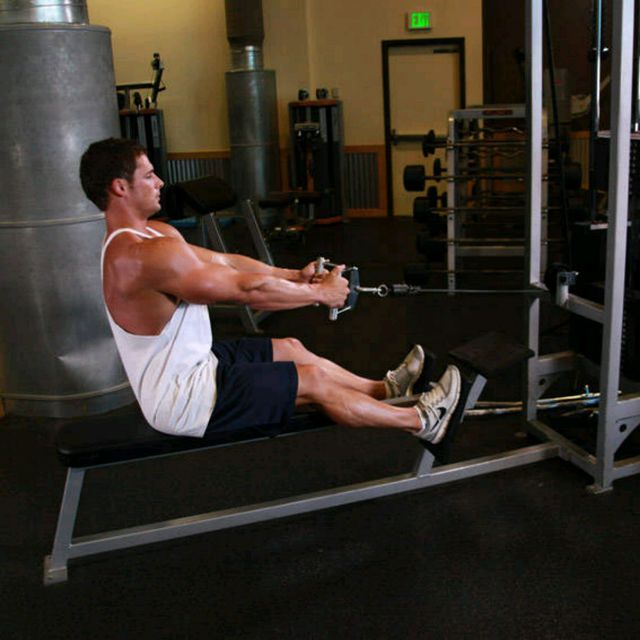
The Seated Cable Row
The Complete Bodybuilder’s Guide to Building a Thick, Detailed, 3D Back
Introduction: The Backbone of Mid-Back Mass
The Seated Cable Row is one of the most essential movements in bodybuilding — not only because it builds thickness through the mid-back, but because it teaches lifters how to truly contract their lats, rhomboids, and traps under controlled tension.
While pulldowns and pull-ups build width, rows build density, depth, and detail — the traits that separate a “big back” from a bodybuilder’s back.
The seated cable row provides the perfect combination of stability, consistent tension, and angle control, making it one of the most versatile back-builders for lifters of all levels.
Unlike free-weight rows, the cable row allows you to:
- Maintain constant tension throughout the entire movement
- Target different areas of the back depending on grip and handle
- Train the lats, rhomboids, and rear delts with precision
- Improve posture and scapular control
- Build a stronger mind–muscle connection
Whether you’re aiming for complete back development, stronger pulling strength, or a more aesthetic V-taper, the Seated Cable Row belongs in your program.
This guide breaks down everything you need: technique, anatomy, variations, programming, mistakes, cues, and advanced methods to maximize your results.
Muscles Worked
Primary Targets
- Latissimus dorsi (middle & lower fibers)
- Rhomboids
- Middle trapezius
Secondary Muscles
- Rear delts
- Teres major & minor
- Biceps brachii
- Brachialis
- Brachioradialis
Stabilizers
- Spinal erectors
- Core
- Forearm flexors
This is a “total-back” movement — no serious physique can be built without developing these midline muscles.
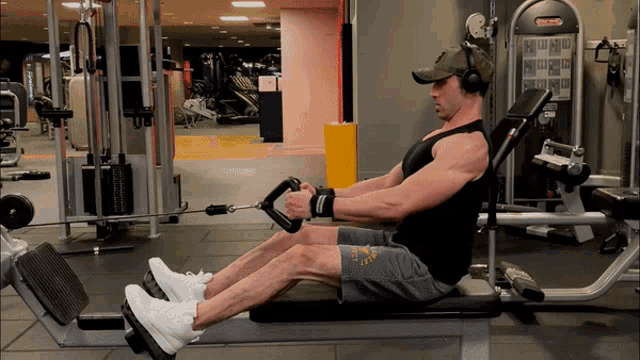
How to Perform the Seated Cable Row (Standard Neutral Grip)
Setup
- Sit on the row station bench and place your feet on the platform.
- Keep a slight bend in your knees — not locked out.
- Sit tall with your torso upright or slightly leaned forward.
- Grasp a neutral close-grip handle (the standard V-bar).
- Engage your core and keep your chest high.
This posture ensures the back — not the arms — takes the lead.
Execution
- Start with a deep stretch
Extend your arms fully and allow your shoulder blades to protract (spread).
Feel the lats lengthen.
- Initiate with scapular retraction
Before bending your elbows:
Pull your shoulder blades back and down.
This activates the upper back before the arms join in.
- Pull the handle toward your lower chest or upper abdomen
Keep elbows close to your ribcage.
Think: “pull with your elbows, not your hands.”
- Squeeze at peak contraction
Hold for 1 second.
Chest up, shoulders back, elbows tucked.
This peak squeeze is crucial for mid-back detail.
- Control the negative (2–3 seconds)
Let your arms re-extend slowly, allowing the shoulders to protract.
This eccentric phase is where a ton of hypertrophy happens.
Breathing Pattern
- Exhale as you pull
- Inhale on the way back
Breathing properly helps stabilize your torso and maintain posture.
Key Bodybuilding Technique Cues
- “Chest up, shoulders down.”
Opens the back and increases muscular tension.
- “Row with your elbows, not your hands.”
Removes biceps dominance.
- “Squeeze your shoulder blades together.”
A stronger retraction equals a thicker mid-back.
- “Let the lats stretch — don’t cut the ROM short.”
Half-reps kill progress.
- “Keep the torso still.”
Swinging turns this into a hip-drive cheat movement.
Common Mistakes and How to Fix Them
❌ Excessive torso leaning/swinging
Turns the exercise into momentum-based pulling.
Fix: Stay tall, use strict form, reduce load.
❌ Pulling with the biceps
Happens when elbows flare outward.
Fix: Tuck elbows and lead with the lats.
❌ Not protracting at the top
Leads to incomplete ROM and reduced lat stretch.
Fix: Allow controlled shoulder blade movement.
❌ Shrugging during the pull
Shifts tension into upper traps.
Fix: Keep shoulders down during the pull.
❌ Rushed reps
No time under tension.
Fix: Slow the negative to 2–3 seconds.
Major Variations and What They Target
One of the strengths of the Seated Cable Row is versatility. By changing handles, you change the stimulus.
- Close-Grip Neutral Row (Standard)
Targets: Lower lats, mid-back thickness
Best for: Overall mass + strength
- Wide-Grip Lat Row (Straight Bar)
Targets: Upper back, rear delts, teres major, upper lats
Benefits: Creates width and upper-back detail
Cue: Elbows flare out slightly
- Medium-Grip Row
Targets: Balanced upper/lower lat development
Best for: Strength carryover to pull-ups
- Supinated (Underhand) Row
Targets: Lower lats + biceps
Benefits: Stronger stretch and contraction
Caution: Use moderate load to avoid elbow strain
- Rope Row (High ROM Variation)
Targets: Mid-back + rear delts
Benefits: Huge contraction, long range of motion
- Single-Arm Cable Row
Targets: Unilateral lat hypertrophy
Benefits: Eliminates imbalances, stronger mind–muscle connection
- Chest-Supported Cable Row
Targets: Upper/middle back
Benefits: Zero torso cheating — pure isolation
Programming for Bodybuilding
For Mass (Hypertrophy Focus)
- 3–4 sets
- 8–12 reps
- 90 sec rest
Controlled reps with full ROM.
For Strength + Thickness
- 4–5 sets
- 6–10 reps
- 2 min rest
Use slightly heavier loads while maintaining strict form.
For Back-Day Finisher
- 2–3 sets
- 15–20 reps
- Very slow stretch at the top
This forces maximum lactate buildup and deep exhaustion.
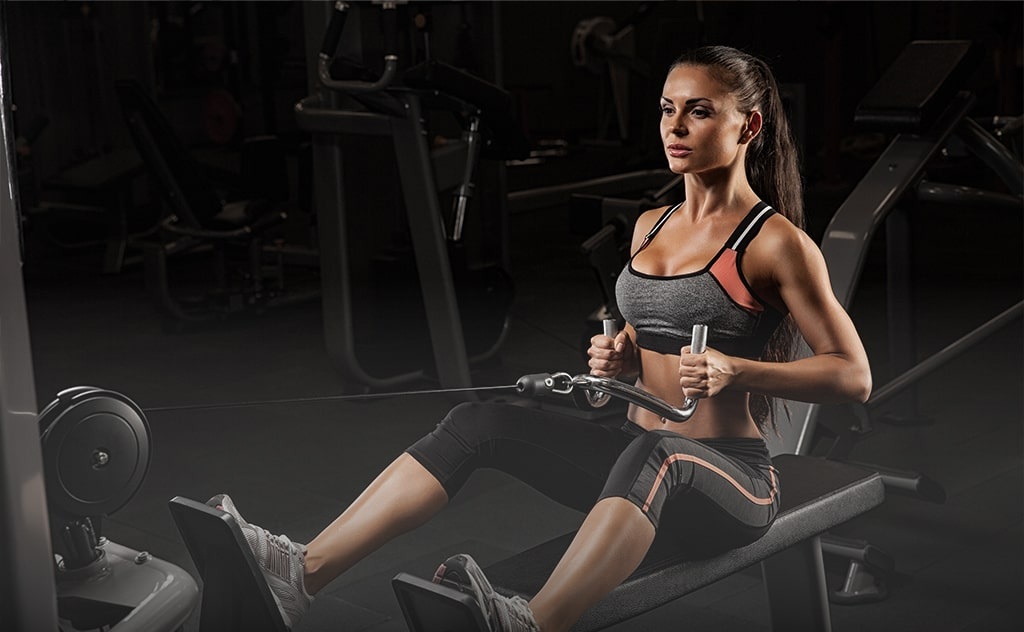
Where It Fits in a Back Workout
Option A — Classic Bodybuilder Back Day
- Pull-Ups
- Barbell Rows
- Seated Cable Rows
- Lat Pulldowns
- Rear-Delt Flyes
Option B — Lat-Emphasis Day
- Close-Grip Pulldown
- Single-Arm Cable Row
- Seated Cable Row
- Straight-Arm Pulldown
Option C — Upper-Back Density Day
- Chest-Supported Row
- Wide-Grip Cable Row
- Reverse Pec Deck
- Face Pulls
Option D — Beginner Back Day
- Close-Grip Pulldown
- Seated Cable Row
- Machine Row
- Straight-Arm Pulldown
Who Benefits Most from This Exercise
✔ Ideal for:
- Bodybuilders seeking back density
- Beginners learning proper rowing mechanics
- Lifters with lower-back issues (stable setup)
- Anyone wanting constant tension and full ROM
- Those needing better scapular control
✘ Not ideal for:
- Athletes relying solely on free-weight rows for performance
- Anyone who cannot control torso movement
- Lifters using heavy ego weights
Advanced Bodybuilding Tips to Take It Further
- Use a 1-second pause at peak contraction
Enhances mid-back density dramatically.
- Add a 2–3-second stretch at the top
This increases lat activation and improves mobility.
- Add fat grips to the handle
Improves forearm and brachialis involvement.
- Use straps if grip fails early
Back training should never be limited by grip.
- Perform “elbow sweeps” instead of pulls
Think of dragging elbows backward along your sides.
- Rest–pause sets for massive pumps
Hit 10 reps → rest 15 sec → hit 4 more → rest → repeat
Summary: A Back-Day Non-Negotiable
The Seated Cable Row is one of the most complete back exercises you can perform.
It builds:
- Mid-back thickness
- Lat density
- Scapular retraction strength
- Balanced back development
- A deeper, more detailed physique
Whether you’re a beginner building your foundation or an advanced lifter refining your stage-ready back, the seated cable row deserves a place in your program.