Russian Twist (Rotation-Focused Oblique Hypertrophy Builder)
The Russian Twist is one of the most misunderstood—and misused—core exercises in the gym. Done poorly, it becomes a sloppy cardio movement that beats up the lower back. Done correctly, it’s one of the best direct oblique hypertrophy and rotational-strength builders you can include in your program.
From a bodybuilder’s perspective, Russian twists aren’t about burning calories or mindlessly swinging a weight side to side.
They’re about loading trunk rotation, building thick, visible obliques, and strengthening the muscles that stabilize and transfer force between your upper and lower body.
When programmed and executed properly, the Russian twist helps carve out that dense, blocky midsection that’s visible even at higher body fat levels—something crunches alone won’t deliver.
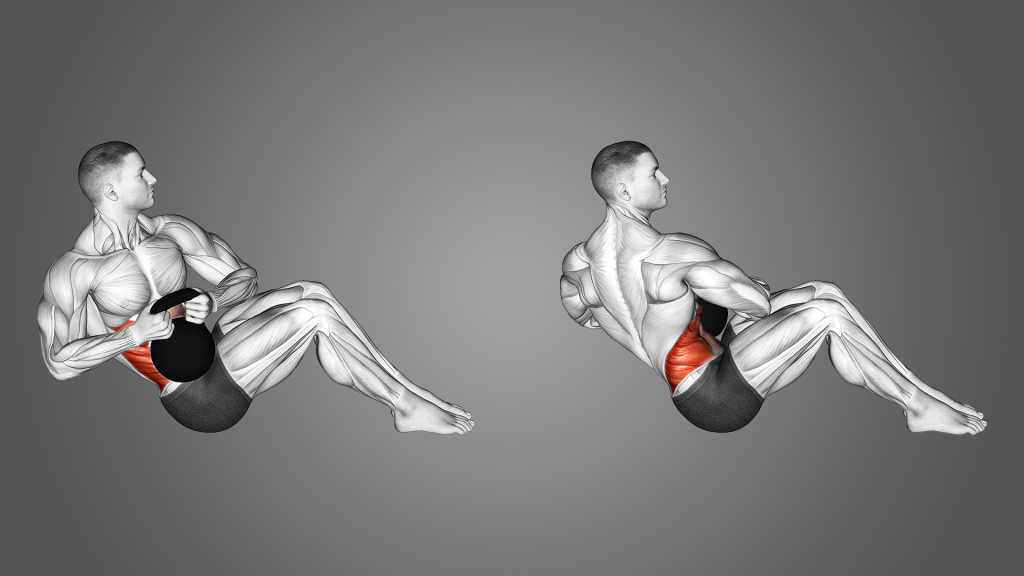
Muscles Worked
Primary Muscles
- External Obliques – Main drivers of rotation and visible “side abs”
- Internal Obliques – Deep stabilizers that add thickness and strength
Secondary Muscles
- Rectus Abdominis – Isometric stabilization
- Transverse Abdominis – Core bracing and spinal control
- Hip Flexors – Assist in maintaining the seated position
- Spinal Stabilizers – Maintain posture and protect the lumbar spine
👉 Think of Russian twists as a dynamic oblique movement, not a straight ab exercise.
Why Russian Twists Matter for Physique Development
Most lifters overtrain spinal flexion (crunches, sit-ups) and undertrain rotation. The obliques aren’t just there to look good—they’re responsible for:
- Rotational strength
- Anti-rotation stability
- Trunk rigidity during heavy lifts
- Waistline density and definition
For bodybuilders, strong obliques:
- Enhance front and side poses
- Improve the transition between abs and serratus
- Create a more dramatic midsection when lean
- Support heavier squats, deadlifts, rows, and presses
Russian twists directly address this gap.

Proper Russian Twist Technique (Bodybuilder Standard)
Setup
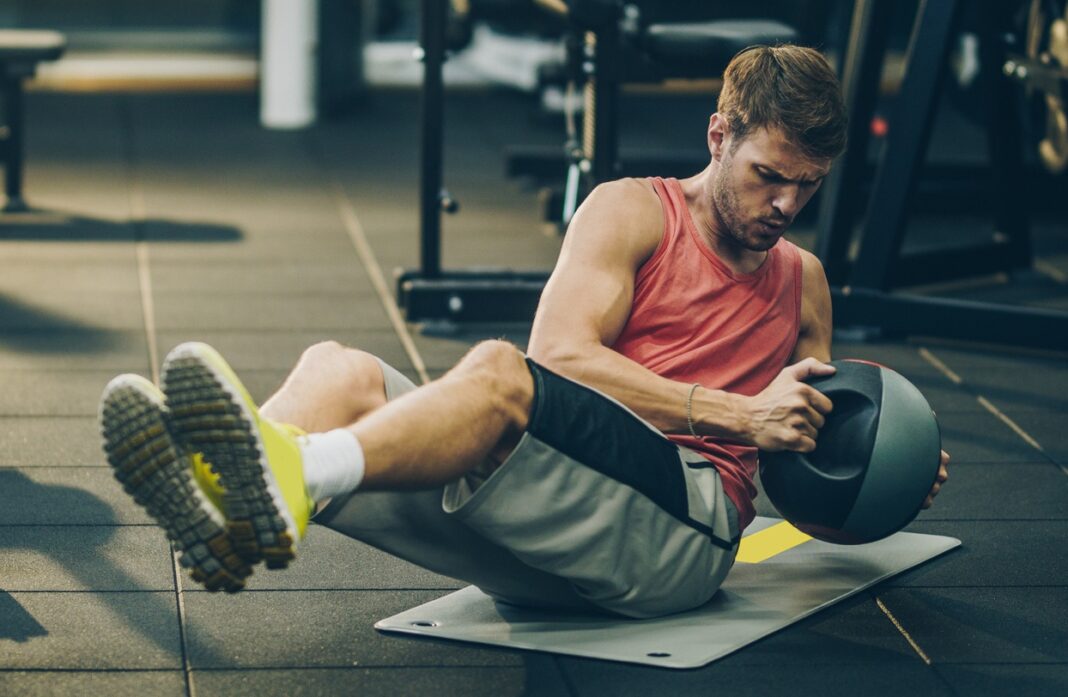
- Sit on the floor with knees bent and feet planted
- Lean back slightly until your torso is at about a 30–45° angle
- Brace your core hard—imagine preparing for a punch
- Hold a weight (plate, dumbbell, kettlebell, or medicine ball) close to your chest
Execution
- Rotate your torso to one side, leading with your shoulders—not your arms
- Pause briefly at end range and squeeze the obliques
- Rotate smoothly through center to the opposite side
- Keep your chest tall and spine neutral throughout
Breathing
- Exhale slightly during rotation
- Maintain continuous tension—don’t relax at center
Key Cues
- “Rotate the ribcage, not the arms”
- “Twist under control, don’t swing”
- “Brace like a plank while rotating”
Common Mistakes (And Why They Kill Results)
❌ Using Momentum
Swinging the weight turns the movement into cardio and removes tension from the obliques.
❌ Overextending the Lumbar Spine
Leaning too far back shifts stress to the lower back instead of the core.
❌ Excessive Load
Too much weight shortens range of motion and increases injury risk.
❌ Fast, Sloppy Reps
Russian twists respond best to controlled tempo, not speed.
Russian Twist Variations
Weighted Russian Twist
- Best for hypertrophy
- Use moderate weight and full ROM
Feet-Elevated Russian Twist
- Increases demand on lower abs and hip flexors
- More advanced
Medicine Ball Russian Twist
- Great for smooth, controlled rotation
- Easier to maintain form
Cable Russian Twist (Seated or Standing)
- Constant tension
- Excellent progression option
Programming Russian Twists for Muscle Growth
Hypertrophy-Focused Rep Scheme
- 3–4 sets
- 10–20 reps per side
- Slow, controlled tempo
- 45–75 seconds rest
Time-Under-Tension Method
- 30–45 seconds continuous rotation
- Moderate load
- Excellent finisher
Strength-Endurance Block
- 2–3 sets
- 20–30 reps per side
- Focus on form under fatigue
Where Russian Twists Fit in Your Core Training
Russian twists work best:
- After primary ab work (crunches, leg raises)
- As a mid-to-late session oblique movement
- 2–3 times per week max
Sample Oblique-Focused Finisher
- Cable Woodchop – 3×12/side
- Hanging Oblique Knee Raise – 3×10–15
- Russian Twist – 3×15–20/side
Beginner vs Advanced Adjustments
Beginners
- Bodyweight only
- Feet on floor
- Smaller range of motion
- Focus on bracing
Intermediate Lifters
- Add external load
- Increase ROM
- Slow tempo emphasis
Advanced Lifters
- Feet elevated
- Heavier resistance
- Cable variations
- Extended time-under-tension sets
Russian Twists and Waist Size — The Truth
A common fear is that rotational work will “thicken the waist.” In reality:
- Oblique hypertrophy is modest compared to abs
- A strong, developed core enhances aesthetics
- Leanness determines waist appearance far more than muscle size
Well-trained obliques create a hard, athletic midsection, not a bulky one.
Practical Takeaways
- Russian twists are a rotation-based oblique hypertrophy tool, not a cardio drill
- Use moderate weight, full ROM, and strict control
- Train obliques like any other muscle—with progression
- Pair with anti-rotation and flexion exercises for complete core development
- Stop reps when form breaks—quality > quantity
Conclusion
The Russian Twist earns its place in a serious bodybuilding core program when it’s treated with intention. It builds rotational strength, adds oblique thickness, and reinforces a powerful, stable midsection that supports both aesthetics and performance.
If you want abs that look complete—not just a six-pack but a fully developed trunk—you need rotational work. Done correctly, the Russian twist is one of the most effective ways to get there.
Train it with control, respect the load, and your obliques will show up when it matters most.