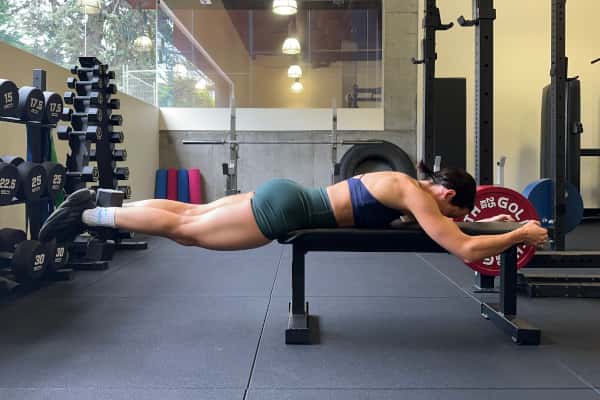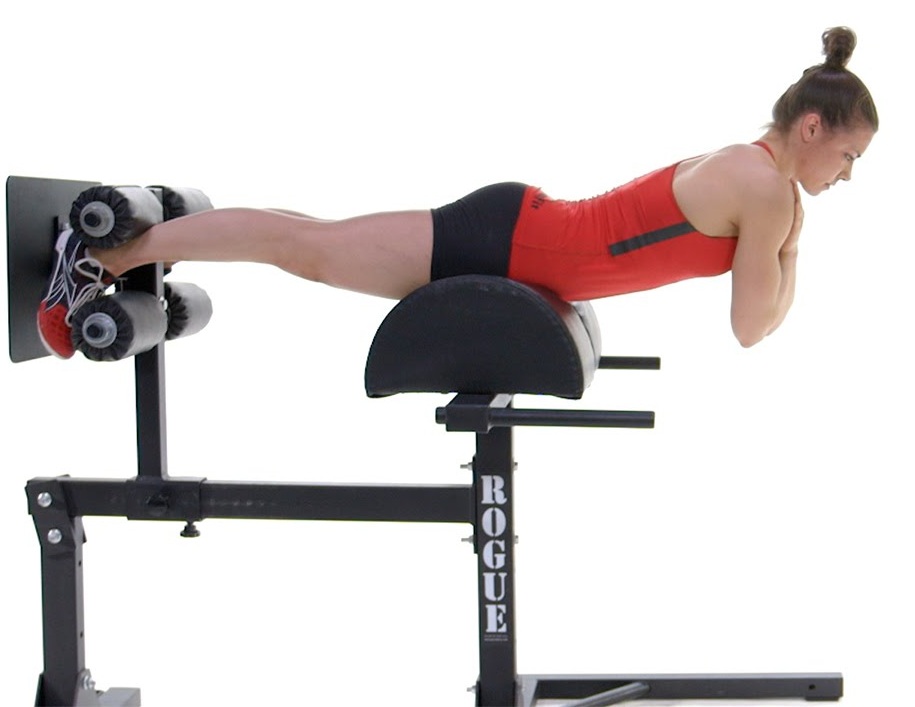
Horizontal Back Extension (GHD Back Extension)
The horizontal back extension is one of the purest lower-back builders in the physique world. Unlike the 45-degree version, the horizontal bench (or GHD set flat) puts your torso parallel to the floor.
That subtle mechanical shift transforms the movement from a general posterior-chain exercise into a targeted lower-back developer with an extended strength curve and a brutal stretch-tension effect across the spinal erectors.
In bodybuilding terms, the horizontal back extension is the hinge pattern that turns “flat” erectors into thick, corded columns of muscle running down the spine.
It fills in the midline with density. It gives the lower back that armor-plate look. And it fortifies the hinge mechanics that every serious lifter depends on for deadlifting, rowing, pressing, and squatting with power.
If the 45-degree back extension feels like a blend of glutes, hams, and erectors, the horizontal version feels unapologetically erector-heavy. It hits the lumbar region with a directness that few lifts can safely replicate.
Below is your full, deep, physique-focused breakdown.
Muscles Worked
Primary
- Spinal Erectors (Erector Spinae)
- Lumbar region (L1–L5)
- Thoracolumbar fascia
- Multifidus and deep spinal stabilizers
This is the movement’s main territory—your erectors take on the lion’s share of the load from the very first inch of the descent.
Secondary
- Glutes
- Hamstrings
- Upper erectors (thoracic region)
- Traps and rhomboids (static stability)
Stabilizers
- Core
- Obliques
- Lats (isometric tension)
Compared to the 45-degree bench, the horizontal setup involves a longer lever arm, meaning the erectors keep the spine extended under more sustained tension.
It’s one of the most efficient ways to grow the lower back with moderate load and low injury risk.
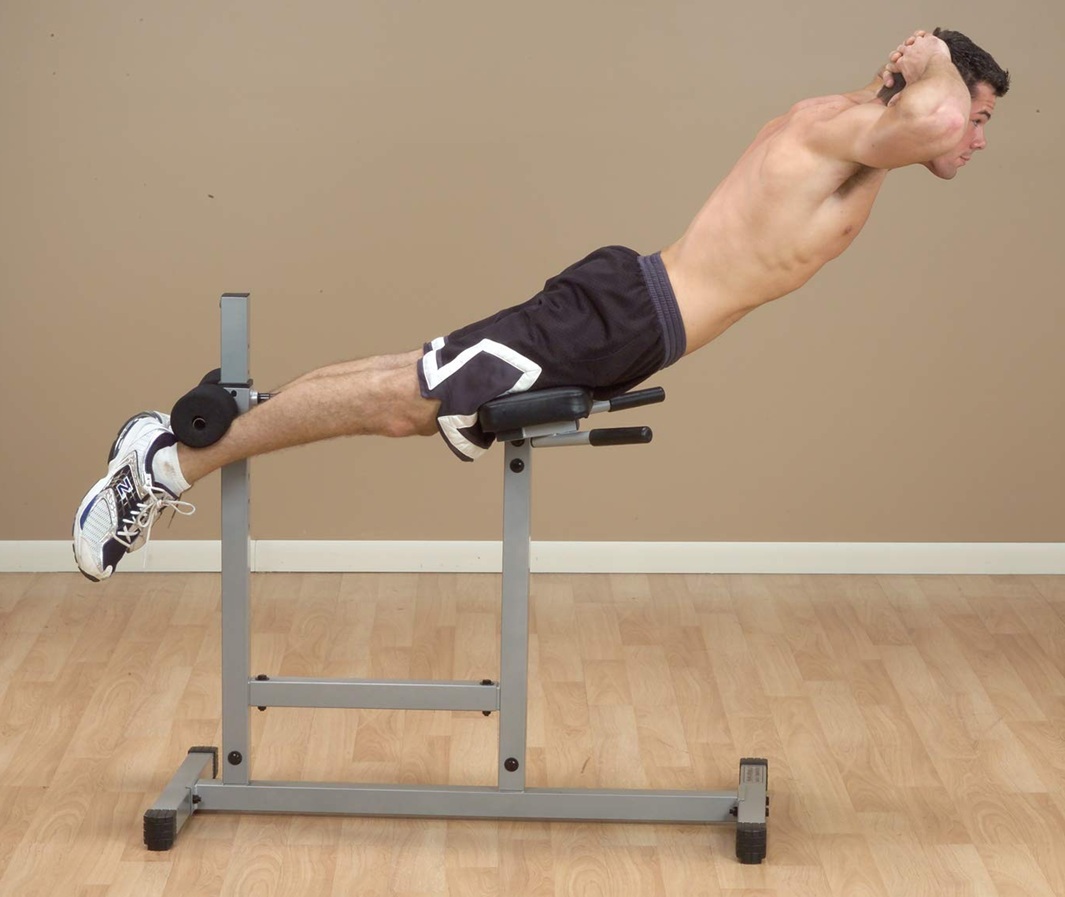
How to Do the Horizontal Back Extension (Step-by-Step)
Setup
- Set the pad height so your hips sit just past the edge, allowing a full hip hinge.
- Lock your heels firmly into the footplate or rollers.
- Brace your core lightly but don’t flatten your back—neutral spine is ideal.
- Cross arms over chest, or hold a plate/dumbbell against your chest for added load.
Execution
- Start Position
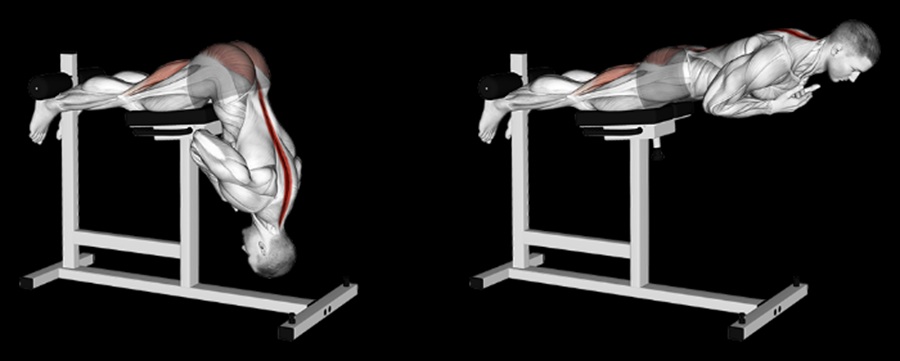
Your body should form a straight line from head to heels—neutral spine, ribs stacked, pelvis neutral. - Controlled Descent
- Hinge from the hips
- Let your torso fall slowly
- Maintain a natural lumbar curve
- Stop when your upper body drops slightly below parallel
- Do not round the lower back
The bottom position is where the stretch-tension truly loads the erectors.
- Ascend with Erector Drive
- Extend the torso until you return to that straight-line position
- Squeeze through the lower back and glutes
- Avoid hyperextension (no arching skyward)
- Peak Position
Finish in line with your legs. The power is in the stability, not the swing.
Reps:
Most bodybuilders thrive in the 10–15 and 15–20 ranges.
Tempo:
3-second descent
1-second ascent
1-second contraction
This magnifies erector tension.
Common Mistakes to Avoid
Mistake #1: Overextending the Spine at the Top
Hyperextension shifts load from muscle to joints.
The goal is a strong, neutral top position—not a gymnastic backbend.
Mistake #2: Rounding the Lower Back
Flexion under load is a fast track to irritation or injury.
Keep the spine long, tensioned, and braced.
Mistake #3: Leading With the Head or Chest
This recruits thoracic extensors and reduces erector emphasis.
Think “lift from the hips and spine,” not “throw your chest upward.”
Mistake #4: Using Momentum
If the reps bounce:
- Reduce weight
- Increase tempo
- Shorten the range slightly
Mistake #5: Pad Too High or Too Low
Too high: no hinge available
Too low: strain on lower back without support
Pad height matters more here than in almost any other posterior-chain lift.
Programming for Bodybuilders
Where It Belongs in a Workout
- After your major hinge (RDL, deadlift variations)
- Before accessory hamstring work
- Near the end of the workout as a “finisher”
Frequency:
2–3 times per week works beautifully for hypertrophy.
Volume Guidelines:
- Beginners: 3 sets of 10–12
- Intermediate: 3–4 sets of 12–15
- Advanced: 4–5 sets of 15–20 or loaded 10–12
Best Rep Range for Growth:
15–20 controlled reps.
The erectors love slow burning tension.
Exercise Variations
Weighted Back Extension (Plate or Dumbbell)
Ideal progression once bodyweight sets exceed 20–25 clean reps.
Barbell Back Extension (Across Shoulders)
Massive erector tension, but advanced only.
Keep weight light and form strict.
Band-Resisted Back Extension
Adds ascending resistance toward the top.
Excellent for mind-muscle connection.
Isometrics (Top Hold)
Hold for 3–5 seconds each rep.
Magnifies stability and hypertrophy stimulus.
Strict Erector Focus Variation
Instead of letting the glutes do most of the lifting, initiate every rep with spinal extension first.
A brutal but highly effective tweak.
Cues From a Bodybuilder’s Perspective
“Drive your torso forward through your belt line.”
This ties the movement to the hip hinge instead of the neck or chest.
“Stretch the spine long on the way down.”
The erectors contract harder when the starting point is lengthened.
“Lift your torso like you’re unrolling a hose.”
Smooth, continuous, pressurized tension.
“Stop at straight, not beyond.”
Preserves spinal integrity and keeps tension in the erectors.
“Don’t let your ribs flare.”
Keeps the movement centered in the hips and lumbar spine.
- How to Progress the Horizontal Back Extension
- Increase Range of Motion
Drop slightly below parallel with control.
More stretch equals more growth.
- Add Load Gradually
Hold a plate or dumbbell at the chest.
Start with 5–10 pounds.
- Slow the Tempo
Especially the descent.
This single change often doubles the tension.
- Add Pause Reps
2–3 seconds at the top reinforces strict form.
- Advanced Only: Holding the Load Away from the Body
If holding a plate fully extended:
- Erector demand skyrockets
- Core engagement increases
- Stability becomes the main challenge
Who Should Use This Exercise and Why
Bodybuilders
To thicken the spinal column visually and create a stronger, more complete back silhouette.
Strength Athletes
Improves hinge strength, deadlift lockout control, and lumbar endurance.
Recreational Lifters
Movements like deadlifts and squats become smoother, safer, and more powerful.
Athletes
Builds foundational stability and protects against rotational strain.
People With Weak Lower Backs
Low load, high reward.
As long as form is strict, it’s extremely joint-friendly.
Sample Training Cycles
Hypertrophy Cycle (4–6 Weeks)
Weeks 1–2:
3×15, bodyweight only
Weeks 3–4:
4×12 with 10–20 lb plate
Weeks 5–6:
4×15 with slow eccentrics
Strength-Endurance Cycle (4 Weeks)
3–4 sets of 20–25 reps
Minimal rest
Focus on strict technique
Erector Density Block (3 Weeks)
- Back extensions 2–3 times per week
- One day slow tempo
- One day heavy
- One day for max reps
This approach delivers visible thickness fast.
Practical Takeaways
- The horizontal back extension targets the lower back more directly than the 45-degree version.
- Best rep ranges: 10–15 or 15–20 with slow eccentrics.
- Keep the spine neutral—no rounding and no hyperextension.
- Early strength will be modest, but growth potential is enormous.
- Ideal as the final heavy hinge in your program.
- When performed properly, it’s one of the safest high-tension erector movements available.