Glute-Ham Raise (GHR) — The Posterior-Chain Powerhouse for Lower-Back Strength, Hamstring Density & Deadlift Performance
Among all lower-back and posterior-chain movements, few exercises inspire as much respect as the Glute-Ham Raise (GHR).
You could argue that the RDL, deadlift, and good morning are the big, flashy kings of the hinge family—but the GHR is the silent destroyer: an elite accessory movement that develops the spinal erectors, glutes, and hamstrings with brutal efficiency and unmatched tension control.
If you’re trying to build a dense, carved-out lower back, bulletproof your posterior chain, fortify your deadlift, or develop hamstrings that look like they’ve been sculpted out of granite, the GHR is non-negotiable.
It’s one of the few exercises that trains both knee flexion and hip extension simultaneously—a perfect combination for lower-back hypertrophy, glute growth, and long-head hamstring development.
This guide breaks down exactly how bodybuilders can maximize the GHR for size, structure, and strength, while also covering the technique nuances most people overlook.
What is the Glute-Ham Raise? (And Why Bodybuilders Need It)
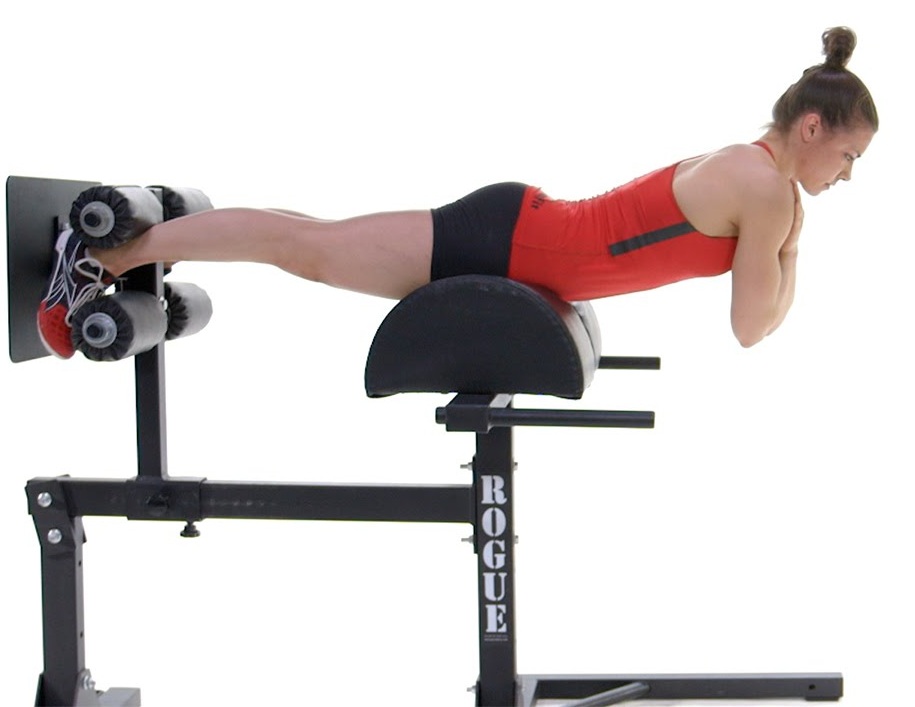
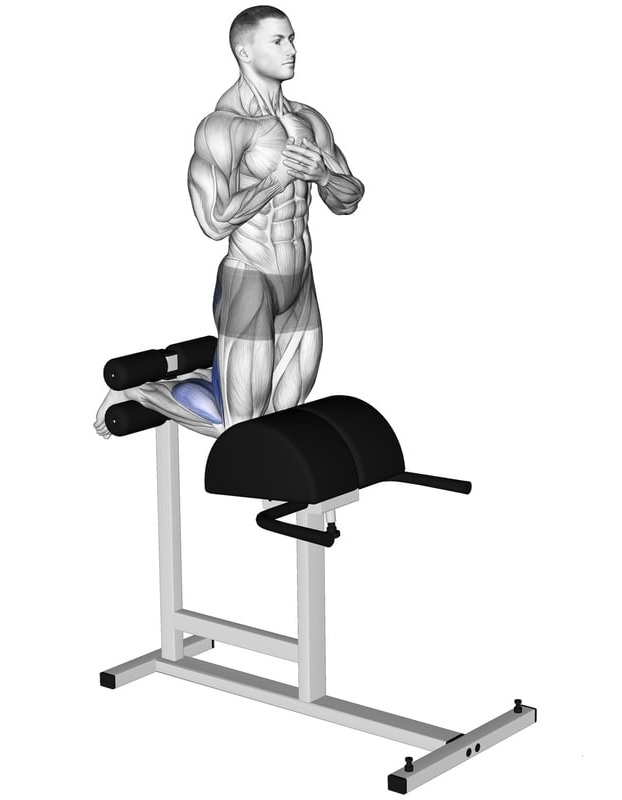
The GHR is performed on a dedicated glute-ham developer (GHD) machine, where your lower legs are locked in place, and your torso moves freely. The movement challenges the posterior chain through:
- Hip extension
- Knee flexion
- Active spinal stabilization
- Controlled eccentric loading
The GHR uniquely targets the glute–ham–erector connection in a way that feels almost like adding muscle fiber directly to your posterior chain.
What makes the GHR a bodybuilding staple?
✔ It isolates the long head of the hamstrings (the part that adds thickness and shape)
✔ It strengthens the spinal erectors without heavy axial load
✔ It enhances deadlift strength by building the muscles most responsible for lockout
✔ It adds noticeable density to the “lower-back shelf”
✔ It reinforces hinge mechanics, making your RDLs and good mornings stronger
✔ It improves posterior-chain symmetry—critical for aesthetics
Most importantly: the GHR hits the hamstrings and erectors in a way no machine curl or deadlift can replicate. It’s uniquely effective, brutally hard, and one of the most hypertrophic movements in the entire posterior chain catalog.
Muscles Worked (Bodybuilding Breakdown)
Primary Movers
- Hamstrings — especially the long head
- Gluteus Maximus
- Erector Spinae (full length of the spinal column)
Secondary Movers
- Adductor magnus
- Gluteus medius/minimus
- Calves (gastrocnemius)
- Upper back (isometric support)
Stabilizers
- Core musculature (anti-flexion)
- Obliques
- Rhomboids
- Lats (maintaining torso tension)
The GHR offers a rare combination: active hip extension + knee flexion. This dual stimulus builds posterior-chain thickness that no leg curl or hyperextension alone can achieve.
How to Perform the Glute-Ham Raise (Perfect Bodybuilder Form)
Step-by-Step Technique Guide
- Set up the GHD machine
Adjust it so:
- Your knees rest just in front of the pad
- Your feet are locked firmly under the roller
- Your hip can hinge freely without sliding forward
Most people set the machine too long; shorter positions make the movement harder and more effective.
- Start in a straight-line position
Your:
- Head
- Spine
- Hips
- Heels
…should all form a straight line. Brace your core and squeeze your glutes.
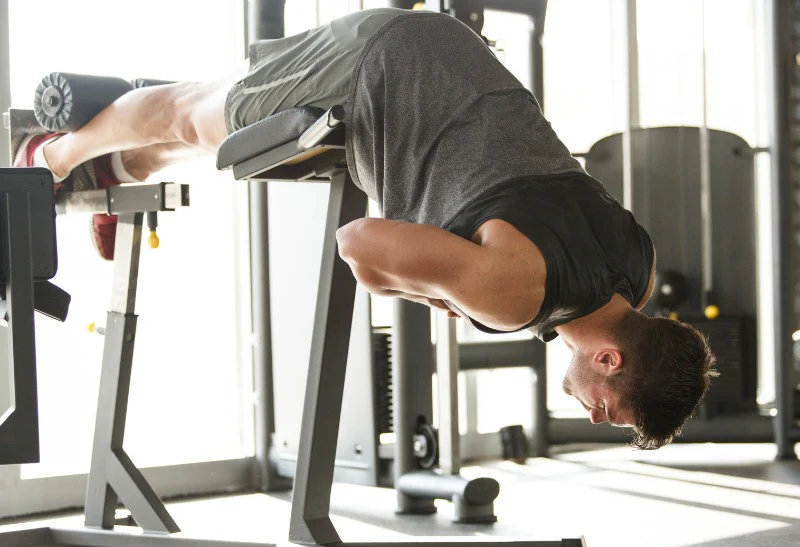
- Lower yourself under control
Hinge at both:
- The hips
- The knees
Your torso moves downward in a controlled arc, similar to an RDL, but with knee flexion engaged.
Lower until:
- You feel a deep stretch in your hamstrings
- Your torso is nearly vertical
- You remain tight through the glutes and lower back
This is the hardest part of the exercise—don’t rush it.
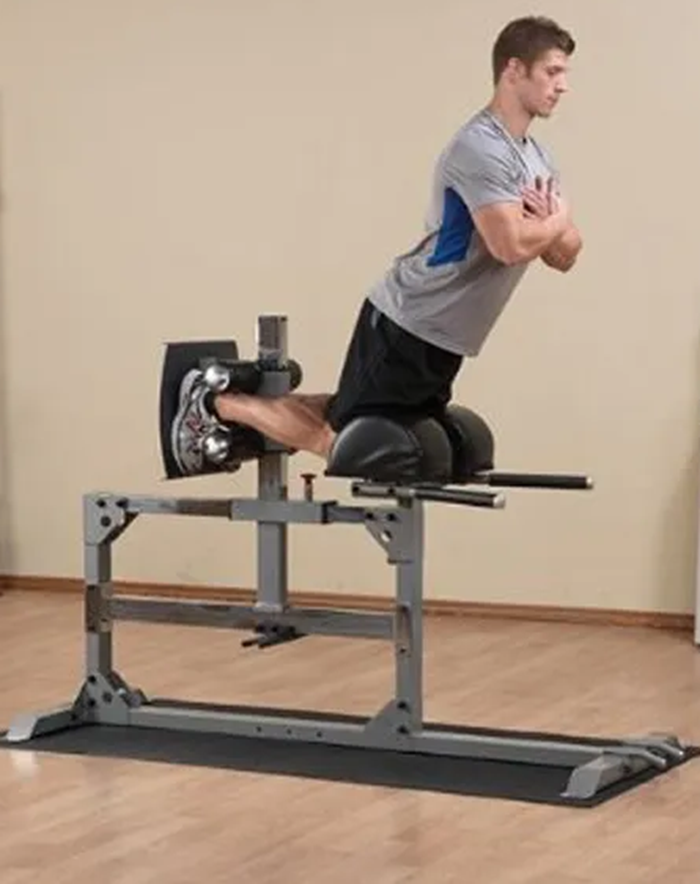
- Initiate the ascent with your hamstrings and glutes
Think:
- “Curl yourself up”
- “Drive your feet into the pad”
- “Pull with the hamstrings but extend with the glutes”
Your hips should extend while your knees flex simultaneously. This is the unique magic of the GHR.
- Return to the starting position
End in a straight line again—don’t hyperextend the lower back or flare the ribs.
Control every inch. Treat it like a high-level bodybuilding movement, not a CrossFit speed drill.
Common Technique Mistakes
Avoid these if you want maximum muscle growth:
❌ Using momentum (turning the exercise into a “fall and catch”)
❌ Hinging only at the hips (turns it into a back extension)
❌ Hinging only at the knees (becomes a leg curl)
❌ Letting the lower back round
❌ Hyperextending the spine at the top
❌ Going too fast on the eccentric (the eccentric is the stimulus)
The GHR is pure control and tension. Treat it as such.
Bodybuilding Benefits of the Glute-Ham Raise
- Builds a Dense, Thick Lower Back
The spinal erectors fire maximally in the GHR. Unlike deadlifts, the load is self-regulating—no spinal compression, no bar to stabilize, no balance issues.
You get:
- Safe erector hypertrophy
- Deep fatigue
- Maximum tension through the entire eccentric phase
If you want that 3D “lower-back armor,” the GHR delivers it.
- Creates Long-Head Hamstring Growth (Shape & Hanging Size)
The long head of the hamstring crosses both the hip and knee, so dual-joint loading is required to maximize its growth.
The GHR checks both boxes.
This leads to:
- Thicker hamstrings
- Better shape from the side
- Better rear double-biceps and side poses
- More “hang” from the shorts
No leg curl machine can match this.
- Enhances Deadlift Strength & Lockout Power
The GHR strengthens the muscles responsible for:
- Breaking the bar off the floor
- Stabilizing the spine under load
- Locking out the final portion of the rep
Powerlifters love it for strength.
Bodybuilders love it for hypertrophy.
Everyone loves what it does to their deadlift numbers.
- Improves Hip Hinge Mechanics
The GHR teaches:
- Proper glute-driven hip extension
- Neutral spine positioning
- Hamstring tension control
- Core bracing under fatigue
This makes your RDLs and good mornings drastically better.
- Reduces Risk of Lower-Back & Hamstring Injuries
Because it strengthens both:
- Hip extension
- Knee flexion
…it builds bulletproof hamstrings and more resilient erectors.
Athletes use it for injury prevention.
Bodybuilders should use it to stay healthy under heavy hinge volume.
Programming the GHR for Bodybuilding
The GHR is humbling. Most lifters can’t do more than a few clean reps when they start.
The key is to begin conservatively and progress steadily.
Beginner Programming
(If you cannot perform a full rep)
Assisted reps
- Band-assisted GHR
- Partial reps
- Hands lightly on thighs
Sets & Reps:
3 × 6–8 (controlled, not rushed)
Intermediate Programming
(You can now control full reps)
Hypertrophy focus
- Slow eccentric
- Full range of motion
- Pauses at the bottom
Sets & Reps:
3–4 × 8–12
(Brutal but effective)
Advanced Programming
(You can do 12+ strict reps)
Add:
- Weight plates hugged to the chest
- Safety squat bar
- Dumbbell loading
- Tempo work
- Iso-holds at the bottom
Sets & Reps:
4 × 10–15
Or
3 × 8 + weighted
Where to place the GHR in a workout
The best placement:
- After primary hinges (RDL, deadlift, good morning)
- Before isolation work (machine curls, back extensions)
For example:
- Romanian Deadlift
- Good Morning
- Glute-Ham Raise
- Back Extension
- Leg Curl Variation
This progression builds the most complete posterior chain possible.
Variations (For Bodybuilders)
- Band-Assisted GHR
Best for beginners.
- Weighted GHR
For advanced lifters who need progressive overload.
- Tempo GHR
3–5 second eccentrics are devastating for hypertrophy.
- Reverse GHR
Feet on pad, chest on roller—more glute-focused.
- Partial GHRs
Great for advanced overload or beginners learning the groove.
Practical Takeaways for Lifters of All Levels
If you’re a beginner:
- Start with assisted reps
- Focus on control, not speed
- Treat it like a skill before it becomes strength work
If you’re an intermediate lifter:
- Use slow eccentrics
- Build up to 8–12 full reps
- Train it 1–2× per week
If you’re an advanced lifter:
- Add weight
- Add volume
- Add intensity techniques (partials, pauses)
- Treat it as a primary accessory movement
If you’re a bodybuilder:
- Prioritize form over load
- Emphasize the stretch
- Pair it with RDLs for maximum posterior-chain growth
If you’re a strength athlete:
- Use it to improve deadlift power
- Use lower reps and higher intensity
- Maintain strict form to protect the spine
Conclusion
The Glute-Ham Raise is one of the purest, most effective posterior-chain builders in existence. It hits the spinal erectors, hamstrings, and glutes in a uniquely synergistic way—one that no deadlift, back extension, or leg curl can replicate.
Whether your goal is bodybuilding hypertrophy, strength, injury prevention, or a better deadlift, the GHR is an essential tool.
If you want a thick, powerful, aesthetic posterior chain that stands out on stage or in the gym, the GHR belongs in your program. It’s difficult, humbling, and unforgiving—but the payoff is elite development and long-term strength.