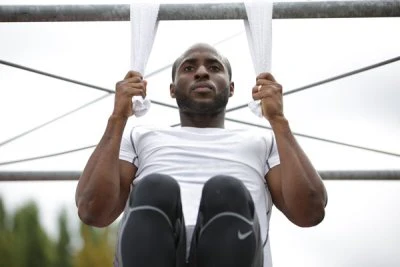
Dead Hang (Grip & Shoulder Stability Builder): The Foundation of Real Forearm and Upper-Body Strength
Sometimes the most deceptively simple movements are the ones that reveal — and build — real strength. The Dead Hang is one of them.
At its core, the dead hang involves just hanging from a bar, arms extended, supporting your entire bodyweight through your grip.
But behind that simplicity lies a goldmine of benefits for forearm development, grip endurance, shoulder stability, and postural control.
For bodybuilders, powerlifters, and athletes alike, this exercise acts as both a builder and a diagnostic tool — it exposes weaknesses in grip, shoulder mobility, and joint integrity.
When programmed intelligently, it can strengthen everything from your brachioradialis and flexors to your rotator cuff and scapular stabilizers, laying a bulletproof foundation for pulling power, pressing stability, and long-term joint health.
Think of it as the bridge between isolation and integration — a static hold that amplifies everything you do in the gym, whether it’s curls, pull-ups, or heavy rows.
Muscles Worked
Primary Muscles:
- Forearm Flexors – maintain grip around the bar, building crushing strength and density.
- Brachioradialis – major player in forearm size and elbow flexion support.
- Extensors and Finger Flexors – dynamically stabilize the hand under load.
Secondary Muscles:
- Latissimus Dorsi (Lats) – engaged to stabilize the shoulder joint.
- Trapezius (Upper and Lower) – supports scapular positioning.
- Rhomboids and Rear Delts – assist in retraction and shoulder alignment.
- Core and Obliques – stabilize the body in a vertical hang.
💡 In a single static position, the dead hang recruits nearly every muscle involved in upper-body posture, making it as functional as it is foundational.
Why Bodybuilders Should Train Dead Hangs
- Grip Strength and Endurance
- Holding your full bodyweight teaches your forearms to stay engaged under tension — crucial for curls, deadlifts, and heavy presses.
- Forearm Hypertrophy
- Constant isometric tension builds thick, vascular forearms and finger flexors.
- Shoulder Health & Mobility
- The decompressive effect on the shoulders opens joint space, relieves tightness, and promotes overhead mobility.
- Spinal Decompression
- Lengthens the spine under gravity, alleviating pressure from squats and deadlifts.
- Improved Posture & Scapular Stability
- Reinforces proper shoulder alignment and strengthens postural muscles.
- Injury Prevention
- Strengthens small stabilizers that often go underdeveloped, reducing the risk of rotator cuff issues.

How to Perform the Dead Hang
Setup
- Find a sturdy pull-up bar that allows your feet to hang freely.
- Grip the bar slightly wider than shoulder-width with a full, overhand grip (thumb wrapped around).
- Let your body hang naturally with arms extended and feet off the ground.
Execution
- Engage Your Core
- Slightly tuck your pelvis and brace your abs to avoid excessive arching.
- Set the Shoulders
- Keep them active — don’t let them completely relax into your ears. Retract slightly to protect your shoulder joints.
- Hold the Position
- Maintain the hang for as long as you can with steady breathing.
- Aim for time under tension — not just survival.
- Descend Smoothly
- When finished, lower yourself gently or step down with control.
Key Form Cues
✅ Keep wrists neutral — don’t overextend.
✅ Engage lats lightly — “pack” the shoulders down for stability.
✅ Avoid swinging — control your body throughout.
✅ Focus on full-hand grip — not just fingers.
✅ Breathe slowly — don’t hold your breath.
Common Mistakes and Fixes
| Mistake | Problem | Fix |
| Shoulders fully disengaged | Causes impingement or strain | Keep shoulders slightly packed |
| Swinging or kipping | Wastes energy, reduces stability | Control your core and legs |
| Short, low-effort hangs | Insufficient time under tension | Aim for minimum 20–30 seconds |
| Overuse without rest | Leads to tendonitis | Train 2–3 times per week max |
| Neglecting thumb wrap | Weakens grip | Always use full grip for security |

Programming the Dead Hang
For Beginners (Grip Foundation)
- Sets: 3–4
- Duration: 20–30 seconds per set
- Rest: 60 seconds
- Focus on maintaining form and steady breathing.
For Intermediate Lifters (Hypertrophy & Endurance)
- Sets: 3–4
- Duration: 40–60 seconds per set
- Rest: 90 seconds
- Perform once or twice per week after back or arm workouts.
For Advanced Lifters (Grip & Shoulder Conditioning)
- Sets: 4–5
- Duration: 60–90+ seconds per set
- Rest: 90–120 seconds
- Progressively add weight using a dip belt or vest.
Training Strategies from a Bodybuilder’s Perspective
💪 1. Grip Burnout Finisher
After forearm or pull workouts, hold a dead hang for max time — it’ll completely fatigue your flexors and build endurance fast.
💪 2. Pre-Exhaust Strategy
Start arm day with a 30–45 second hang to activate grip and stabilizers before curls or presses.
💪 3. Weighted Progression
Once you can hang for 60 seconds bodyweight, add small weight increments (5–10 lbs) weekly.
💪 4. Active Hang vs Passive Hang
Alternate between scapula-retracted holds (active) and relaxed hangs (passive) for full shoulder mobility and strength balance.
💪 5. Superset Idea
- Dead Hang (45–60 seconds)
- Hammer Curl (10–12 reps)
- Wrist Roller (1 set)
Perfect for forearm blowouts and vascular detail.
Variations of the Dead Hang
- Active Hang
- Shoulders pulled slightly down and back.
- Builds scapular control and postural endurance.
- Passive Hang
- Completely relaxed shoulders.
- Focuses on joint decompression and mobility.
- Mixed-Grip Hang
- One overhand, one underhand grip.
- Enhances grip versatility and brachioradialis recruitment.
- Towel or Fat Grip Hang
- Use towels or thick bars to intensify grip stress.
- Advanced forearm builder for bodybuilders and climbers.
- Single-Arm Dead Hang
- Extremely challenging unilateral variation.
- Develops asymmetrical grip strength and shoulder stability.
Advanced Progressions
- Weighted Dead Hang
- Use a dip belt or weighted vest.
- Great for powerlifters and grip specialists.
- Timed Isometric Ladder
- 15 sec hang → 10 sec rest → 20 sec hang → 10 sec rest → 30 sec hang.
- Builds both strength and endurance in a single session.
- Hanging Scapular Shrugs
- Small scapular depressions from a dead hang position.
- Strengthens lower traps and rotator cuff muscles.
- Pull-Up Transition Holds
- Pause mid-range during a pull-up for time.
- Builds static strength across the range of motion.
Integrating Dead Hangs into Your Training Split
Option 1: Arm or Forearm Day
- Barbell Curl – 4×10
- Hammer Curl – 3×12
- Wrist Roller – 3 rounds
- Dead Hang – 3×Max Hold (as finisher)
Option 2: Back or Pull Day
- Pull-Up – 4×AMRAP
- Barbell Row – 4×8
- Cable Rear Delt Fly – 3×15
- Dead Hang – 3×60 sec hold (for decompression)
Option 3: Daily Mobility Routine
- Hang for 30–45 seconds once daily post-training.
- Enhances shoulder recovery and flexibility.

Bodybuilder Tips
🏋️♂️ Start small — 20–30 seconds at a time is plenty for beginners.
🏋️♂️ Train grip actively — don’t use straps for dead hangs.
🏋️♂️ Add variability — change bar thickness or texture weekly.
🏋️♂️ Pair with wrist curls or farmer’s carries for full forearm development.
🏋️♂️ Always control breathing — inhale deep, exhale through the hold.
Safety and Recovery
⚠️ Warm up shoulders and wrists before hanging.
⚠️ Don’t hang through shoulder pain — use active scapular positioning.
⚠️ Avoid overdoing it — forearms need recovery between sessions.
⚠️ Stretch forearms, chest, and lats afterward to restore mobility.
⚠️ If grip fails, land softly or lower with bent knees to protect joints.
Comparison: Dead Hang vs Towel Pull-Up
| Exercise | Focus | Primary Benefit |
| Dead Hang | Grip, shoulders, decompression | Foundational grip endurance & shoulder stability |
| Towel Pull-Up | Grip, forearms, lats | Dynamic grip hypertrophy & pulling strength |
✅ Combine both:
Use Dead Hangs for shoulder health and endurance, and Towel Pull-Ups for hypertrophy and power.
Practical Takeaways
✅ Perform dead hangs 2–3 times weekly for 30–60 seconds per set.
✅ Use them as both a warm-up (mobility) and finisher (grip burnout).
✅ Progress by adding weight, increasing duration, or reducing rest.
✅ Focus on consistency — the longer you can hang, the stronger your forearms, shoulders, and grip will become.
Conclusion
The Dead Hang may look simple, but it’s one of the purest tests — and builders — of real strength. It strengthens your grip, decompresses your spine, stabilizes your shoulders, and enhances control across every upper-body movement you perform.
For bodybuilders, it’s the missing link between muscular size and true function — helping you lift heavier, pose tighter, and stay injury-free.
Incorporate it regularly, master control, and over time you’ll build forearms that don’t fatigue, shoulders that stay healthy, and a body that feels stronger from the inside out.