Barbell Shrug: The Foundational Trap Mass Builder
Build towering upper traps, thick yokes, and a brutally strong upper back.
The barbell shrug is one of the most iconic exercises in bodybuilding and strength culture. If you look at any physique with armor-plated traps — from the golden era to modern mass monsters — you’ll find barbell shrugs somewhere in their training history.
It’s simple, brutally effective, load-friendly, and tailor-made for adding inches of dense muscle across the upper traps.
Your traps are one of the most visually dominant upper-back muscles. Massive pecs and capped delts look even better when supported by thick, mountainous traps that rise toward the ears.
The shrug remains one of the purest ways to train the traps in their strongest movement pattern: scapular elevation under heavy, controlled tension.
This guide breaks down everything you need to know about the barbell shrug — from technique, biomechanics, variations, programming, mistakes, rep schemes, and advanced bodybuilding cues you won’t find in general fitness articles.
Muscles Worked
Primary:
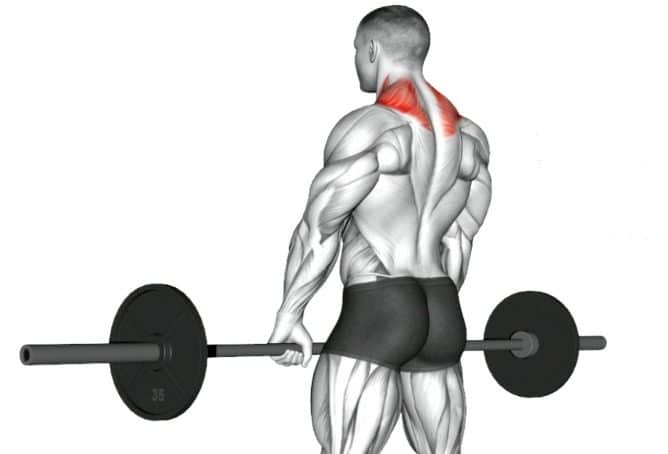
- Upper Trapezius (Traps)
- Levator Scapulae
Secondary:
- Middle trapezius
- Rhomboids
- Forearms (static grip)
- Spinal erectors (isometric stabilization)
While the movement looks simple, a barbell shrug loads your entire upper back with massive amounts of mechanical tension. Because you can use heavy weight safely, it’s one of the best ways to stimulate fast-twitch recruitment in the traps.
How to Perform the Barbell Shrug (Step-by-Step)
- Set Up
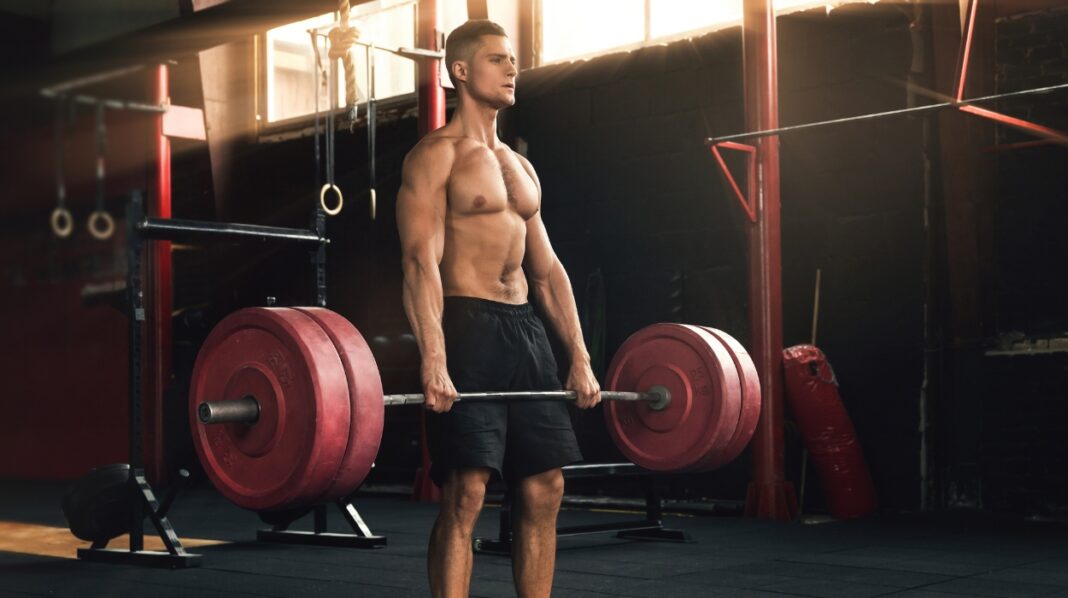
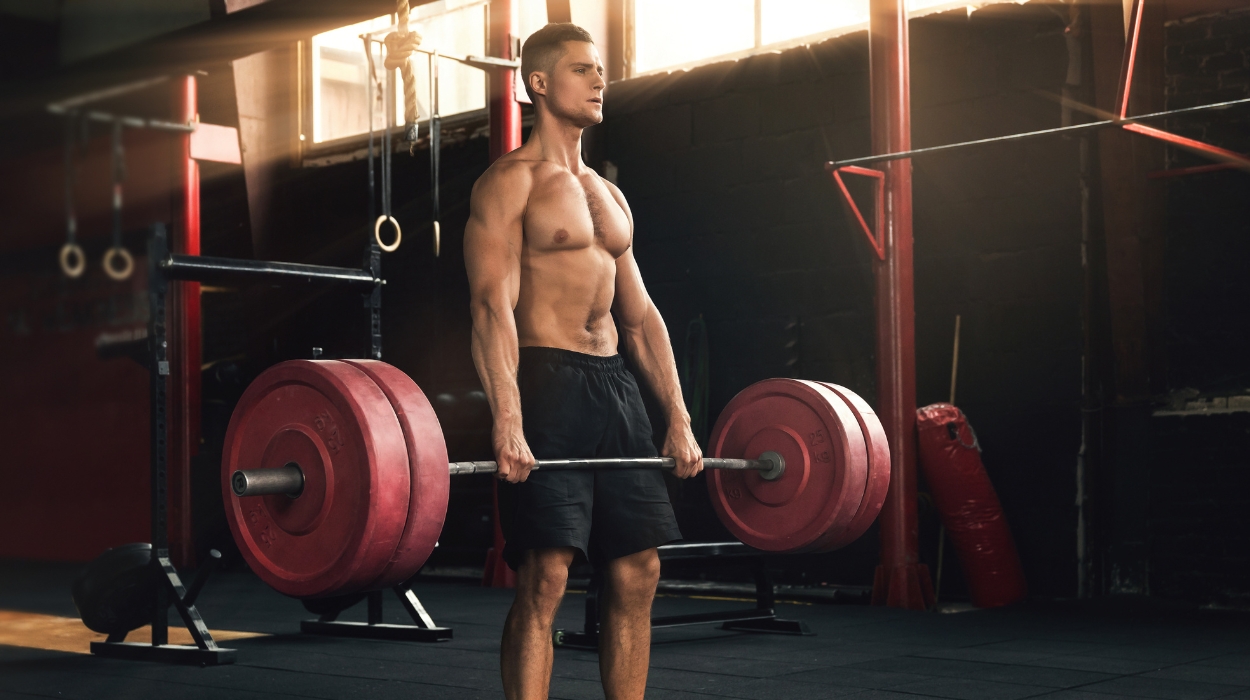
- Stand with a barbell in your hands at hip level, using a shoulder-width or slightly wider grip.
- Keep feet hip-width apart.
- Brace your core and let the arms hang naturally.
- Pull the Shoulders Straight Up
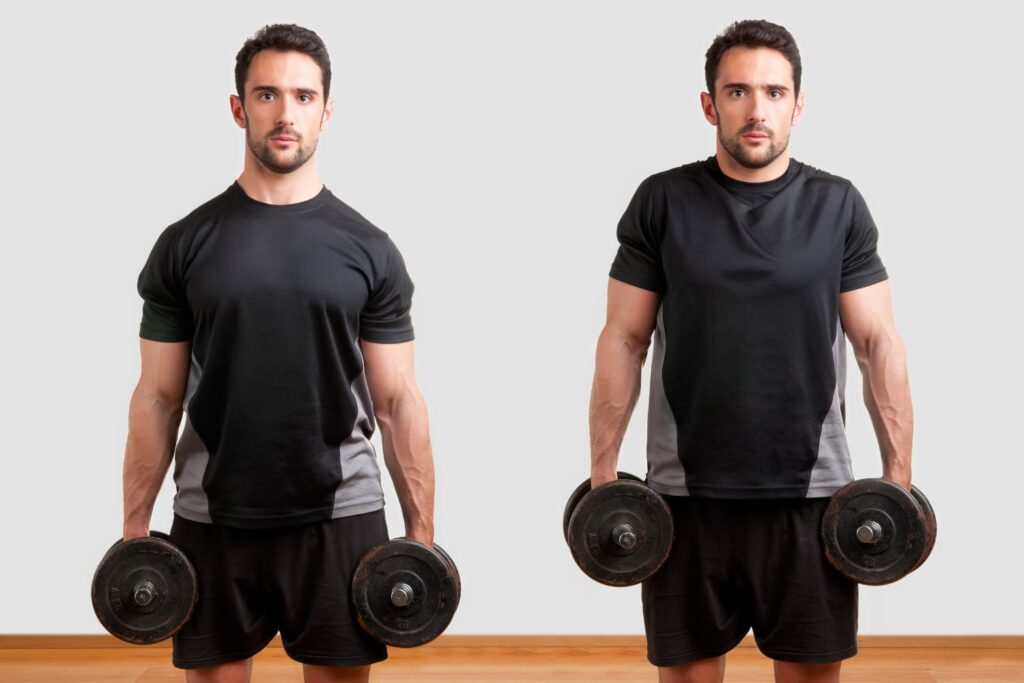
- Imagine your shoulders sliding upward toward your ears, not backward.
- The motion is vertical — think “elevate the shoulders,” not “roll them.”
- Squeeze Hard at the Top
- Hold the peak contraction for 1 full second, driving your traps into a hard, conscious squeeze.
- Don’t let the bar bounce off your thighs.
- Lower Under Control
- Descend slowly, allowing a full stretch.
- Maintain posture — no rounding, swaying, or leaning forward.
- Repeat with the Same Tempo
- Most lifters benefit from a controlled 1-2 second squeeze and a 2-3 second eccentric.
Key Form Cues for Maximum Trap Growth
✔ “Pull your shoulders up — not back.”
Scapular elevation, not retraction, is the trap’s most efficient hypertrophy pattern. Pulling “up and back” reduces tension on the upper traps and shifts load into the rhomboids.
✔ “Stand tall and let the traps do the lifting.”
Avoid using your arms — they should act like hooks. Imagine the traps are directly connected to the bar.
✔ “Slow down — traps grow from tension, not momentum.”
The shrug is a tension exercise, not a power move. The eccentric (lowering phase) is especially important.
✔ “Keep the bar close to your body.”
If the bar drifts forward, the load transfers to the low back instead of the upper traps.
✔ “Squeeze HARD at the top.”
A full peak contraction recruits more motor units and delivers stronger hypertrophy signals.
Common Mistakes That Kill Trap Gains
- Rolling the Shoulders
This is the classic mistake. Rolling does not increase trap activation; it simply adds unnecessary shoulder rotation and increases injury risk.
- Using Too Much Weight
If you’re hitching, jerking, or swinging, the traps aren’t doing the work. Heavy is fine — sloppy is not.
- Shortening the Range of Motion
Half-shrugs = half the gains.
A full stretch and full elevation are essential.
- Letting the Head Jut Forward
This compromises posture and shifts emphasis off the traps.
- Bending the Elbows
This turns the shrug into a weird quasi upright row. Your arms should remain straight.
Why the Barbell Shrug Is Essential for Bodybuilders
- You Can Load It Heavily
Barbells allow massive progressive overload — the #1 driver of trap hypertrophy. Dumbbells eventually become too heavy or awkward.
- It Targets the Traps in Their Strongest Position
The upper traps are strongest in elevation, not retraction or rotation.
- It Creates a Thick, “3D” Look
Huge traps enhance the:
- upper body silhouette
- shoulder-to-neck transition
- muscular look in clothes
- front and rear double biceps poses
- most muscular pose
A physique without traps looks incomplete. Shrugs fill out the upper frame.
- Safe to Perform Frequently
Traps recover quickly and tolerate high training frequency.
Barbell Shrug Variations You Can Add Later
- Snatch-Grip Shrugs
Wider grip = more upper-trap stretch and longer range of motion.
- Barbell Shrug with Paused Contraction
1–3 second hold at the top intensifies motor unit recruitment.
- Barbell Shrug with Slow Eccentric
A 3–4 second lowering phase creates severe metabolic stress — great for hypertrophy.
- Behind-the-Back Barbell Shrug
Changes the line of pull and alters fiber recruitment, hitting lower and middle trap fibers more.
- Rack Shrug
Performed in a rack for massive overload with controlled range.
Programming the Barbell Shrug (For Maximum Trap Growth)
Hypertrophy Sets & Reps
- 3–5 sets
- 8–15 reps
- Controlled tempo
- 1–2 seconds at peak contraction
Strength-Based Trap Training
- 3–5 sets of 5–8
- Heavy loading, but strict form
- Best for building a base of trap thickness
High-Rep Pump Work
- 15–25 reps
- Fast pace but controlled
- Enhances trap endurance and creates a “burn” that leads to dramatic fullness
Sample Bodybuilding Shrug Programming
Option A: Upper-Back Training Day
- Barbell Shrugs – 4×10–12
- Face Pulls – 3×15
- Rear Delt Fly – 3×12–20
Option B: Shoulder Day Finisher
- Barbell Shrugs – 3×12
- Dumbbell Shrugs – 2×15
- Cable Upright Row – 3×10
Option C: Traps-Focused Specialization Block
- Barbell Shrugs – 5×10
- Rack Pulls – 3×8
- Behind-the-Back Shrugs – 3×12
- Heavy Farmer’s Carries – 4×30 sec
Traps respond extremely well to high load + high frequency. You can train shrugs 2–3 times per week if your recovery is solid.
Who Should Use the Barbell Shrug?
✔ Bodybuilders
For trap mass, density, and upper-back roundness.
✔ Strength Athletes
Strongman, powerlifters, and Olympic lifters all benefit from stronger traps.
✔ Beginners
Easy to learn and safe to load.
✔ Advanced Lifters
One of the best plateau breakers for adding thickness to a mature physique.
Practical Takeaways
- Keep the motion straight up and down.
- Use a weight you can control.
- Hold the peak contraction for 1–2 seconds.
- Don’t roll the shoulders — ever.
- Use high frequency for rapid trap growth.
- Track your progress — traps respond heavily to progressive overload.
The barbell shrug is simple, scalable, and brutally effective. Whether you’re a beginner adding your first bit of upper-back thickness or an advanced lifter chasing that granite 3D look, the shrug belongs in your program.