Barbell Deadlift — Complete Lower-Back Hypertrophy & Strength
The Barbell Deadlift is the single most iconic lift in strength training — a raw, uncompromising test of total-body power.
But despite its reputation as a “full-body” or “posterior-chain” exercise, bodybuilders often misunderstand its role in a hypertrophy-focused program. Yes, deadlifts build massive spinal erectors.
Yes, they thicken the traps, strengthen the glutes, and pack on overall back density. But no, they are not a precision hypertrophy movement — they are a strategic overload tool.
When programmed intelligently, the deadlift becomes the cornerstone of lower-back development, forging thick, rope-like erectors that run up the spine like steel cables. This explainer breaks down exactly how to use — and not misuse — the deadlift for muscle building.
What the Deadlift Really Trains (Bodybuilder’s Perspective)
While the entire posterior chain contributes, the deadlift is unmatched for isometric spinal erector loading. Unlike rowing or back extensions, where the erectors shorten and lengthen, the deadlift forces them to maintain a rigid spine under extremely high tension.
Primary Hypertrophy Stimulus (Bodybuilding Priority)
- Spinal erectors — This is the star of the show. No other exercise loads the erectors this heavily.
- Traps (upper and mid-traps) — Strong involvement as the bar is held and stabilized.
- Glutes — Powerful hip extension in the lockout phase.
- Hamstrings — Substantial tension, especially for lifters with good hip hinge mechanics.
Secondary Muscular Contribution
- Rhomboids
- Lats (mostly stabilizers)
- Forearms & grip
- Core musculature
- Quadriceps (off the floor)
Why Bodybuilders Should (Still) Deadlift
Even though the deadlift isn’t a pure “targeted” exercise for most upper-back muscles, it provides three hypertrophy benefits no isolation movement can match:
- Mechanical Overload
Deadlifts let bodybuilders use the heaviest loads they will ever touch.
Heavier loads → more mechanical tension → more deep, dense muscle.
- Erector-Specific Thickness
Rows make your back wide.
Deadlifts make your back thick.
The spinal erectors respond especially well to heavy isometrics.
- Full Posterior Chain Synergy
A strong erector foundation enhances every other back movement — rows, pulldowns, RDLs, hyperextensions, and more.
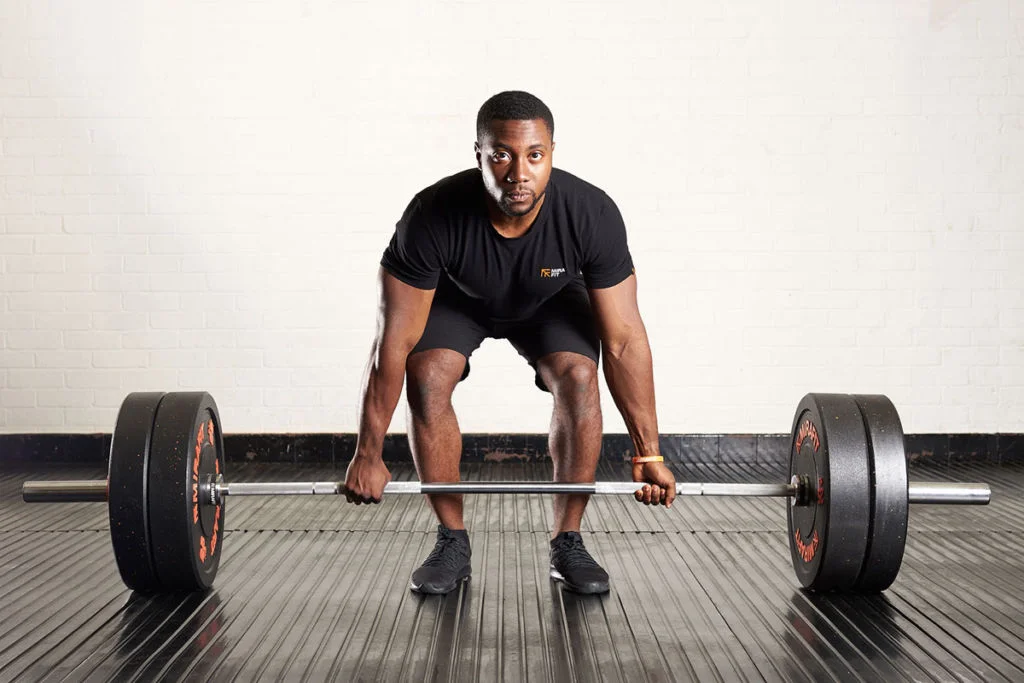
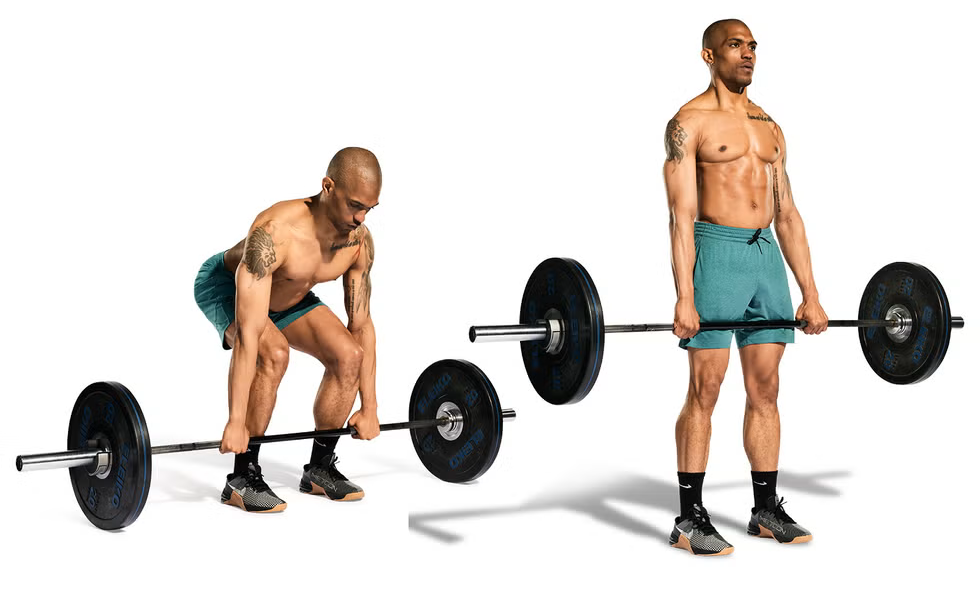
How to Perform the Deadlift With Bodybuilding Precision
Below is a step-by-step guide optimized for hypertrophy and safety, not powerlifting competition standards. The goal is clean mechanics that target the muscles, not maximal load.
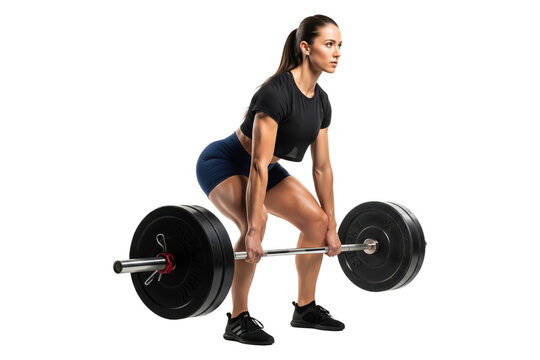
Step-by-Step Technique Guide
- Set Your Stance and Foot Position
- Feet about hip-width apart (narrower than squat stance).
- Toes pointing slightly outward.
- Bar positioned over mid-foot, about 1 inch from your shins.
This alignment reduces shear stress and optimizes the erector’s ability to hold posture.
- Grip the Bar
Choose between:
- Double overhand — best for warm-ups
- Mixed grip — strongest option for heavy sets
- Hook grip — strong but painful; rarely necessary for bodybuilders
- Straps — excellent choice if grip is limiting your back hypertrophy focus
Bodybuilding tip:
Use straps for back training days — let the back work, not the grip.
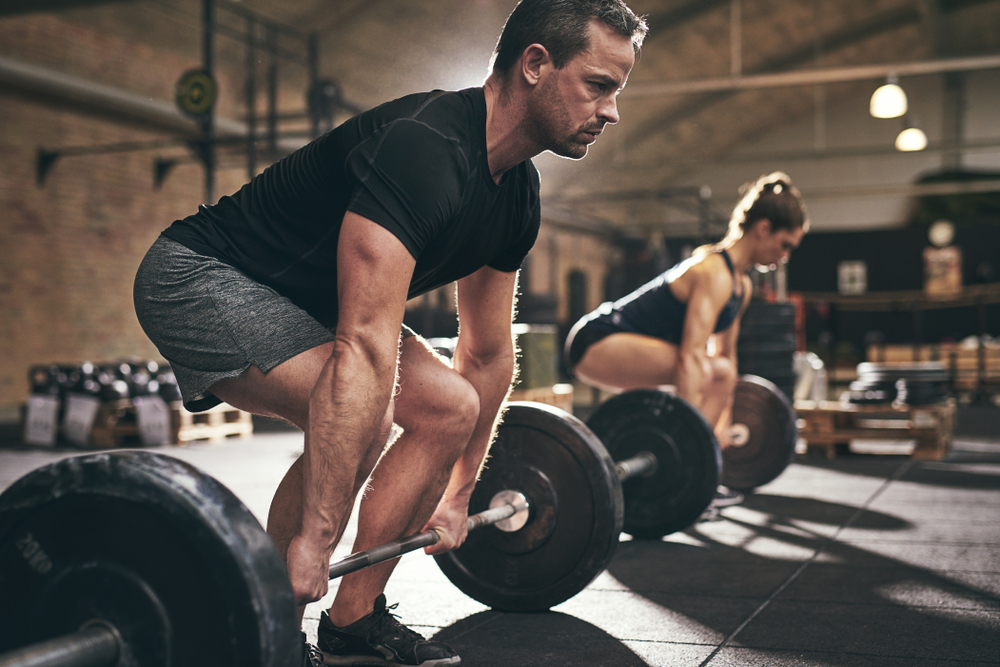
- Lower Your Hips and Bend the Knees
Think:
Bend down to the bar — don’t squat down to it.
Your shins should lightly touch the bar without rolling it forward.
- Set Your Back
This is the most important cue of the entire movement.
- Extend (arch) your lower back slightly.
- Keep your chest tall and your lats tight.
- Imagine “bending the bar around your shins.”
Your spine should be neutral and solid — no rounding.
- Brace Your Core
Take a deep breath into your belly, not your chest.
Brace as if preparing for a punch.
Hold that breath (Valsalva) during the pull.
- Pull From the Floor
- Initiate the lift by driving your feet through the floor.
- Keep the bar in constant contact with your legs.
- Hips and shoulders should rise at the same time.
This prevents excessive lower-back strain.
- Lock Out Smoothly
At the top, stand tall — don’t hyperextend or lean back.
Squeeze your glutes to finish the lift cleanly.
- Lower the Bar Under Control
- Push your hips back first.
- Maintain tension in your erectors.
- Once the bar passes your knees, bend your knees slightly to return to the ground.
Bodybuilding cue:
Don’t “drop” the weight — the lowering phase strengthens the erectors significantly.
Common Mistakes (and Corrections)
❌ Mistake 1: Rounding the Back
This is the #1 reason lifters injure themselves.
Fix:
Use lighter weight until you can maintain neutral spine, and strengthen your hip hinge with Romanian deadlifts.
❌ Mistake 2: Hips Rising Faster Than Shoulders
This turns the lift into an uncomfortable stiff-leg deadlift.
Fix:
Think: “Push the floor away” and focus on leg drive.
❌ Mistake 3: Too Much Quadriceps Drive
Deadlifts aren’t squats.
Fix:
Move your hips back more before initiating the lift.
❌ Mistake 4: Pulling the Bar Away From the Body
Increases shear on the lower back.
Fix:
Keep the bar sliding against your shins and thighs.
❌ Mistake 5: Overextending at Lockout
Leaning back under load is dangerous.
Fix:
Stand tall and squeeze glutes — no backward lean required.
Hypertrophy Programming for Bodybuilders
Most bodybuilders shouldn’t treat the deadlift like powerlifters do. It’s not about max singles — it’s about strategic tension.
Volume Recommendations
- 1–3 working sets
- 3–8 reps per set
Deadlifts should rarely exceed 8 reps, as form tends to break down.
Intensity
- Moderate to heavy loads: 70–85% of 1RM
- Avoid weekly max-effort singles
Frequency
- Once every 7–14 days for most lifters
- Twice weekly can work if you rotate a lighter variation (e.g., RDL)
Rest Periods
- 3–5 minutes between sets
Deadlifts tax the CNS heavily — don’t rush them.
Best Deadlift Variations for Lower-Back Hypertrophy
- Conventional Deadlift (Primary Choice)
Best for total thickness and erector overload.
- Romanian Deadlift (RDL)
The top bodybuilding hinge movement for erectors + hamstrings.
Arguably better than the deadlift for pure hypertrophy.
- Rack Pull (Above the Knee)
Allows very heavy loads with a shorter ROM — fantastic for upper erectors and traps.
- Deficit Deadlift
Increases range of motion; useful for lifters with strong hips and weak off-the-floor mechanics.
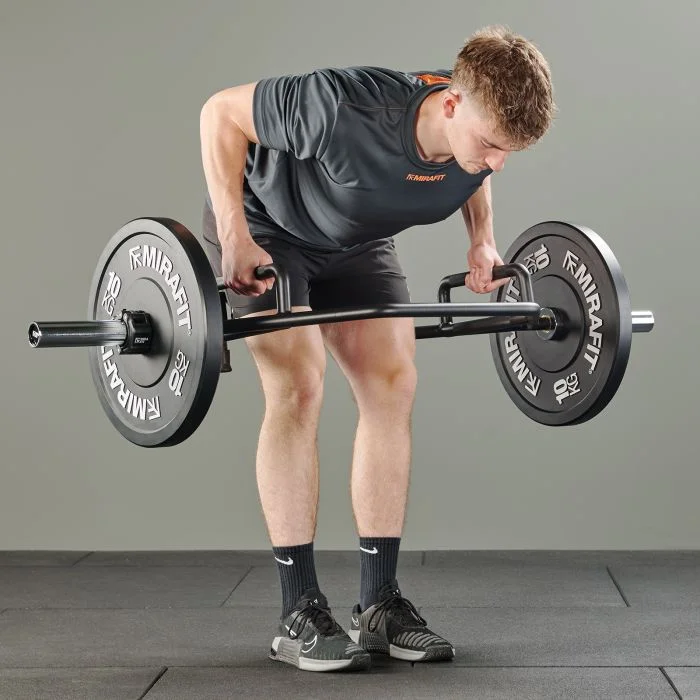
- Trap Bar Deadlift
More quad involvement, slightly less erector loading, but easier on the lower back.
Where to Place Deadlifts in a Back Day
Deadlifts should generally be placed:
At the Start of the Workout
When your:
- erectors
- hips
- grip
- CNS
are fresh and able to stabilize safely.
Follow Deadlifts With:
- RDLs
- Rows
- Pulldowns
- Back extensions
Deadlifts + an erector-focused finisher (like hyperextensions) is an excellent mass-building combination.
Deadlifts vs. RDLs — Which Builds More Muscle?
Bodybuilders often ask whether the deadlift or the RDL is the superior hypertrophy movement.
Deadlift Advantages
- Builds more total-body strength
- Overloads erectors heavier
- Thickens traps and upper back
- Increases overall training capacity
RDL Advantages
- More hamstring stretch tension
- Better glute hypertrophy
- Cleaner, simpler technique
- Lower fatigue cost
- Higher time under tension
Conclusion
For bodybuilders focusing on lower-back hypertrophy, the conventional deadlift should be supplemental, not the main movement.
Your ideal combo is:
Deadlift (heavy) + RDL (moderate volume)
Who Should Probably Avoid Heavy Deadlifts?
Though deadlifts are iconic, they are not mandatory. Lifters who may benefit more from variations include:
- Individuals with long femurs + short torsos
- Lifters with chronic lumbar issues
- Very tall lifters
- Bodybuilders already doing heavy RDLs, rack pulls, and back extensions
If deadlifts beat you up more than they build you — swap them for RDLs or trap bar deadlifts.
Practical Takeaways for Lifters of All Levels
For Beginners
- Learn the hinge pattern with RDLs first
- Start with straps once the weight gets challenging
- Focus on form over load
For Intermediate Lifters
- Use the deadlift as an overload tool
- Pair it with rows and hyperextensions
- Deadlift every 1–2 weeks
For Advanced Bodybuilders
- Heavy deadlifts are optional
- Often a combination of RDL + back extension provides superior hypertrophy with less fatigue
- Use deadlifts strategically, not weekly
Final Word: The Deadlift’s True Role in a Bodybuilder’s Program
The deadlift is not the best exercise for lat isolation.
It’s not the best for upper-back width.
It’s not the best for glute hypertrophy.
But there is one thing no other exercise can replicate:
The barbell deadlift builds lower-back thickness and total posterior-chain density like nothing else on earth.
When used alongside RDLs, rows, pulldowns, extensions, and machine work, it becomes a powerful backbone (pun intended) of a complete bodybuilding program.
If you program it smart, it will transform your erectors from “functional” to “dragon spine” — thick, hard ridges that stand out even when you’re relaxed.