
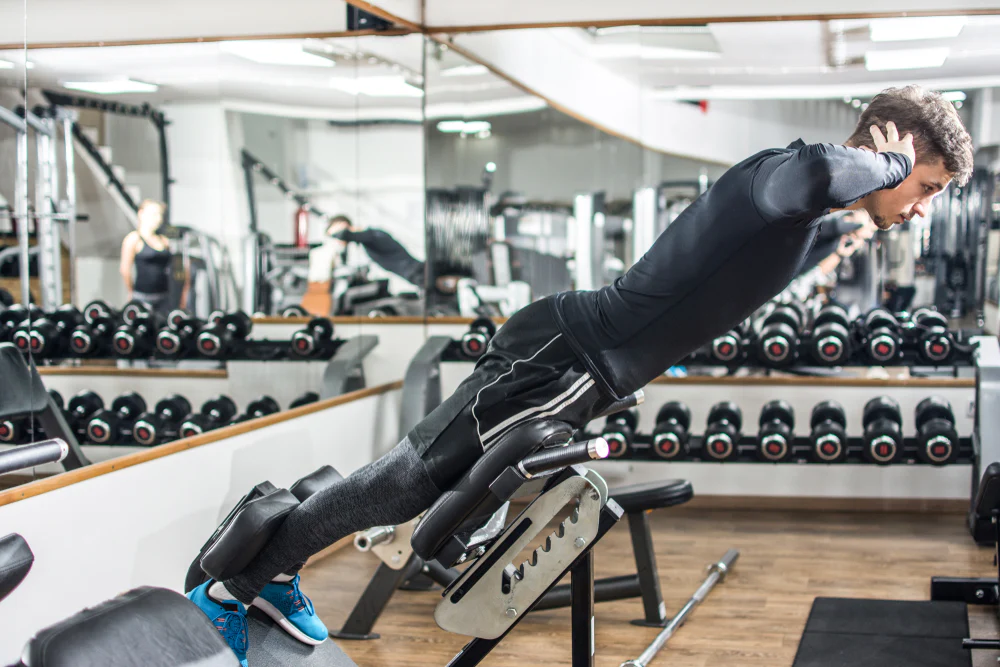
Lower-Back Exercise: Back Extension (45° or Horizontal Hyperextension)
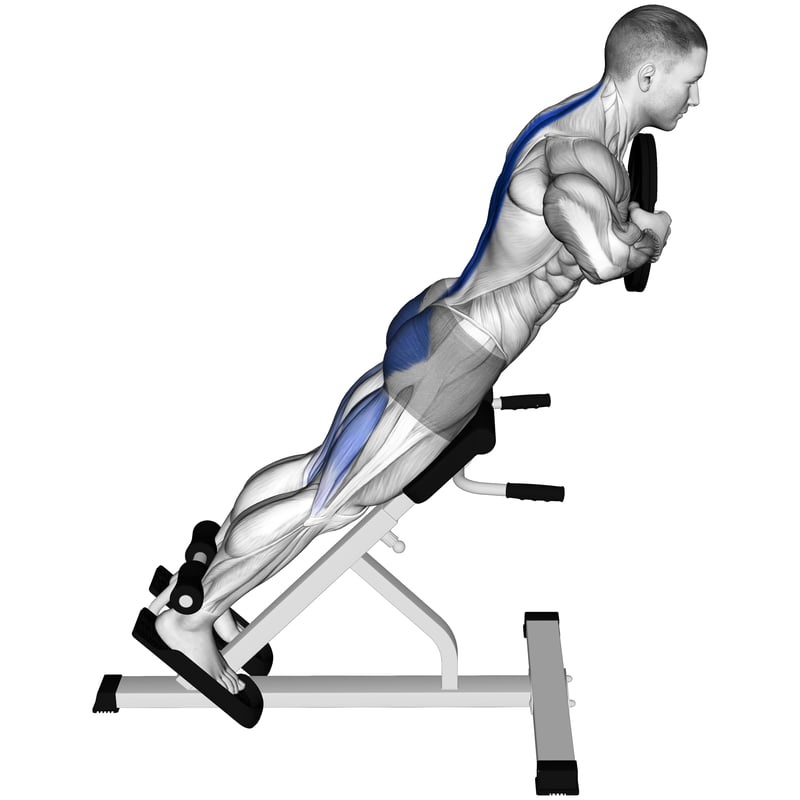
Primary Focus: Lower Back (Erector Spinae)
Secondary Focus: Glutes, Hamstrings, Upper Back Stabilizers
Category: Lower Back / Posterior Chain Strength
The Back Extension — performed on either a 45° hyperextension bench or a horizontal GHD-style bench — is one of the most effective direct-isolation movements for strengthening the lower back.
Unlike deadlifts and RDLs, which load the posterior chain through heavy hip hinging, the back extension allows you to target the erector spinae with precision while keeping systemic fatigue low.
Bodybuilders use it as a high-rep finisher, powerlifters use it to build a thicker spinal column for deadlifts and squats, and athletes use it to bulletproof their lumbar region.
Because it stresses the spinal erectors through controlled flexion and extension, it builds true functional strength — not just mass.
The movement can be progressed with bodyweight, plate resistance, dumbbells, barbells, or bands. The key is controlled execution: no swinging, no “cranking,” and no jerking. When done correctly, it’s one of the best long-term investments for lumbar health and posterior chain development
Muscles Worked
Primary
- Erector Spinae (Lower Back)
Responsible for spinal extension and stability — the main driver of the exercise.
Secondary
- Gluteus Maximus — hip extension support
- Hamstrings — assist with hip extension
- Upper Back (Traps, Rhomboids) — stabilizing the torso at the top
- Core (Obliques, Transverse Abdominis) — resisting rotation and collapse
You can bias muscular emphasis depending on technique:
- More lower back focus: flex and extend through the spine
- More glute/hamstring focus: keep the spine neutral and hinge at the hip
This versatility makes it an invaluable movement in any program.
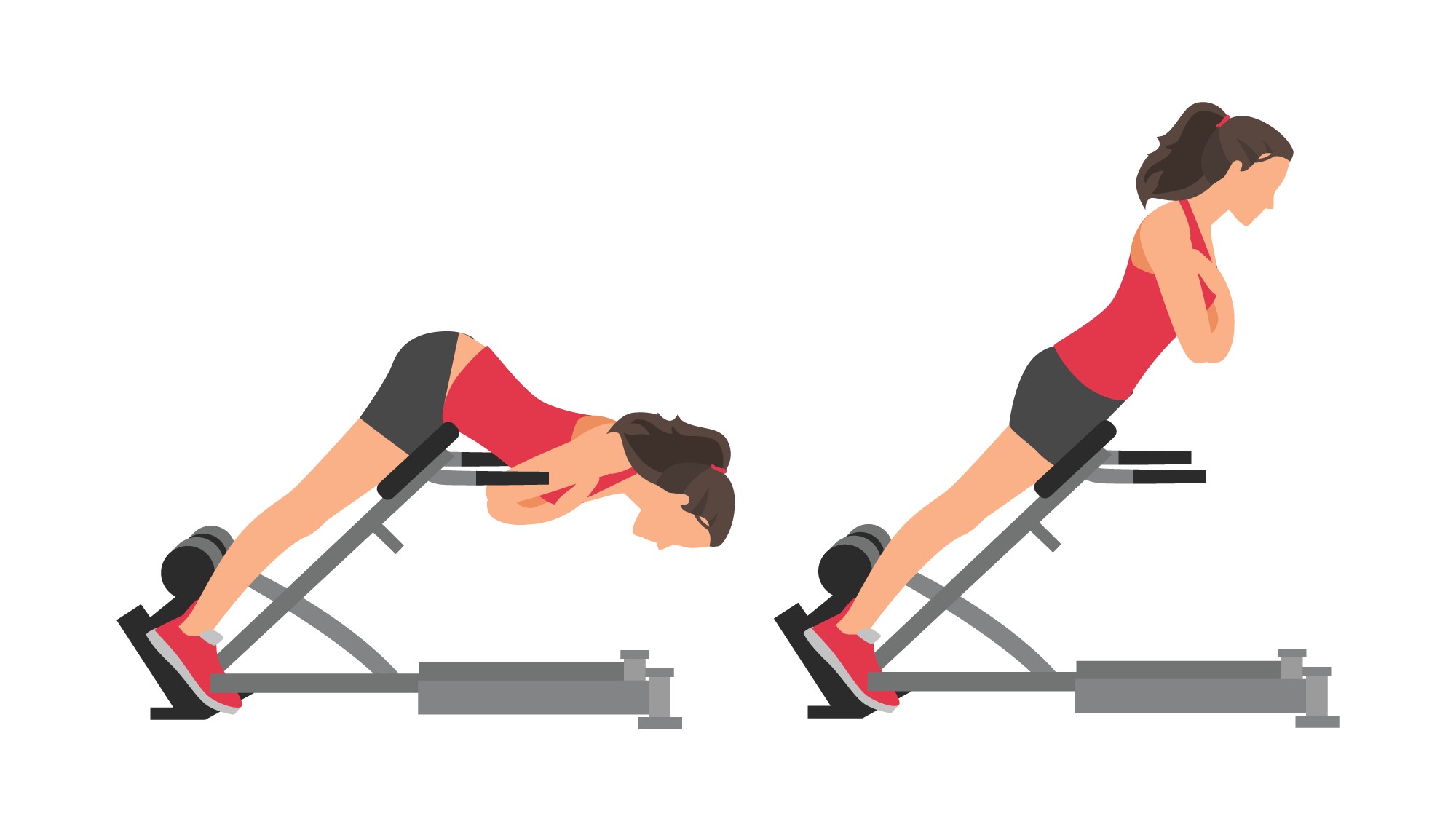
How to Perform the Back Extension (Perfect Form)
- Set Your Hip Position
Adjust the pad so the top of the pad sits just below your hip crease.
- Too high → limits movement and reduces lumbar involvement
- Too low → adds unnecessary pressure to the thighs
Goal: hips free to hinge.
- Start in a Straight-Line Plank Position
- Ankles locked
- Torso straight
- Chin tucked
- Shoulders slightly retracted
Imagine your body forming a rigid board.
- Lower with Control
Slowly descend by bending at the hips (or through spinal flexion if targeting lower back deeply).
- Go down until you feel a stretch in the hamstrings
- Keep the movement smooth — no collapsing
Tempo guideline: 2–3 seconds down.
- Raise Up Through the Posterior Chain
Reverse the motion by contracting:
- Erector spinae
- Glutes
- Hamstrings
Rise until your body is back in a straight line — not hyperextended.
Do not arch excessively.
This takes stress off the lower back and shifts it to the spine’s passive tissues.
- Squeeze at the Top
Pause for 1–2 seconds to reinforce muscular tension.
- Repeat With Strict Control
High-quality reps are more important than load.
Back Extension Technique Variations (Based on Your Goal)
- Lower Back Emphasis
- Slight rounding of upper back during descent
- Flex spine → extend spine
- Shorter range of motion
- Light to moderate loading
This isolates the erectors extremely well.
- Glute-Ham Bias
- Keep the spine neutral
- Pure hip hinge
- Push hips into pad at the top
Feels more like a Romanian Deadlift.
- Upper-Back Support
- Arms crossed over chest
- Shoulders retracted
- Maintain thoracic tension
Builds upper-back stability essential for deadlifts and squats.
Common Mistakes & How to Fix Them
❌ Hyperextending at the Top
Why it’s bad: loads spine through passive structures instead of muscle.
Fix: stop when your torso is straight.
❌ Rushing the Eccentric
Why it’s bad: removes the tension that builds size and strength.
Fix: slow, controlled descent.
❌ Setting the Pad Too High
Result: awkward movement and reduced ROM.
Fix: adjust pad below hip crease.
❌ Using Momentum or Swinging
Fix: reset tension every rep.
❌ Lifting Too Heavy Too Soon
Progress with technique and controlled reps first.
Programming Guidelines
For Muscle Growth (Hypertrophy)
- Sets: 3–5
- Reps: 10–20
- Tempo: slow and controlled
- Rest: 60–90 seconds
- Load: bodyweight → plate → dumbbell progression
High reps = best hypertrophic stimulus for spinal erectors.
For Strength & Posterior Chain Development
- Sets: 4–6
- Reps: 6–10
- Load: moderate
- Rest: 2 minutes
- Variation: weighted hip-hinge style
For Lower-Back Health / Prehab
- Sets: 2–3
- Reps: 15–25
- Load: very light
- Goal: endurance + activation
High-rep erector conditioning has strong evidence for preventing lower-back fatigue injuries.
Progression Options
Bodyweight
Start here for learning proper technique.
Holding a Plate or Dumbbell
Most common progression once 20+ reps become easy.
Barbell Back Extensions
Bar across shoulders — very advanced, lower back heavy.
Banded Back Extensions
Great for adding peak contraction tension.
Weighted Vest
Evenly distributed load and keeps hands free.
Who Should Be Using Back Extensions?
Bodybuilders
- Isolate lower back without systemic fatigue
- Adds thickness to the lumbar region
- Ensures balanced posterior chain growth
Powerlifters
- Builds spinal rigidity for squats and deadlifts
- Helps prevent rounding during heavy pulls
- Great high-rep accessory on volume days
Athletes
- Enhances posterior chain endurance
- Improves hip extension strength
- Supports sprinting and jumping mechanics
Anyone With a Weak Lower Back
Back extensions are one of the safest and most progressive ways to strengthen the lumbar region.
Why This Exercise Matters
The lower back is involved in every major compound lift you do. When your erector spinae are weak, everything suffers:
- Deadlift lockout
- Squat stability
- Rowing strength
- Posterior chain power
- Even posture
Back extensions build the kind of deep, structural strength that carries over everywhere.
Exercise Summary
The Back Extension (hyperextension) is one of the best direct lower-back builders available.
It strengthens the erector spinae, glutes, and hamstrings while improving spinal stability and injury resilience.
Whether you’re bodybuilding, powerlifting, or just training for long-term strength and health, this movement deserves a permanent place in your program.
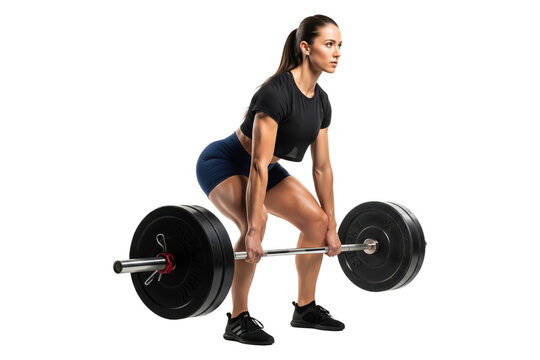

 is one of the best direct lower-back builders available.It strengthens the erector spinae, glutes)