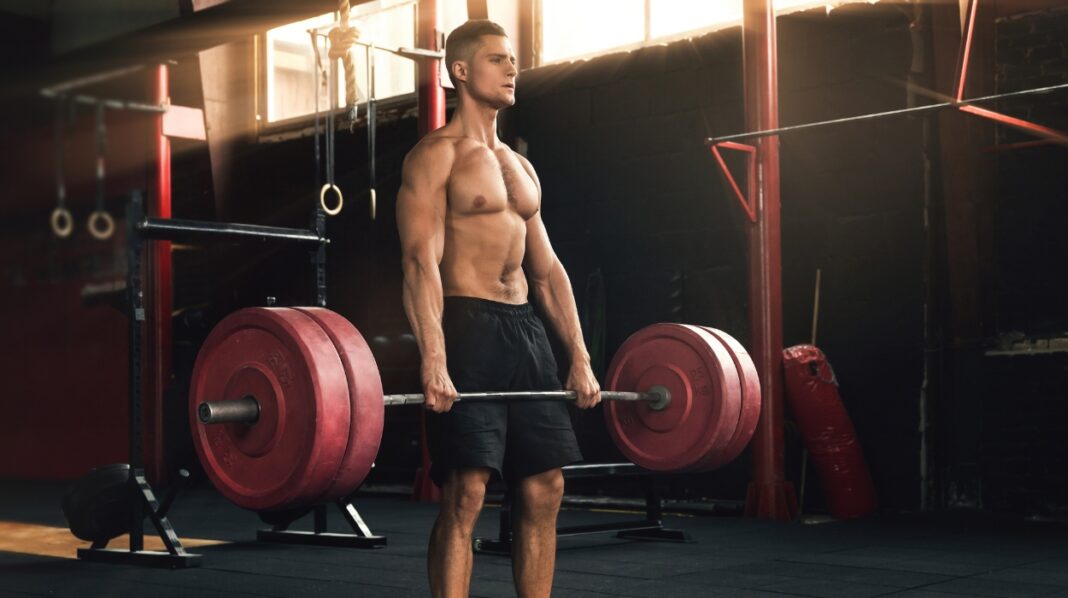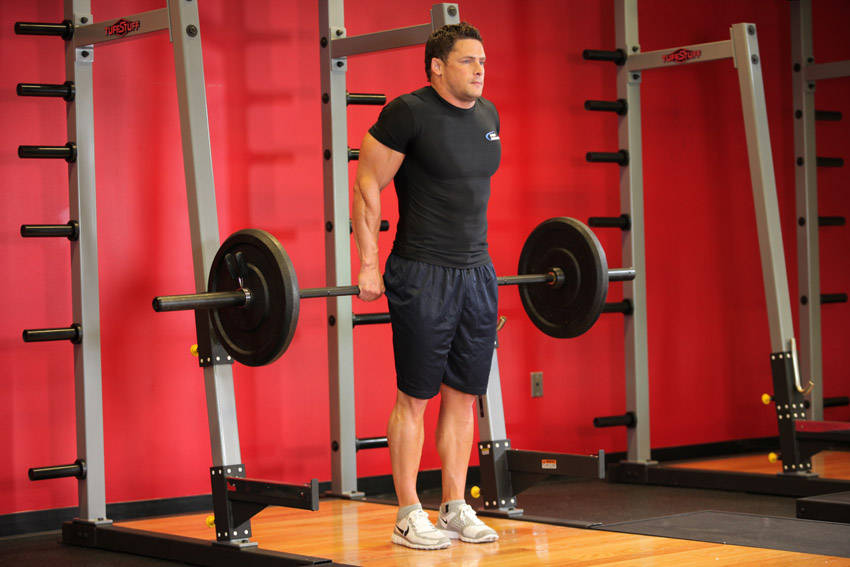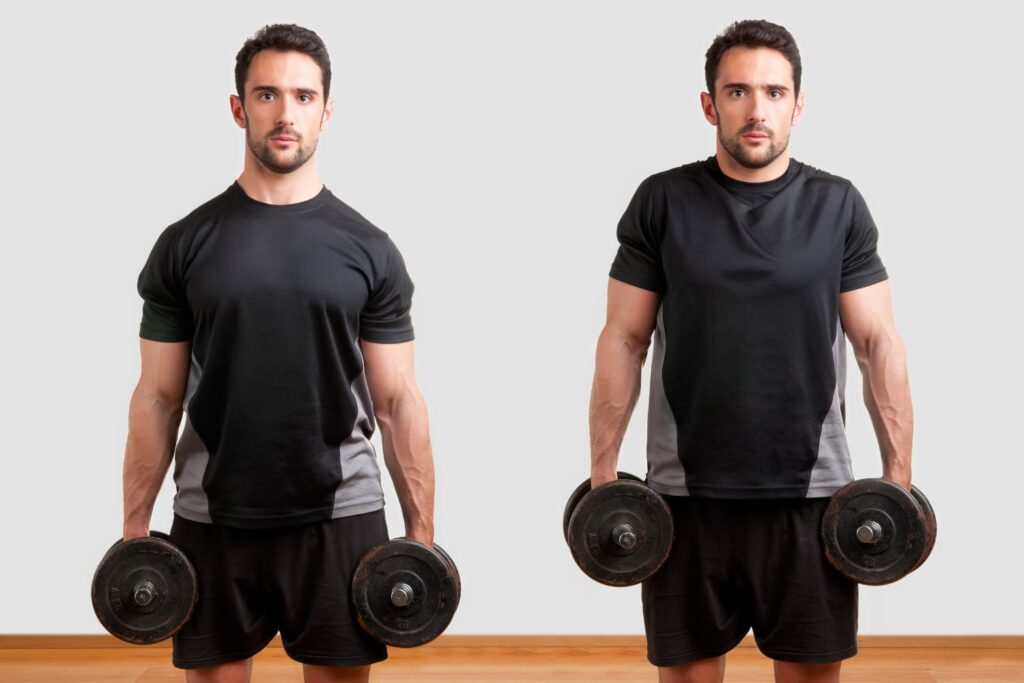
Dumbbell Shrug — Complete Bodybuilding Traps Mass Builder
The most joint-friendly trap builder for upper-trap thickness, density, and peak development.
Overview: Why the Dumbbell Shrug Belongs in Every Traps Program
If the barbell shrug is the heavy, brutal strength-builder, the dumbbell shrug is the refined, precision-focused trap developer that allows bodybuilders to:
- Train each side independently
- Move naturally through their structure
- Build a symmetrical trap peak
- Avoid joint stress and awkward bar paths
- Increase time under tension more effectively than barbell work
The dumbbell shrug gives you something barbells struggle with: freedom of motion.
With dumbbells, your shoulders can roll slightly back, up, and “toward your ears” in a natural, biomechanically comfortable arc. This produces a deeper contraction, fuller range of motion, and significantly better muscle recruitment of the upper trapezius.
This exercise is also elite for bodybuilding pump training, because you can increase control, slow the tempo, and chase constant tension without fighting a bar positioned in front of your thighs.
If your goal is dense, mountainous traps that add power to your physique in every pose and angle, dumbbell shrugs should be a cornerstone movement.
Primary Muscles Worked
Main Target
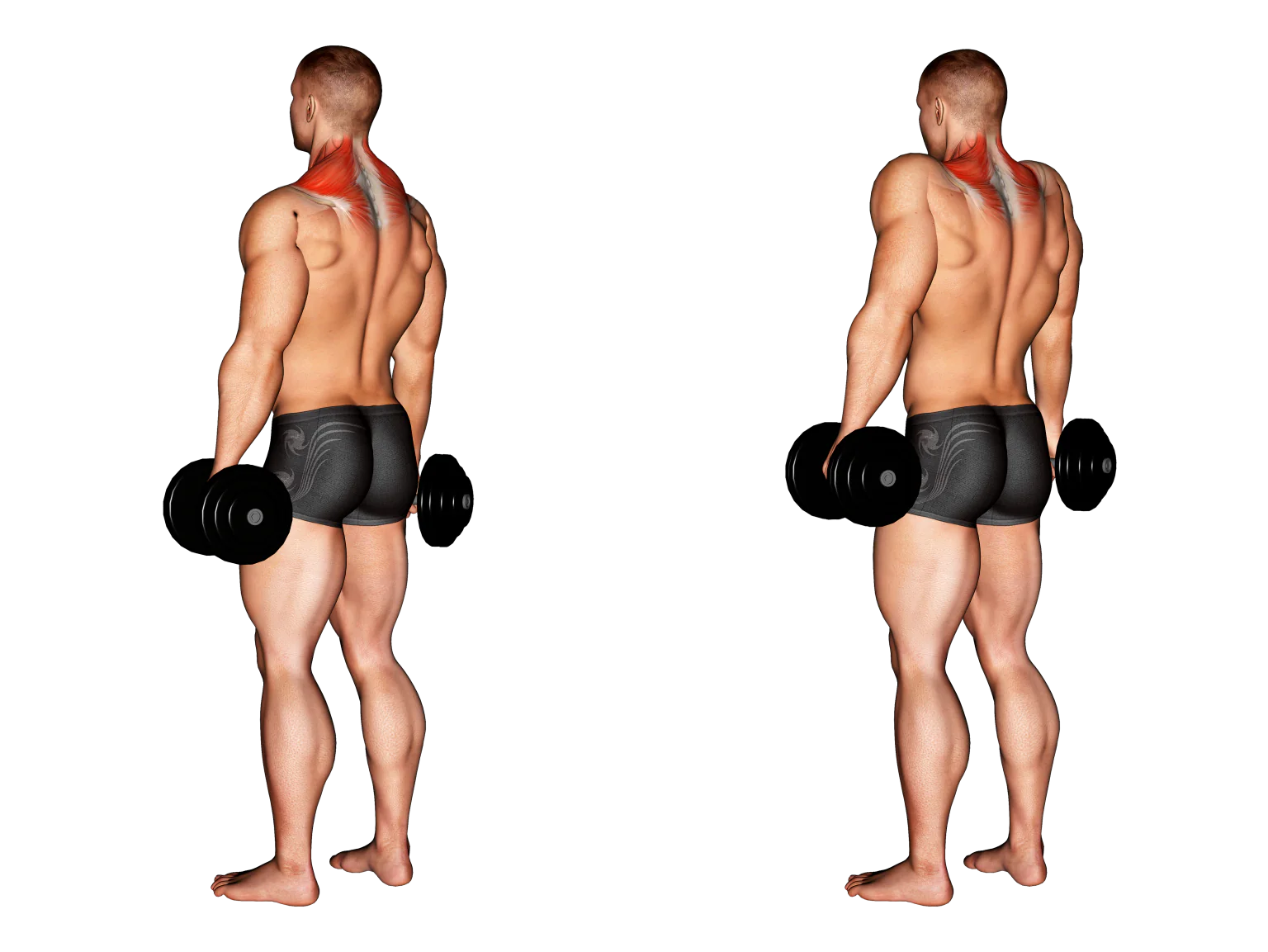
- Upper trapezius (upper traps) — The thick, rounded mass from your shoulders to your neck.
Secondary Muscles
- Middle trapezius
- Levator scapulae
- Rhomboids
- Forearms (grip strength)
- Core (stabilization under heavy load)
While dumbbell shrugs are an upper-trap superstar, the natural retraction of the shoulder blades also gives the mid-back a strong secondary stimulus.
How to Perform the Dumbbell Shrug (Bodybuilder’s Step-by-Step Guide)
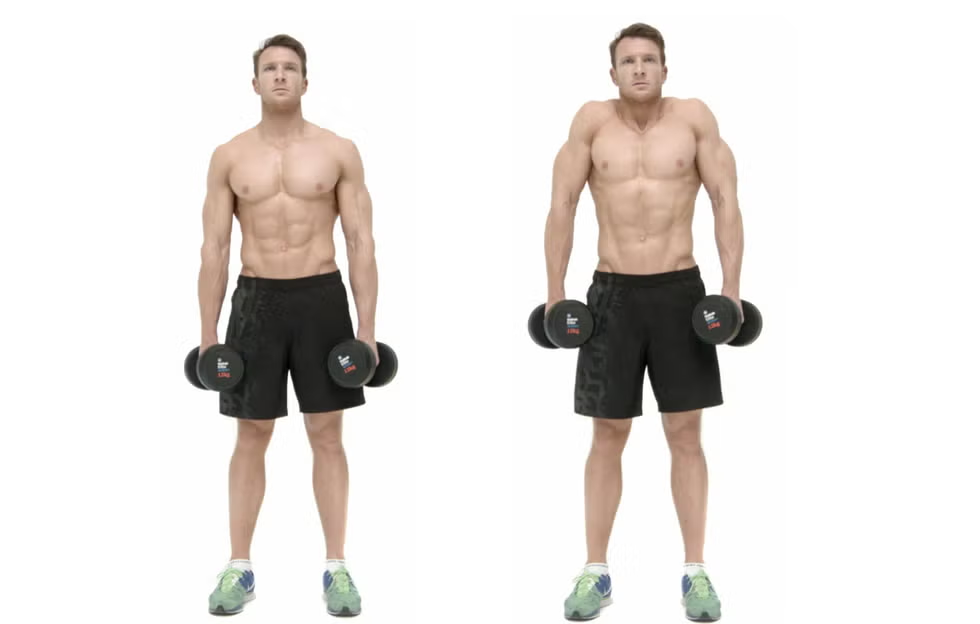
- Set Up and Stance
- Grab a pair of dumbbells heavy enough to challenge you but light enough to pull smoothly.
- Stand tall with feet hip-width apart.
- Keep a neutral spine and let the dumbbells hang at your sides.
Key cue: Think “long arms, tall posture.” No leaning forward.
- Initiate the Shrug
- Pull your shoulders straight upward as if trying to touch your ears.
- Lead with the traps — not the arms, not the biceps.
Key cue: Imagine you’re lifting your shoulders vertically — not rolling them.
- Squeeze at the Top
- Hold the top position for 1–2 seconds.
- Think of “pinching your traps against your neck.”
Key cue: If you can’t pause, the dumbbells are too heavy.
- Controlled Lower
- Lower the dumbbells slowly over 2–3 seconds.
- Keep tension on the traps; don’t let the weights free-fall.
Key cue: The lowering phase is half the stimulus — treat it like work.
- Reset and Repeat
- Let the traps stretch fully at the bottom without slumping forward.
- Repeat through your full rep range with consistent tempo.
Biomechanics Breakdown: What Makes the Dumbbell Shrug So Effective?
Bodybuilders love this movement because the dumbbell shrug aligns perfectly with the upper traps’ primary role: elevation of the scapula.
Dumbbells let the shoulders move:
- Upward
- Slightly outward or inward (depending on your structure)
- Slightly back
This creates a more natural shrugging arc, which increases comfort and muscle activation.
Compared to the barbell shrug:
Pros of Dumbbells
- Greater range of motion
- Less wrist irritation
- No bar obstruction
- Side-loaded resistance (better trap alignment)
- Perfect for constant tension training
- Allows unilateral corrections
Cons
- Harder to load extremely heavy
- Requires strong grip strength (unless straps are used)
But for pure bodybuilding hypertrophy, dumbbells often deliver a superior trap contraction and a fuller pump.
Common Mistakes (And How to Fix Them)
❌ Mistake #1: Rolling the shoulders
This forces rotation through the shoulder joint, adding no benefit and increasing injury risk.
Fix:
Move straight upward. No circles. No “roll back.”
❌ Mistake #2: Using weights far too heavy
The most common sin in trap training: tiny reps with zero elevation.
Fix:
Choose a weight that lets you get at least 8–10 full shrug reps with pauses.
❌ Mistake #3: Bending the elbows
This turns the shrug into an upright row hybrid.
Fix:
Think “long, dead-straight arms.”
❌ Mistake #4: Leaning forward
This reduces trap activation and overloads the lower back.
Fix:
Stay tall.
Chest up.
Core braced.
❌ Mistake #5: Rushing the reps
Shrugs reward time under tension, not speed.
Fix:
Use a 1–2 second hold at the top and a controlled 2–3 second descent.
Training Strategies for Maximum Trap Growth
- Heavy Straight Sets
4 × 8–12 heavy, controlled reps
Ideal for building thick trap density.
- High-Rep Pump Sets
3 × 15–25
Shorter rest. More burn. More blood flow.
This gives the traps insane metabolic stress.
- Tempo Shrugs
- 3 seconds up
- 1 second hold
- 3 seconds down
Excellent for sculpting the upper-trap peak.
- Rest–Pause Shrugs
- Perform 12–15 reps
- Rest 20 seconds
- Perform 6–8
- Rest 20 seconds
- Perform 4–6
Upper traps respond extremely well to this type of training.
- Dumbbell Shrug + Upright Row Superset
Great for developing both the trap height and width.
Combo:
- 12 shrugs
- 12 upright rows
Rest 90 seconds.
Progression Methods That Build Monster Traps
- Add 2.5–5 lb per dumbbell each week if possible
- Increase rep targets (8–12 → 12–15 → 15–20)
- Improve pause duration (1 second → 2–3 seconds)
- Increase total weekly volume
- Introduce intensity techniques, such as:
- Drop sets
- Partial reps after failure
- Isometric holds to finish the set
Your traps are one of the strongest, most fatigue-resistant muscles in the body — they often grow best with high volume + high frequency.
Programming the Dumbbell Shrug
Bodybuilding Split
Traps Day or Shoulders + Traps Day
- Heavy Shrugs
- Upright Rows
- Face Pulls or rear-delt work
Push/Pull/Legs
Pull Day (toward the end)
Shrugs after rows and pull-downs.
Upper/Lower Split
Upper Day
One heavy shrug variation per session works extremely well.
Frequency
2× per week is optimal for most lifters.
Who Should Use Dumbbell Shrugs?
Great For:
- Bodybuilders seeking dense upper traps
- Physique athletes needing a strong back pose
- Beginners (easy to learn)
- Lifters with shoulder mobility limitations
- Anyone wanting to avoid barbell wrist strain
- People training at home or limited-equipment gyms
Not Ideal For:
- Severe grip-strength issues (unless using straps)
- People seeking maximal trap overload (barbell may allow heavier loading)
Variations You Can Use
- Slow-Tempo Dumbbell Shrug
Best for constant tension and control.
- Dumbbell Upright Shrug (slight backward lean)
Helps emphasize upper–middle traps.
- Kettlebell Shrug
Allows a bit more natural swing and deeper stretch.
- Unilateral Shrug
Helps fix imbalances and improves side-to-side symmetry.
Practical Takeaways
- Use dumbbell shrugs when you want peak contraction, symmetry, and joint-friendly trap development.
- Don’t ego lift — traps respond better to clean reps and long tension.
- Use straps if needed; the goal is trap stimulation, not grip failure.
- Pair heavy sets with high-rep burn sets for complete development.
- Make shrugs a weekly staple if your goal is a mountainous upper back.