Cable Pull-Through: Guide to Glute & Lower-Back Growth
The Cable Pull-Through is one of the most underrated posterior-chain exercises in bodybuilding and strength training.
While it looks simple — holding a rope and hinging at the hips — it is one of the most effective tools for targeting the glutes, hamstrings, and lower-back erectors without loading the spine heavily.
That makes it ideal for lifters who want hypertrophy and technique development without the fatigue cost of deadlifts or RDLs.
For bodybuilders, the Cable Pull-Through offers several advantages:
- It teaches perfect hip hinge mechanics, which carry over to deadlifts, RDLs, good mornings, and rack pulls.
- It hits the glutes directly in their fully lengthened position, creating deep hypertrophic tension.
- It targets the lower-back isometrically in a stable, joint-friendly way.
- It delivers a glute pump with excellent mind–muscle connection.
- It allows high-volume training without crushing CNS recovery.
The cable pull-through may not be flashy or Instagram-sexy, but in terms of raw stimulus, glute development, and hinge technique, it is one of the most valuable accessory lifts in the entire posterior-chain library.
This is your complete guide — mechanics, mistakes, anatomy, programming, cues, and muscle-building strategy — written from the perspective of serious bodybuilding training.
Muscles Worked
Primary
- Gluteus Maximus
The glute max is the prime mover, creating hip extension. This exercise allows maximal lengthening under tension.
Secondary
- Hamstrings (especially the long head)
- Erector Spinae (lower-back isometric strength)
- Adductor Magnus (acts like a hip extensor during hinges)
Stabilizers
- Core bracing muscles
- Lats (holding the rope tight)
- Grip and forearms
Unlike deadlifts, the pull-through minimizes axial loading and instead maximizes horizontal loading, placing consistent tension on the glutes throughout the entire range of motion.
How to Perform the Cable Pull-Through (Step-by-Step)
Setup
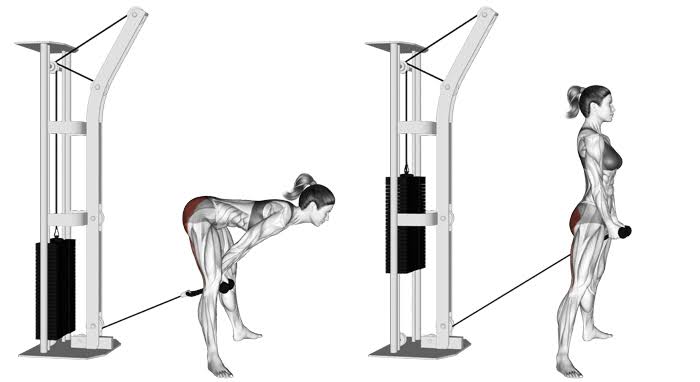
- Set a cable stack to its lowest height.
- Attach a rope handle.
- Stand facing away from the machine, straddling the rope between your legs.
- Take a step or two forward to create tension before starting.
Execution
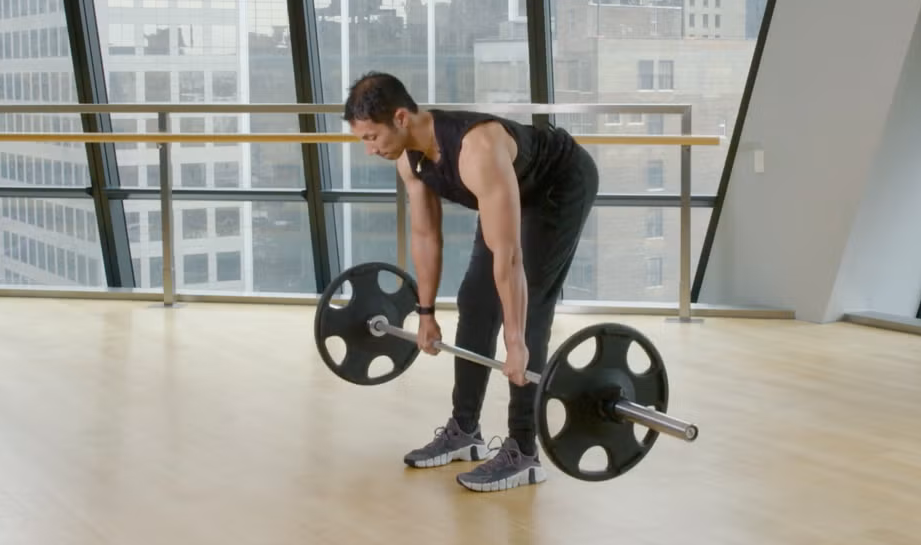
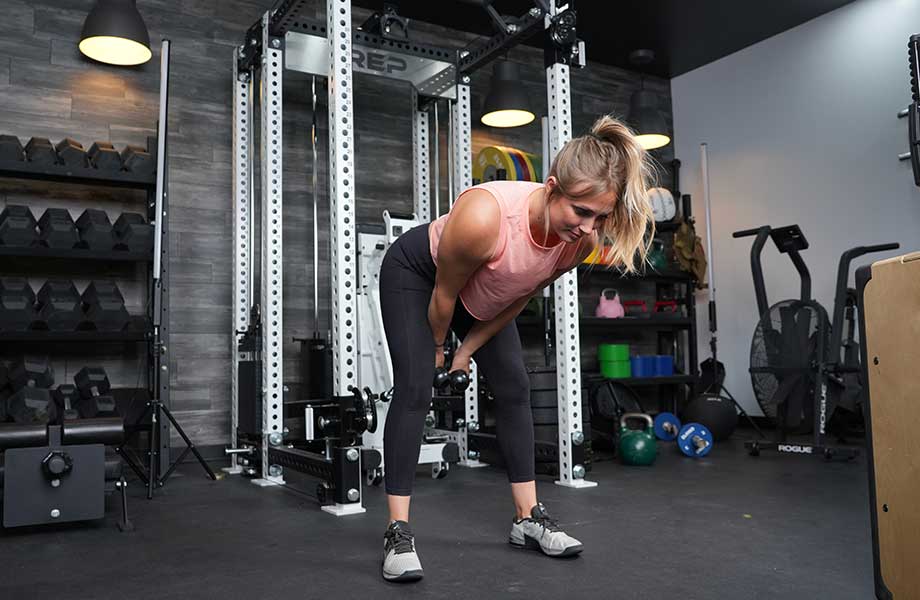
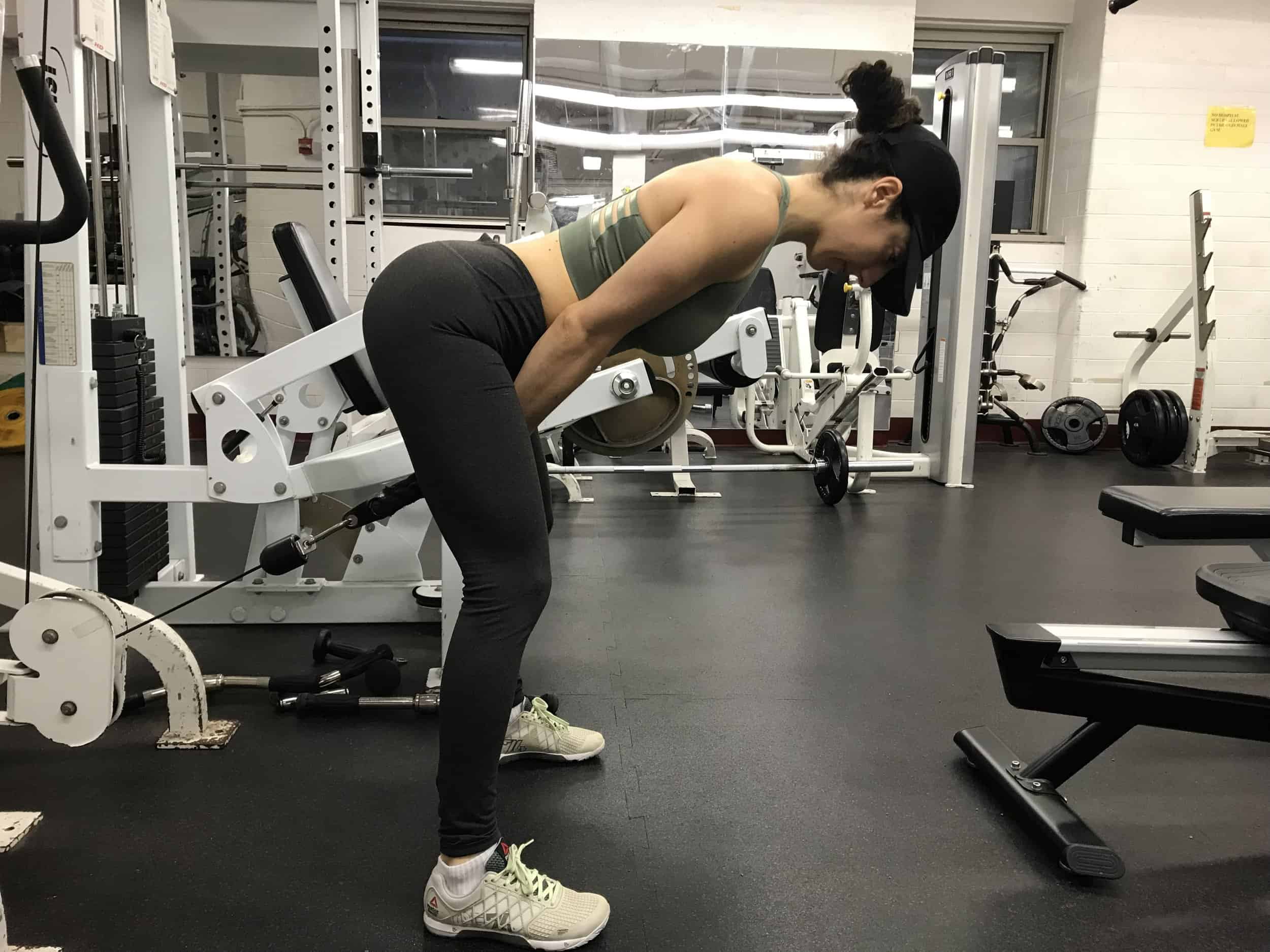
- Hinge Back
Push your hips backward while keeping your spine neutral and your shins relatively vertical.
Your torso lowers, your glutes stretch, and your hamstrings lengthen. - Reach Full Stretch
At the bottom, you should feel a deep posterior-chain tension — but zero rounding in the lower back. - Drive Hips Forward
Contract your glutes hard and push your hips through until you reach full hip extension.
Don’t lean back or hyperextend. Finish tall. - Repeat Smoothly
Keep constant tension throughout — the cable should never slack.
Optimal Technique Cues (Bodybuilder-Approved)
- “Push your hips back — don’t squat down.”
The cable pull-through is a hinge, not a squat. Knees bend slightly but remain mostly fixed.
- “Reach back with your hips, not your hands.”
Your upper body should move passively — your hips drive everything.
- “Crunch your glutes at the top like you’re trying to crack a walnut.”
This drill teaches strong lockouts for deadlifts and RDLs.
- “Keep your ribs down.”
Prevents lumbar extension and maintains abdominal tension.
- “Feel the stretch — don’t rush through it.”
The eccentric (lowering phase) is where the hypertrophy happens.
Common Mistakes and How to Fix Them
- Turning it into a squat
Bending the knees too much shifts emphasis away from the glutes.
Fix:
Keep knees slightly bent but locked into position; hinge instead.
- Hyperextending at the top
Leaning back overloads the lower back and kills glute tension.
Fix:
Finish tall with glutes tight and abs braced.
- Letting the cable drag you forward
If you’re too close to the machine or don’t brace, you’ll lose control.
Fix:
Walk out an extra step and anchor your feet.
- Rounding your lower back
This shortens the glutes and reduces tension.
Fix:
Stay long through your spine and think “chest proud, ribs down.”
- Using too much weight
Turning the pull-through into a momentum exercise kills results.
Fix:
Use a weight you can feel, not just move.
Why Bodybuilders Should Use Cable Pull-Throughs
- They Train the Glutes in the Lengthened Position
This is arguably the #1 mechanism of hypertrophy.
Pull-throughs stretch the glutes more safely than heavy RDLs.
- Zero Axial Loading Means Better Recovery
You can hammer high volume without crushing your lower back or CNS.
- Perfect Hip Hinge Practice
Every bodybuilder benefits from better hinge mechanics — they translate directly to:
- RDL strength
- Deadlift lockout
- Good mornings
- Rack pulls
- Hip thrusts
- They’re Lower-Back Friendly Yet Still Strengthen the Erectors
Because the spine stays neutral while resisting forward pull, this exercise strengthens:
- lower-back endurance
- static bracing capability
- anti-flexion strength
- They Provide High Tension with Constant Cable Resistance
Cables provide smooth tension — no sticking points, no momentum.
Programming for Maximum Hypertrophy
Sets & Reps
- 3–5 sets
- 10–20 reps (hypertrophy sweet spot)
High reps typically work best due to the movement’s tension profile and glute pump potential.
Tempo
- 2–3 seconds down (eccentric)
- 1 second pause in stretch
- Explosive hip extension
Rest Times
- 60–90 seconds between sets
When to Place It in Your Training?
Best placed:
- After your heavy hip-hinge (RDL, deadlift, good morning)
- As a glute-focused accessory
- In a pump finisher superset
- On lower-back or glute hypertrophy days
Great Pairing Ideas
- Cable pull-through + hip thrust
- Cable pull-through + glute-focused leg press
- Cable pull-through + back extension
- Cable pull-through + RDL (light pump sets)
Variations to Consider
- Banded Pull-Through
Easier at the bottom, harder at the top — more lockout bias.
- Kettlebell Pull-Through (Bodyweight Anchor)
Rare but useful for teaching hip hinge mechanics.
- Heavy Low-Rep Pull-Throughs
More posterior-chain strength, but still low axial load.
- Kneeling Cable Pull-Through
Shortens range of motion but increases glute squeeze and mind–muscle connection.
Who Benefits Most from Cable Pull-Throughs?
Bodybuilders
For glute hypertrophy and hinge mastery with minimal fatigue.
Powerlifters
For strengthening the posterior chain without loading the spine.
Beginners
To learn hinge mechanics safely.
People with Lower-Back Sensitivities
Allows training of hip extension without heavy spinal loading.
Advanced Lifters
Perfect for:
- technique refinement
- high-volume glute work
- deep stretch-focused training
- fatigue-free posterior-chain sessions
How to Progress Over Time
- Increase range of motion
Step further out from the cable stack.
- Increase time under tension
Slower eccentrics = more hypertrophy.
- Increase load — but only once technique is perfect
You should never lose hinge control.
- Add volume
More sets, more reps, more weekly frequency.
Sample Bodybuilding Pull-Through Workouts
Hypertrophy-Focused
- 4 sets of 15–20
- 2-second stretch pause at bottom
Strength-Focused
- 3 sets of 8–10
- Heavy weight, perfect hinge
Glute Pump Finisher
- 1 set of 30–40 reps
- Constant tension, no resting
- Superset with cable kickbacks or frog pumps
Final Coaching Notes (Bodybuilder to Bodybuilder)
Cable pull-throughs will never replace RDLs or deadlifts — but they were never meant to. They fill an entirely different role:
- High tension
- Low axial fatigue
- Deep, safe glute stretch
- Perfectly stable spine
- Repeatable volume
- Ideal technique practice
If you’re building a physique and want thick erectors, full glutes, stable hips, and elite hinge mechanics, you need movements that train the posterior chain in multiple ways — not just heavy barbell pulls.
The cable pull-through belongs in every serious bodybuilding program as a:
- glute mass builder
- lower-back stabilizer
- hinge movement educator
- hypertrophy-friendly accessory
It’s simple. It’s effective. It’s joint-friendly.
And it delivers real results.