THE SEAL ROW
The Ultimate Strict Lat & Mid-Back Mass Builder (The Purest Row in Bodybuilding)
Introduction: The Strictest, Purest, Most Honest Row You’ll Ever Perform
When it comes to back training, most lifters think they’re rowing strictly.
They think they’re isolating their lats.
They think they’re removing momentum.
But the Seal Row exposes the truth.
No hips.
No torso rotation.
No English.
No cheating of any kind.
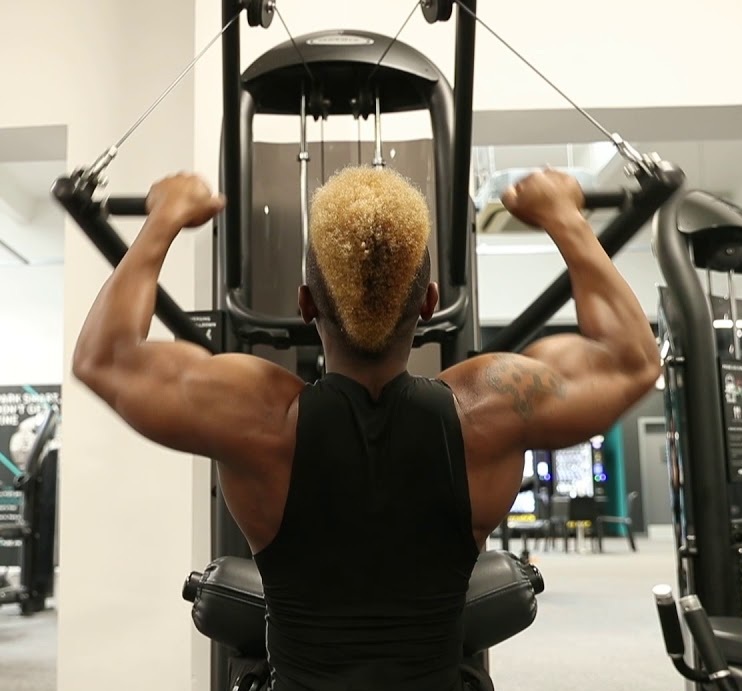
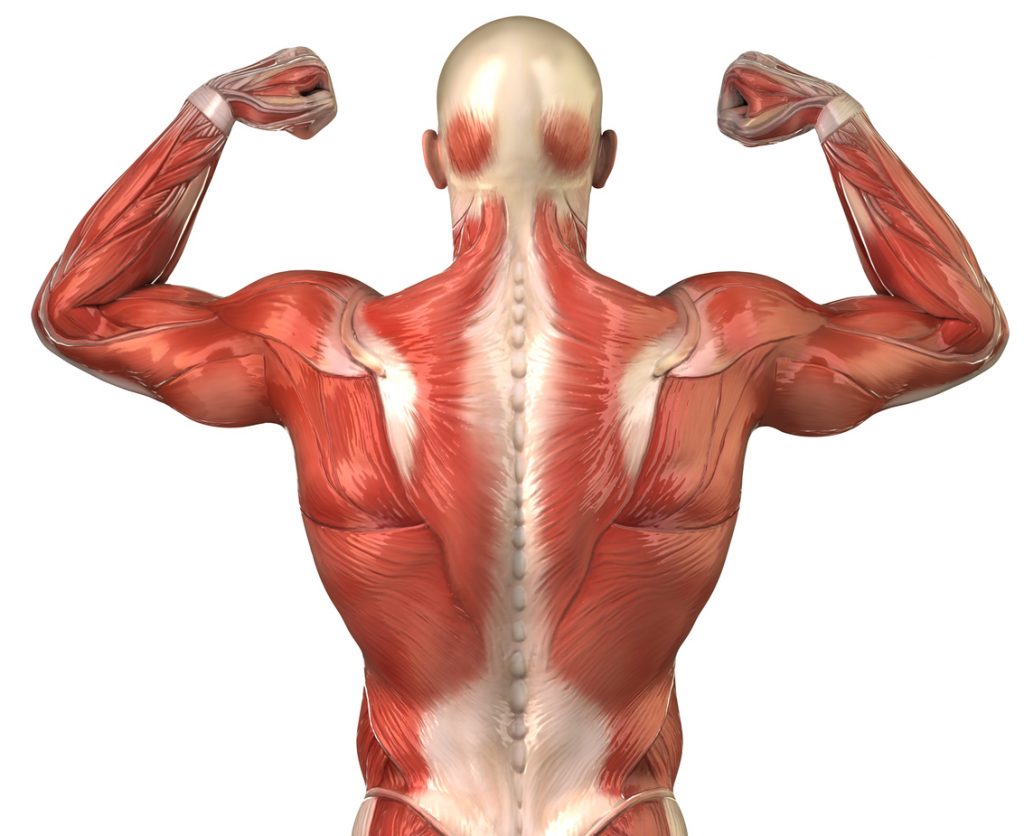
Just pure lats, traps, rhomboids, and rear delts doing the work — and nothing else.
The Seal Row is one of the most brutally honest, biomechanically pure back exercises in existence. It’s the great equalizer: you can’t hide behind momentum, ego lifting, or leverage. You either have the back strength… or you don’t.
Originally popular in strength-training circles and later adopted by bodybuilders seeking pure hypertrophy, the Seal Row has become a cult favorite because:
- It produces dramatic lat thickness
- It builds mid-back density
- It forces strict technique
- It eliminates spinal compression
- It strengthens the entire back without cheating
This article breaks down everything you need to know — technique, programming, muscle targets, variations, and practical tips for lifters of all levels.
What Makes the Seal Row Unique
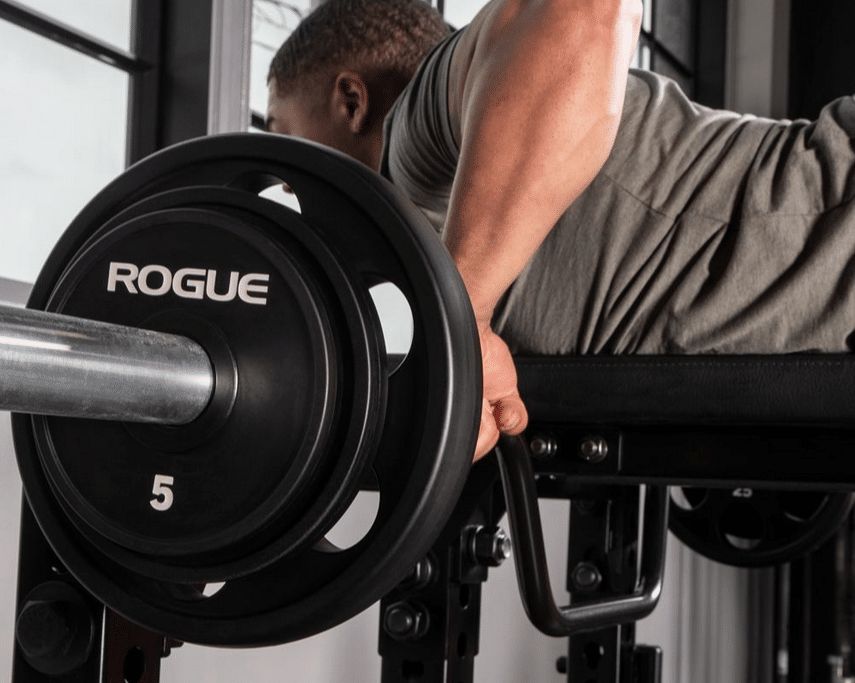
Unlike traditional rows, your chest is supported on a bench (usually elevated), which does three things:
- Completely eliminates momentum
You cannot swing the weight.
You cannot cheat.
You cannot use your lower back.
- Eliminates spinal loading
Your lumbar spine is free from:
- Compression
- Shear forces
- Erector fatigue
This makes the Seal Row a top choice for lifters with back issues.
- Forces full range of motion
Most rows get shortened as the weight gets heavy.
Not here.
Seal Rows produce:
- A complete stretch
- A long pull
- A full contraction
Even with moderate weight, the strictness makes it incredibly challenging.

Muscles Worked
Primary Muscles
- Lats (entire length, especially lower and mid-lats)
- Rhomboids
- Middle traps
Secondary Muscles
- Rear delts
- Lower traps
- Teres major & minor
- Biceps and brachialis
- Forearms
Because the torso is fixed, your back must lift every ounce of load. No compensation.
How to Perform the Seal Row (Step-by-Step Technique)
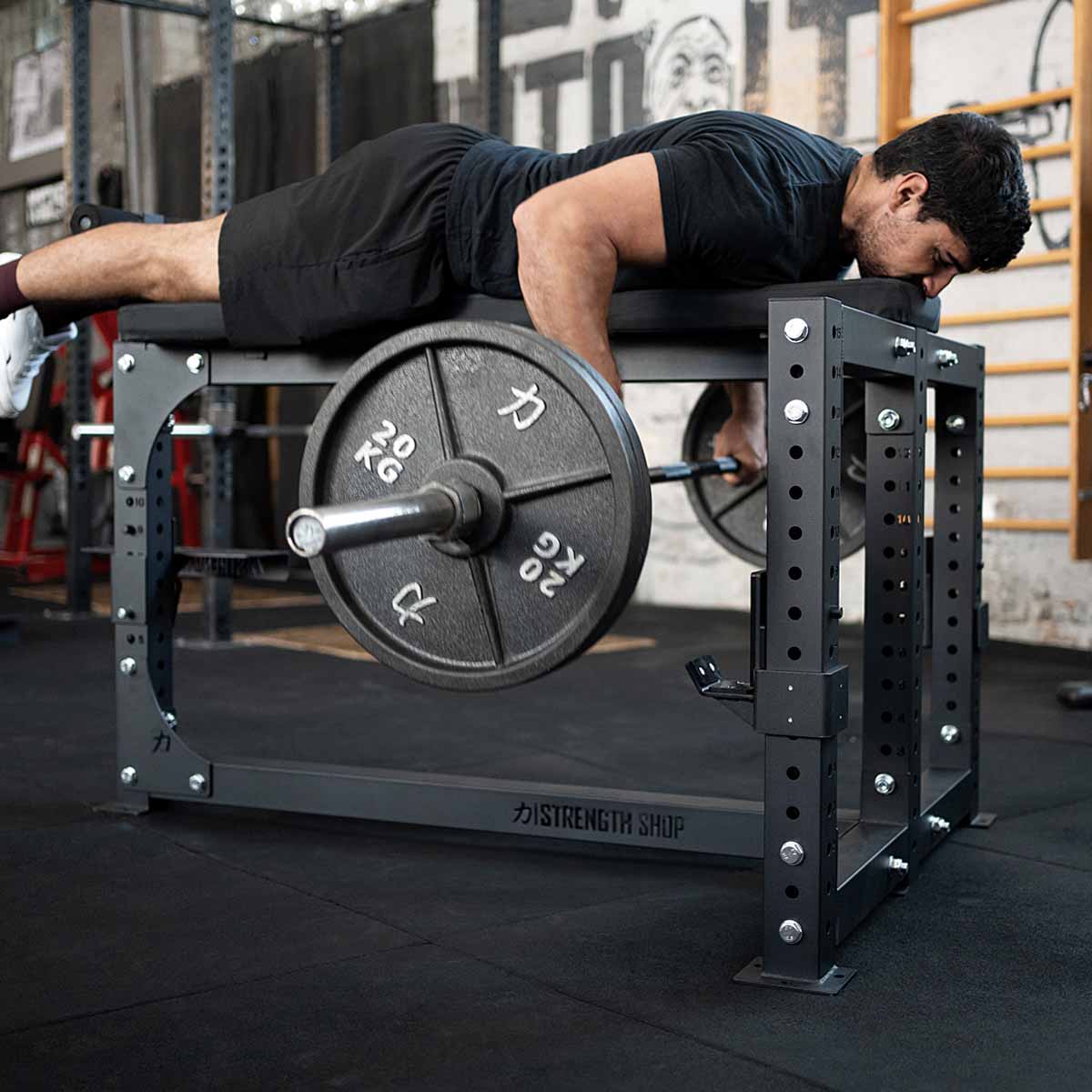
- Set up your bench height
A proper Seal Row requires:
- A flat bench elevated 18–24 inches off the floor
- Room for arms to fully extend beneath it
- Ideally, a barbell or dumbbells placed directly underneath
Commercial Seal Row benches exist, but regular benches can be elevated using sturdy boxes or platforms.
- Lie face down on the bench
Chest on the pad.
Hips flat.
Feet either:
- Straight behind you, or
- Bending the knees “frog-style” for stability
Keep your spine neutral and your core lightly braced.
- Grip the barbell
Use:
- Shoulder-width or slightly wider grip
- Overhand grip for upper-back emphasis
- Underhand grip for more lower-lat recruitment
Arms should hang fully extended.
- Row the bar toward the lower chest or upper stomach
This is key:
- Pull the bar slightly low, not directly to the mid-chest
- Pulling too high shifts the emphasis off the lats
- Pulling low maximizes lat contraction and lever efficiency
Imagine trying to “bend the bar around your ribs” as you contract.
- Pause and squeeze
Hold the top position for ½ to 1 full second, focusing on:
- Retracting the scapula
- Driving elbows “back and down”
- Squeezing the lats and mid-back hard
This is the hardest part of the lift.
- Slowly lower into a deep stretch
Let the shoulder blades:
- Protract
- Elevate slightly
- Fully stretch the lats
The stretch is one of the most hypertrophic aspects of this lift.
- Repeat for the desired reps
Expect to use 50–60% less weight than your typical bent-over row.
If you’re using heavy weight, you’re probably cheating — and cheating is impossible here.
Why Bodybuilders Should Love the Seal Row
✔ 1. Ultra-strict hypertrophy stimulus
It forces the lats and mid-back to work harder than nearly any other row.
✔ 2. Total isolation of the back
No lower back, no hips, no traps stealing the workload.
✔ 3. Full stretch + full squeeze = max growth
Rowing movements rarely provide both simultaneously.
✔ 4. Perfect for mind-muscle connection
Because your body is locked in place, all neural drive goes straight to the back.
✔ 5. Symmetry and balance builder
If one side is weaker, it immediately shows.
You can correct this with dumbbell or unilateral variations.
Seal Row vs Bent-Over Barbell Row
| Feature | Seal Row | Bent-Over Row |
| Lower back load | None | Very high |
| Momentum | Impossible | Common |
| Range of motion | Long & strict | Often shortened |
| Lat activation | High | Moderate |
| Mid-back activation | High | Very high |
| Strength carryover | Moderate | Very high |
| Hypertrophy focus | Exceptional | Strong, but technique-dependent |
Seal Rows are not meant to replace bent-over rows, but to complement them — especially during hypertrophy phases.
Common Mistakes & How to Fix Them
❌ Mistake 1 — Pulling too high onto the chest
This shifts tension to the upper traps.
👉 Fix: Pull to the upper stomach or lower chest.
❌ Mistake 2 — Using too much weight
If the bar doesn’t touch the bench at the top, the weight is too heavy.
👉 Fix: Reduce the load and prioritize full ROM.
❌ Mistake 3 — Bouncing off the bench
This defeats the purpose of the strict setup.
👉 Fix: Maintain tension; control the pull.
❌ Mistake 4 — Letting elbows flare too wide
This removes tension from the lats.
👉 Fix: Keep elbows at a 45–60° angle.
❌ Mistake 5 — Neglecting the stretch
The stretch creates major hypertrophy.
👉 Fix: Allow full protraction between reps.
Variations of the Seal Row
- Barbell Seal Row
Most common.
Best for progressive overload.
- Dumbbell Seal Row
Allows a freer range of motion and trains each side independently.
Great for:
- Imbalance correction
- Greater stretch
- Higher lat activation
- Neutral-Grip Handle Seal Row
Using a V-handle or neutral bar attachment reduces elbow flare and increases lat bias.
- Underhand Seal Row
Targets lower lats and improves lat sweep.
Simulates a “strict” Pendlay row but without torso movement.
- Wide-Grip Seal Row
Emphasizes upper back (traps, rhomboids, rear delts).
- Seal Row Machine
Fixed path, easier setup, excellent for muscle isolation.
Programming the Seal Row
Seal Rows work best as a primary or secondary back thickness exercise.
For Hypertrophy (Bodybuilding Style)
3–4 sets of 8–12 reps
- Slow negatives
- 1–2 sec pauses at the top
- Maximum contraction focus
For Lat Thickness
3–5 sets of 10–15 reps
- Underhand or neutral grip
- Pull lower and squeeze harder
For Strength-Building Back Work
3–5 sets of 5–8 reps
- Barbell
- Slightly explosive concentric
- Controlled eccentric
As a “Finisher” for Back Days
2 sets of 12–20 reps
- Light to moderate load
- Constant tension
- No momentum
Where Seal Rows Fit Into a Back Workout
Ideal Placement: Mid-Workout
After a heavy compound row or pull-down:
- Deadlift / Rack Pull / T-Bar Row
- Bent-Over Row or Pulldown
- Seal Row (primary strict lat & mid-back hypertrophy)
- Dumbbell row / machine row / pullovers
- Accessories (rear delts, traps, spinal erectors)
Seal Rows shine when your lower back is tired but your lats and mid-back still have fuel.
Who Should Use Seal Rows
✔ Bodybuilders
For strict, targeted hypertrophy.
✔ Strength Athletes
For improving mid-back strength without taxing the spine.
✔ Physique Competitors
For better back symmetry, density, and detail.
✔ Lifters with lower-back limitations
Because there’s no spinal compression or erector fatigue.
Who Should Avoid Seal Rows
- Those with shoulder impingement that worsens in prone positions
- Lifters who lack bench elevation to perform them safely
- Anyone relying solely on momentum-based rowing patterns
Benefits for the Lat Spread & Rear Double Biceps Poses
Seal Rows dramatically enhance:
- Lat thickness near the insertion
- Mid-lat width and depth
- Rhomboid fullness
- Upper-back separation
These qualities improve shape and dominance onstage.
Practical Takeaways for All Lifters
Beginners
- Start with dumbbells
- Focus on full ROM
- Learn lat engagement without compensation
Intermediates
- Add the barbell variation
- Increase reps to 10–15
- Prioritize control over load
Advanced Lifters
- Use Seal Rows as a strict complement to heavy rows
- Experiment with underhand or neutral-grip versions
- Push sets near failure for dense hypertrophy
Bodybuilders
- Use as a foundation for thickness cycles
- Combine with pulldowns for width + density synergy
Powerlifters
- Build upper-back stability without taxing the lower back
- Assist deadlift lockout strength
Conclusion: The Seal Row — The Back Builder You Didn’t Know You Needed
The Seal Row deserves far more attention than it gets.
It’s strict.
It’s unforgiving.
It’s brutally effective.
In a world full of ego lifting, swinging dumbbells, and sloppy row mechanics, the Seal Row restores purity and precision to back training.
If you want:
- Lat thickness
- Mid-back density
- Zero cheating
- Zero spinal fatigue
- Pure hypertrophy pressure
No back movement delivers like the Seal Row.
Add it to your program — and watch your back transform into a thicker, denser, more powerful version of itself.