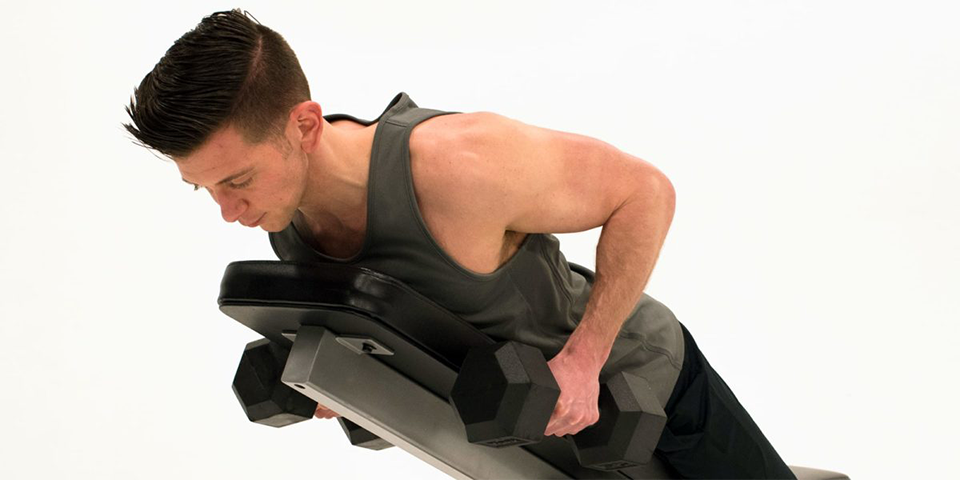
THE LAT-FOCUSED DUMBBELL ROW
The Ultimate One-Arm Row Variation for Maximum Lat Isolation, Deep Stretch, and Left–Right Symmetry
Among all rowing variations a bodybuilder performs, almost none are as misunderstood—or underutilized—as the lat-focused version of the single-arm dumbbell row.
Most lifters unknowingly turn this movement into an upper-back exercise, shrugging the shoulder, flaring the elbow, and rowing too high. That builds traps and rhomboids—not lats.
But when you shift into the lat-biased version, everything changes.
Suddenly, the dumbbell row becomes a pure lat isolation movement:
- A long, deep stretch that expands the lower lats
- A tight, sweeping contraction that brings the elbow toward the hip
- A mind–muscle connection that even machines struggle to replicate
- A brutally effective unilateral symmetry corrector
This is the row that creates the deep “lat pocket,” the cobra-like silhouette, the polished taper that separates good backs from elite bodybuilding backs.
It’s not loud, flashy, or ego-lift friendly—but it’s among the most productive back exercises in the physique-building arsenal.
In this guide, we’ll break down exactly how bodybuilders should perform the lat-focused dumbbell row, the biomechanics that make it unique, how to program it for mass, and the common mistakes that ruin the movement.
Whether you’re a beginner, intermediate, or advanced lifter, this is a row every serious physique athlete should master.
Muscles Worked (Lat-Biased Version)
Primary Target
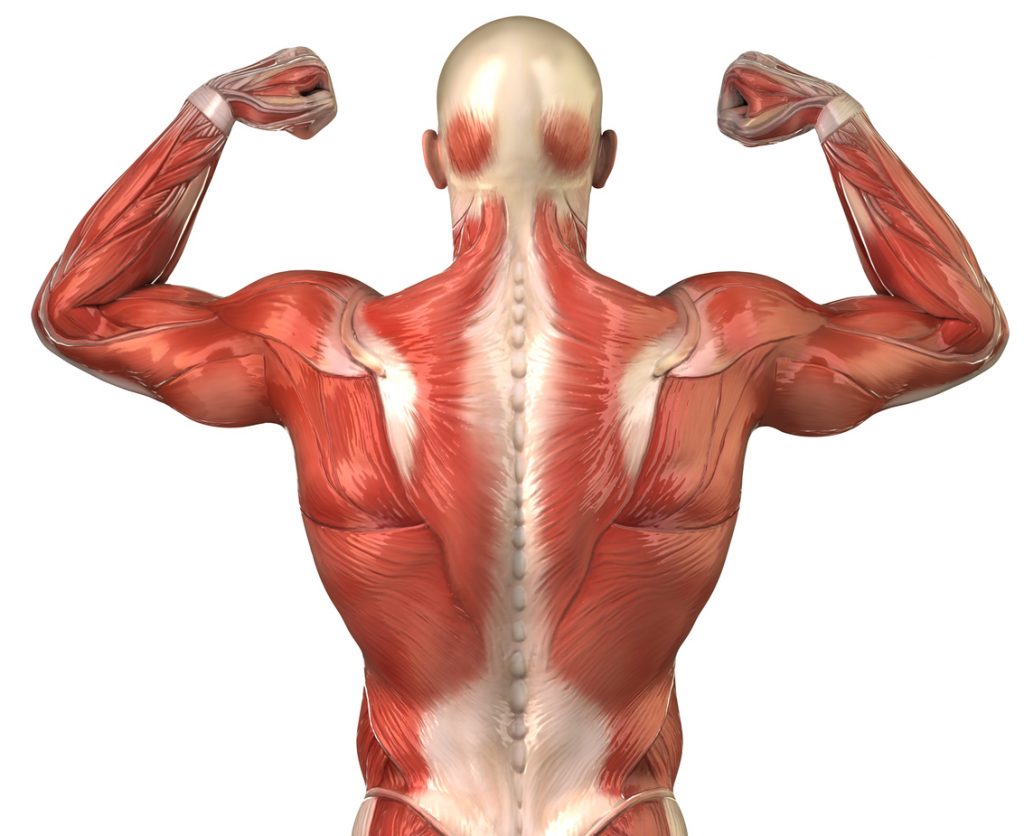
- Latissimus dorsi (especially lower and mid fibers)
Secondary Contributors
- Teres major
- Serratus anterior
- Biceps brachii
- Brachialis
- Rear delts (minimal, compared to upper-back rows)
- Obliques (core stability)
Minimal Involvement (by design)
- Traps
- Rhomboids
- Upper back
- Rear delts (to a lesser extent)
This variation is NOT a trap-builder. It is NOT a rhomboid-heavy row. The entire point is to suppress upper-back dominance and funnel the tension directly into the lats.
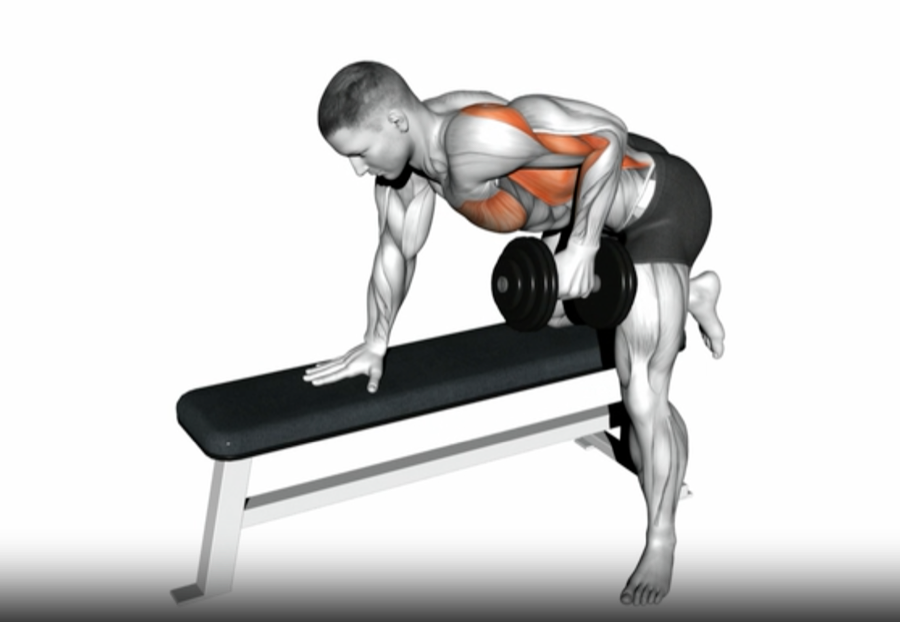
How the Lat-Focused Dumbbell Row Works
The biomechanical secret lies in elbow path.
Upper-back row
Elbow flares out → dumbbell travels high → shoulder retracts hard → traps and rhomboids dominate.
Lat-focused row
Elbow stays tucked → dumbbell sweeps low toward the hip → shoulder extends, not retracts → lats take over completely.
When done properly, the movement is not a “pulling up” action but a back-and-down sweeping motion—almost like you’re trying to place the dumbbell into your back pocket.
This is why many bodybuilders feel the lats more in this variation than in most machine rows.
How to Perform the Lat-Focused Dumbbell Row
This step-by-step guide is optimized for bodybuilding, not powerlifting or strength work.
Step 1 — Set Up Your Bench Position
- Place one knee and one hand on the bench.
- Keep your working-side foot planted firmly on the floor.
- Spine neutral, chest slightly elevated but NOT overextended.
- Hips square and level.
Pro tip:
Lean slightly away from the dumbbell. This opens the lats and increases the stretch.
Step 2 — Arm Position Before the Pull
- Let the dumbbell hang fully with a relaxed shoulder.
- Slight forward reach through the working arm to lengthen the lat.
- Maintain a soft bend in the elbow—not locked.
- Shoulders square to the floor.
If you feel the lower lat stretching, you’re doing it correctly.
Step 3 — Initiate the Pull With the Elbow, Not the Hand
This is where most lifters ruin the movement.
Don’t “curl” the dumbbell up.
Instead:
✔ Drive the elbow down and back toward your hip
✔ Keep the elbow pinned tight to your side
✔ Avoid letting the elbow flare outward
The lat contracts most intensely when the elbow moves in its natural arc, which ends slightly behind the torso.
Step 4 — Row to the Hip, Not the Ribcage
This is the defining technique of this exercise.
- Pull the dumbbell toward the top of your hip.
- NOT your ribs
- NOT your chest
- NOT your stomach
The dumbbell should follow a shallow, low arc—this is what biases the lat over the upper back.
At the top, avoid pulling your shoulder blade back excessively. The goal is shoulder extension, not retraction.
Step 5 — Squeeze, Then Control the Stretch
At the top:
- Pause briefly for 0.5–1 second.
- Feel the lat contract hard.
- Do NOT twist your torso to finish the rep.
Then lower:
- Let the dumbbell descend under control
- Stretch the lat fully
- Reach slightly at the bottom to open the muscle fibers
The eccentric (lowering) phase is where the lat does its deepest growth.

Common Mistakes (and How to Fix Them)
Mistake 1 — Rowing too high
This shifts tension to traps and rhomboids.
Fix:
Pull toward your hip, not your ribs.
Mistake 2 — Flaring the elbow
This destroys the lat tension instantly.
Fix:
Keep your elbow close to your side.
Mistake 3 — Over-retracting the scapula
This turns the movement into an upper-back row.
Fix:
Think “shoulder extends downward,” not “shoulder pulls back.”
Mistake 4 — Using too much weight
If you can’t keep the elbow tucked, the weight is too heavy.
Fix:
Go lighter and rebuild mind–muscle control.
Mistake 5 — Twisting the torso
Momentum kills back isolation.
Fix:
Keep hips and shoulders square.
Mistake 6 — Pulling with the arms
The biceps should assist, not dominate.
Fix:
Think “drive the elbow,” not “pull with the hand.”
Benefits for Bodybuilders
Unmatched Lat Isolation
This builds the deep lat thickness machines struggle to replicate.
Massive Lat Stretch
The stretched-lat position stimulates hypertrophy through:
- passive tension
- muscle lengthening
- improved fiber recruitment
This is a major factor in lat growth.
Left–Right Symmetry Correction
Every bodybuilder has a stronger lat.
This exercise fixes that.
Long Range of Motion
The more stretch and sweep, the greater the hypertrophy signal.
Less Trap Dominance
Great for lifters whose upper back overpowers their lats.
Improves Mind–Muscle Connection
The unilateral nature trains you to feel the lats properly, which carries over into all back training.
Ideal Rep Ranges and Set Structure
For maximum bodybuilding effect:
Hypertrophy (Primary Focus)
- 3–5 sets
- 8–12 reps
- Controlled eccentric
- Deep bottom stretch
Stretch-Focused Growth (Advanced)
- 2–3 sets
- 12–15 reps
- Full stretch, deep ROM
- Slow tempo
Strength-Endurance (Optional)
- 15–20 reps
Great for establishing MMC and blood flow.
Advanced Training Strategies
Lat Intent Cues
The lats don’t respond well to “just pull.”
Use these commands:
- “Elbow to hip.”
- “Sweep down, not up.”
- “Drive through the lat, not the biceps.”
- “Keep elbow tight.”
Stretch-Pause Technique
At the bottom of the rep:
Hold for 2 seconds.
Let the lat fully lengthen.
This accelerates growth dramatically.
Mechanical Drop Sets
After regular rows, switch to a more upright torso to shift load slightly toward upper back to extend the set.
1.5 Reps
Row → half stretch → row → full stretch.
Brutal for lat burn.
Alternating Clusters
- Do 4 reps left
- 4 reps right
- Repeat until 12 reps each side
Keeps form tight and prevents fatigue from compromising technique.
Programming Placement
The lat-focused dumbbell row fits best:
Option A: After heavy pulldowns or pull-ups
This keeps lat mechanics fresh and isolates them after vertical work.
Option B: As your main unilateral horizontal pull
Pairs well with:
- barbell rows
- machine rows
- cable rows
Option C: Toward end of back day for isolation
Especially on lat-focused days in a push/pull/legs split.
Who Should Use This Exercise?
Beginners
Perfect for learning how to activate lats and develop symmetry early.
Intermediates
Great for refining shape, improving MMC, and fixing lat-weak lifts.
Advanced Bodybuilders
Essential for finishing detail work, especially in contest prep phases.
Practical Takeaways
- Keep elbow tucked: this is a lat exercise.
- Pull toward the hip, not the ribs.
- Avoid using momentum or twisting the torso.
- Stretch deeply at the bottom.
- Use moderate, controlled weight.
- Prioritize feeling the lat, not moving heavy load.
Conclusion
The Lat-Focused Dumbbell Row is one of the purest lat isolation movements you can perform outside of specialized machines.
Its long range of motion, deep stretch, unilateral symmetry benefits, and unmatched contraction make it a top-tier mass builder for any serious bodybuilder.
Master the technique, ditch the ego lifting, and use the lats—not the traps—to drive the motion. Over time, this single exercise can dramatically transform the width, depth, and shape of your back.