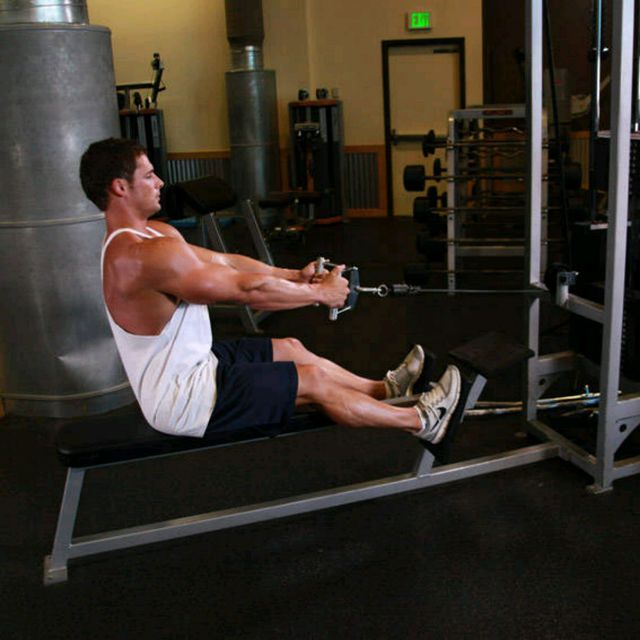
THE STRAIGHT-ARM PULLDOWN
Introduction: The Purest Lat-Isolation Movement in Bodybuilding
If the lat pulldown is the bread and butter of width training, then the Straight-Arm Pulldown is the precision tool that carves out the lower lats, sharpens the V-taper, and teaches lifters how to actually feel their lats contract.
This exercise has long been a secret weapon of elite bodybuilders — from Dorian Yates to Phil Heath — because it’s one of the only movements that isolates the lats while eliminating the biceps from the pulling equation.
It creates a long-range, high-tension movement pattern that forces the lats to work from fully stretched to fully shortened, something most rowing and pulldown variations can’t match.
Done correctly, the Straight-Arm Pulldown:
- Builds lat width, especially through the lower and outer regions
- Strengthens the mind–muscle connection
- Improves the contraction you feel in all rowing and pulldown movements
- Enhances back aesthetics by emphasizing the sweeping under-curvature of the lats
- Helps beginners learn lat activation
- Allows advanced lifters to refine detail and back lines
This is one of the most important isolation exercises for anyone chasing a wide, deep V-tapered physique — and one of the best finishing movements for a complete back session.
Let’s break it down in full bodybuilding detail.
Muscles Worked
Primary Muscle
- Latissimus dorsi (with emphasis on lower & outer fibers)
Secondary Muscles
- Teres major
- Long head of triceps
- Rear delts
- Rhomboids (minimal)
Stabilizers
- Core
- Forearm flexors (grip)
- Serratus anterior
This is one of the rare back exercises where the biceps don’t take over, making it invaluable for purer lat targeting.
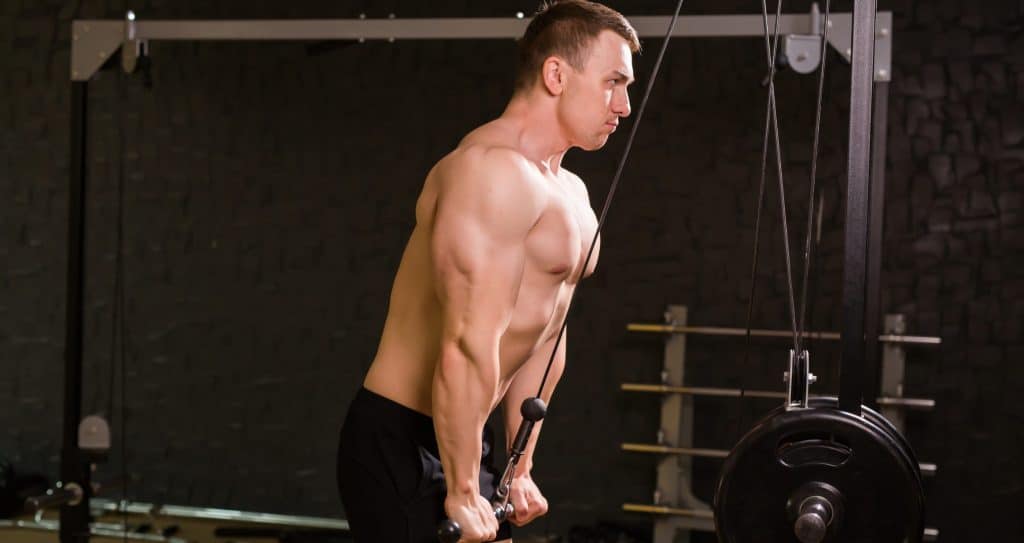
Why the Straight-Arm Pulldown Is Essential for Bodybuilders
- It creates unbeatable lat isolation.
Rowing and pulldown movements always involve elbow flexion, meaning the biceps can dominate.
Here, the arms stay straight, forcing the lats to do all the work.
- It keeps constant tension on the lats.
Cables provide a consistent resistance curve that free weights can’t replicate.
- It trains the lat’s full length.
The lat works best when stretched long — this exercise maximizes that stretch.
- It fixes your mind–muscle connection.
This movement teaches how to activate the lats during all pulling exercises.
- It improves aesthetics — big time.
Wider V-taper, fuller lower lats, and sharper back outline.
How to Perform the Straight-Arm Pulldown (Bodybuilding Form)
Setup
- Stand facing a high cable station.
- Attach a straight bar, EZ-bar, or rope handle (all work well).
- Step back 1–2 feet to create cable tension.
- Hinge your hips slightly (10–20° lean forward).
- Keep arms completely straight or only slightly bent.
- Raise your chest and lock your shoulders down and back.
The setup is everything — it determines your ability to target the lats properly.
Execution
- Start with a huge lat stretch
Let the bar travel overhead slightly.
Feel the lats lengthen fully.
- Initiate by depressing your shoulder blades
This is crucial.
Think:
“Pull with your armpits, not your hands.”
- Pull the bar downward in an arc
Your arms stay straight as you sweep the bar toward your thighs.
Elbows follow a circular downward path.
- Squeeze the lats hard at the bottom
Pause for 1 second.
Feel the lower and outer lats fully shorten.
- Slowly control the negative
Take 3–4 seconds to return to the stretched position.
This eccentric is the key to hypertrophy here.
Breathing Pattern
- Exhale during the pulldown
- Inhale as your arms rise overhead
Breathing inconsistencies will disrupt your torso stability and range of motion.
Bodybuilding Technique Cues
- “Hands are hooks — pull with your lats.”
Don’t grip the bar too hard.
Use your elbows to guide tension into the muscles.
- “Keep the arms straight — don’t bend the elbows.”
Bent elbows bring the biceps into play.
- “Drive the bar toward your hips, not your chest.”
Hitting too high shifts tension into the shoulders.
- “Stretch tall at the top.”
The deep stretch is the hypertrophy driver.
- “Stay hinged — don’t stand upright.”
The slight forward lean sets the cable line of force correctly.
Common Mistakes (and How to Fix Them)
❌ Turning it into a triceps press-down
Elbows bend → biceps/triceps take over.
Fix: Keep arms nearly locked.
❌ Shrugging the shoulders upward
This kills lat tension and overloads traps.
Fix: Think “shoulders down and tucked into back pockets.”
❌ Using momentum
Swinging the torso removes tension from the lats.
Fix: Control tempo, reduce weight.
❌ Shortening the ROM
Stopping early eliminates the stretch and peak contraction.
Fix: Full reach overhead → full sweep to hips.
❌ Gripping too tightly
Forearms dominate, lats fade.
Fix: Maintain a relaxed, hook-like grip.
Variations and What They Target
- Rope Straight-Arm Pulldown
- Larger range of motion
- Great for isolating lower & outer lats
- Allows wrists to rotate for deeper contraction
- EZ-Bar Straight-Arm Pulldown
- More elbow-friendly
- Easier gripping position
- Slightly stronger peak contraction
- Single-Arm Straight-Arm Pulldown
- Perfect for fixing imbalances
- Stronger mind–muscle connection
- More rotational freedom → deeper lat engagement
- Kneeling Straight-Arm Pulldown
- Reduces torso movement
- Enhances stability
- Excellent for beginners learning strict form
- Reverse-Grip Straight-Arm Pulldown
- Targets lower lats even more
- Stronger contraction at bottom
- Slightly longer ROM
Programming for Hypertrophy
For Mass and Lat Development
- 3–4 sets
- 10–15 reps
- Controlled tempo with 2–3 sec eccentrics
For Maximum Stretch + Growth
- 3 sets
- 12–20 reps
- Light to moderate load
- Full stretch at top every rep
For High-Volume Finisher
- 2–3 sets
- 15–25 reps
- Minimal rest between sets
- Rope attachment recommended

Where It Fits in a Back Workout
Option A — Lat-Dominant Day
- Wide-Grip Pulldown
- Close-Grip Pulldown
- Straight-Arm Pulldown
- Single-Arm Row
- Machine Row
Option B — Back-Day Finisher
- Barbell Row
- Dumbbell Row
- Seated Cable Row
- Straight-Arm Pulldown
Option C — Beginner-Friendly Lat Progression
- Assisted Pull-Up
- Lat Pulldown
- Straight-Arm Pulldown
- Cable Row
Option D — High-Volume Bodybuilding Back Day
- Pull-Ups
- Machine Lat Pulldown
- Straight-Arm Pulldown
- T-Bar Row
- Reverse Pec Deck
Who Benefits Most from the Exercise
✔ Ideal for:
- Bodybuilders refining a wide, sweeping back
- Lifters with weak bicep-dominant pulling patterns
- Anyone wanting a deeper lat stretch
- Those struggling to “feel” their lats activate
- All levels — beginner through advanced
✘ Not ideal for:
- Anyone seeking maximal load
- People with compromised shoulder mobility
- Those who fail to control tempo (ego lifters)
Advanced Bodybuilding Tips for Maximum Lat Growth
- Add a 1–2 second stretch at the top
This increases mechanical tension and improves lat flexibility.
- Slow the eccentric to 3–4 seconds
More time under tension → better hypertrophy.
- Perform partial reps at the bottom
Small-range pulses amplify contraction and metabolic stress.
- Use straps when the load gets challenging
Your grip shouldn’t limit your lat training.
- Try rest–pause sets
10 reps → 15 sec rest → 5 reps → rest → 3 reps
Perfect for a burnout finisher.
- Use the rope and pull “out” at the bottom
This improves outer-lat flare and width.
Summary: A Non-Negotiable for a Wide, Well-Developed Back
The Straight-Arm Pulldown is a bodybuilding essential:
- Massive lat isolation
- Incredible stretch and contraction
- Builds lower-lat flare
- Improves mind–muscle connection
- Enhances everything from pull-ups to rows
If you’re chasing a dramatic V-taper, this exercise is mandatory.