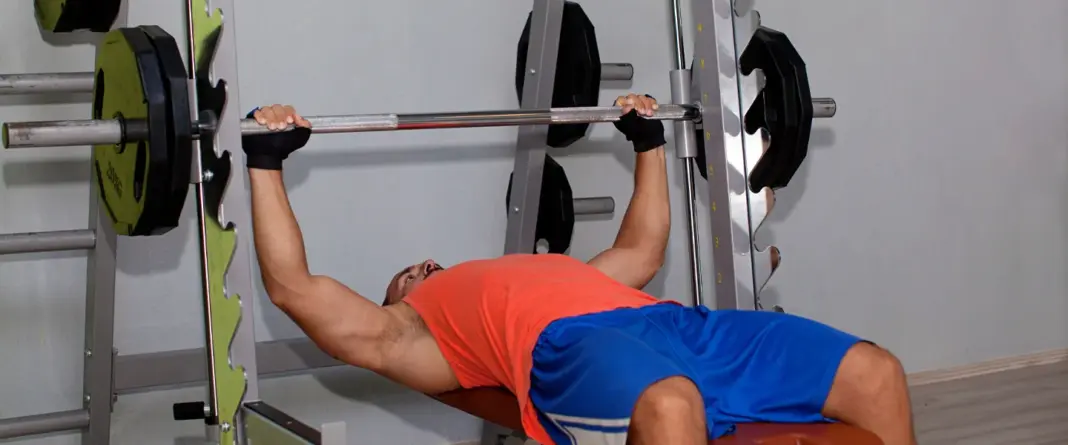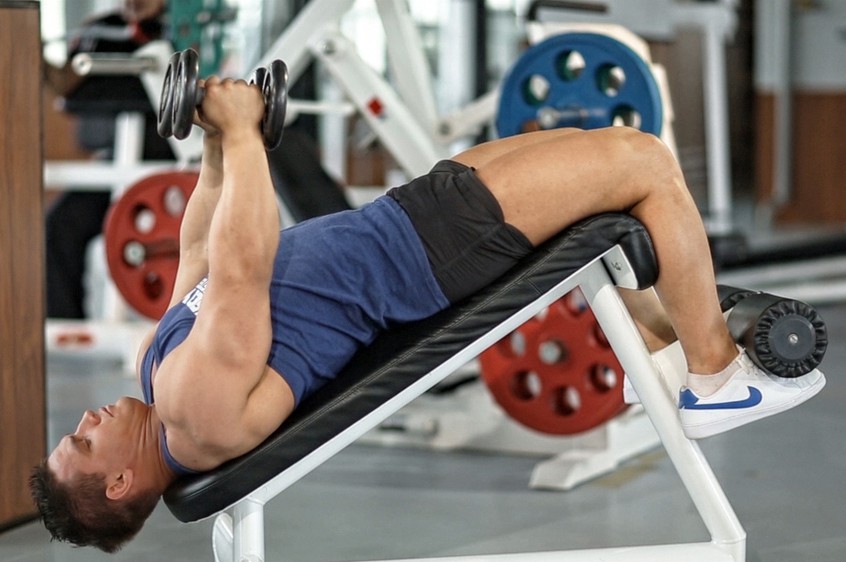
The Decline Dumbbell Fly (Lower-Pec Isolation & Deep Stretch Builder)
Introduction: Why Every Lifter Should Use the Decline Dumbbell Fly
If your goal is a fully developed chest — especially a dense, carved lower chest — the Decline Dumbbell Fly is one of the most effective isolation movements you can add.
While decline pressing hits the lower pecs with heavy loading, the decline dumbbell fly uniquely provides:
- A greater stretch in the lower and mid pec fibers
- A longer contraction path
- Minimal deltoid involvement
- Pure chest isolation without triceps contribution
- A natural shoulder position that reduces stress
This is the most “bodybuilding-specific” lower chest movement, and it delivers one of the most intense pec stretches in training. It shapes the lower chest line, enhances chest fullness, and complements all decline pressing variations.
Muscles Worked
Primary:
- Pectoralis major — sternal head (lower chest)
Secondary:
- Pectoralis major — middle fibers
- Anterior deltoids (minimal if technique is clean)
- Serratus anterior
How to Perform the Decline Dumbbell Fly
Setup
- Set a decline bench to a moderate angle (20–30° decline is ideal).
- Hold two dumbbells with a neutral grip (palms facing each other).
- Secure your feet under the decline pads.
- Lie back and begin with dumbbells over the chest, elbows slightly bent and locked in that position.
Execution
- Lower into a Wide Arc
- Open your arms to your sides
- Maintain a fixed elbow bend (don’t turn it into a press)
- Descend until you feel a large stretch in the lower chest
Your forearms should remain perpendicular to the floor at the bottom.
- Drive Chest Up Into the Stretch
This creates one of the deepest pec stretches possible and improves activation.
- Sweep the Arms Back Up
Bring the dumbbells together over your chest in a smooth, controlled arc.
Do not let the hands drift toward your face — keep them aligned with lower–middle chest.
- Squeeze Hard at the Top
A 1–2 second contraction intensifies inner and lower-pec activation.
Breathing
- Inhale as you lower to the stretch
- Exhale as you sweep upward and contract
Key Technique Cues
- “Elbows locked in a soft bend.”
This keeps tension on the pecs instead of turning the movement into a press.
- “Hands travel in an arc aligned with your lower chest.”
If the arc is too high, delts take over.
- “Stretch from the chest, not the shoulder joint.”
Think about opening the chest, not just dropping the arms.
- “Use a weight you can fully control.”
Fly movements with heavy dumbbells are a recipe for poor form.
- “Think about squeezing the pecs together, not touching the dumbbells.”
This internal cue increases pec contraction significantly.

Common Mistakes & Fixes
❌ Turning it into a dumbbell decline press
Elbows decreasing bend → triceps take over.
Fix: Use lighter dumbbells and lock elbow angle in place.
❌ Dropping the hands too low
This strains the shoulders without adding pec stimulus.
Fix: Stop when you feel a maximal chest stretch — not shoulder pain.
❌ Letting the dumbbells drift toward the face
This recruits upper chest and anterior delts.
Fix: Keep movement aligned with the lower–mid chest.
❌ Rushing the eccentric
The entire value of this movement is in the stretch.
Fix: Use a 2–3 second negative.
❌ Touching the dumbbells at the top
This removes tension and encourages momentum.
Fix: Stop 1–2 inches short for maximum tension.
Training Variations
- Semi-Decline Fly (10–15°)
Less aggressive than full decline.
More friendly for beginners or those with sensitive shoulders.
- Deep Stretch Version
Increase bottom-range time under tension by pausing 1–2 seconds at the stretch.
- Reduced ROM Top-Half Pump Version
Only the top ¾ of the fly motion.
Keeps constant tension for massive pump work.
- One-and-a-Half Rep Decline Fly
- Full rep
- Half rep
- Repeat
Great for advanced hypertrophy and inner-lower pec definition.
Programming Guidelines
Hypertrophy / Mass-Building
- 3–4 sets
- 10–15 reps
- Moderate weight
- Slow lowering phase (2–3 seconds)
Definition / Isolation
- 3 sets
- 12–20 reps
- Peak squeeze at top
- Non-lockout technique (don’t touch dumbbells)
Finisher Work
Use cables or machine flys afterward to completely fatigue the lower chest.

Who Should Use the Decline Dumbbell Fly?
Perfect For:
✔ Physique athletes focusing on lower-chest shaping
✔ Lifters who want stronger chest–mind–muscle connection
✔ Anyone whose lower chest is underdeveloped
✔ Bodybuilders targeting fine detail and inner-line definition
Avoid If:
❌ You struggle with shoulder stability
❌ You use too much weight and can’t control the arc
❌ You’re currently managing rotator cuff irritation
Advanced Bodybuilding Tips
- Lift your ribcage high to increase stretch.
This keeps fiber alignment perfect.
- Stop short at the top to keep constant tension.
Flies are most effective when you avoid dead zones.
- Keep your lower back tight and anchored.
This prevents instability on the decline bench.
- Use straps if dumbbell grip becomes limiting.
This is a chest isolation exercise — not a grip test.
- Superset with decline pressing.
Decline press → decline fly = one of the best lower-chest mass supersets.
Practical Summary
- The Decline Dumbbell Fly is unmatched for lower-chest isolation, deep stretch, and inner-pec development.
- Controlled ROM, moderate weight, and a rigid elbow angle deliver the best hypertrophy.
- Excellent finishing or mid-session isolation movement for chest-focused bodybuilders.