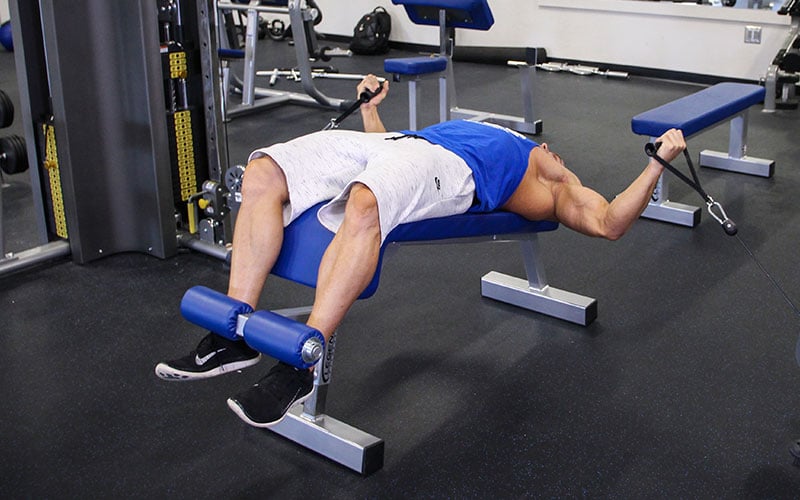
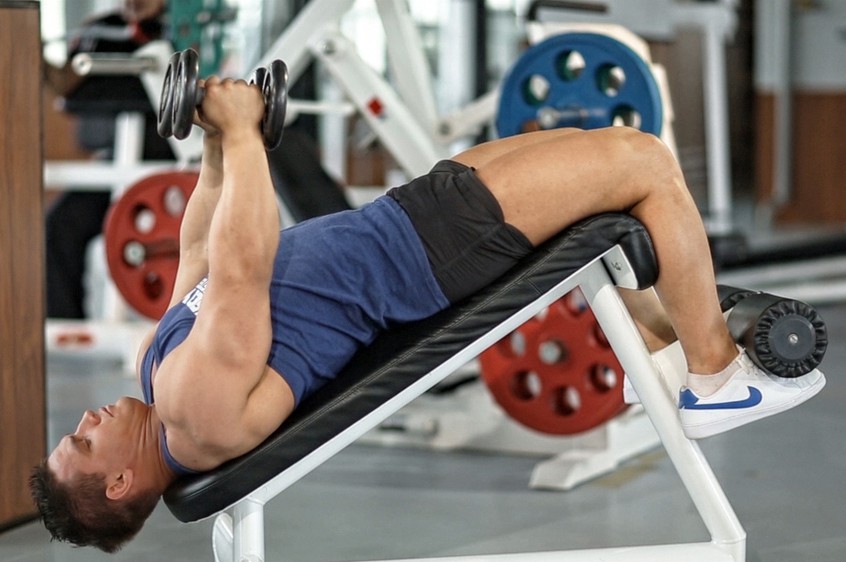
Single-Arm Cable Fly (Unilateral Cable Fly for Symmetry, Isolation & Inner-Chest Development)
Introduction: Why the Single-Arm Cable Fly Is a Must for a Complete Chest
Even if you already have standing cable fly variations, the single-arm cable fly deserves its own place. This isn’t just “doing the fly with one arm.” The unilateral setup gives you:
- Superior pec isolation
- Better symmetry correction
- Stronger mind–muscle connection
- Greater peak contraction
- More control over fiber angle
- No torso rotation compensations
- Longer range of motion
Most lifters unknowingly have one side of the chest that’s stronger, fuller, or more responsive. The unilateral nature forces the weaker side to work just as hard — without help from its dominant partner.
This makes the Single-Arm Cable Fly one of the best physique-sculpting movements, especially when building the inner chest, improving lower–mid pec density, and fixing imbalances in pressing movements.
Muscles Worked
Primary:
- Pectoralis major (fiber emphasis depends on cable height)
Secondary:
- Anterior deltoid (low involvement if done correctly)
- Serratus anterior
- Triceps (very minor stabilization only)
- Rotator cuff stabilizers
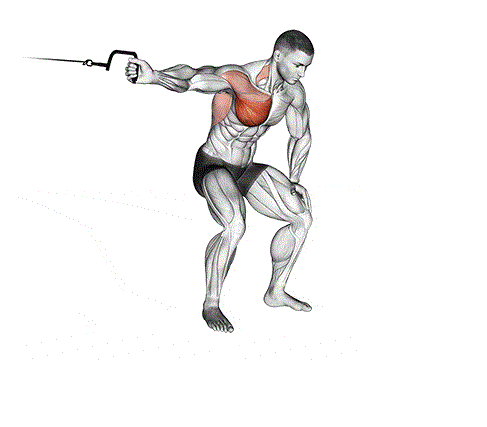
How to Perform the Single-Arm Cable Fly
Setup
- Stand to the side of the cable tower with the handle in one hand.
- Take a slight step forward to load the cable (tension from rep 1).
- Stagger your stance slightly — opposite leg forward for balance.
- Chest up, shoulders down and back.
- Slight, fixed elbow bend to protect the joint and isolate the pec.
Execution
- Start in a Fully Stretched Position
Arm opened wide behind the midline, palm facing slightly forward.
You should feel a full stretch through the pec.
- Sweep the Arm Across the Body
Bring your arm in a wide arc until your hand finishes across your sternum or just past the midline.
This is the key:
Since there’s no second arm to block the movement, you can cross the midline — increasing inner chest contraction.
- Pause Hard in the Contracted Position (1–2 seconds)
This is what makes unilateral flies elite for muscle control.
Visualize squeezing the pec across your body.
- Return Slowly to the Stretch Position
Control the eccentric; don’t let the cable yank your arm back.
- Repeat for Reps Before Switching Sides
Do not alternate arms.
Focus entirely on one side at a time.
Breathing
- Exhale as you sweep across your body and contract.
- Inhale as the arm opens and stretches.
Key Technique Cues
- “Think wide arc, not straight line.”
This maintains pec tension, not shoulder tension.
- “Cross the hand slightly past the midline.”
Unique benefit of unilateral flies — huge inner chest stimulus.
- “Lock the shoulder down and back.”
Prevents using traps or front delts.
- “Keep the elbow fixed, not bending during the sweep.”
Ensures chest stays the driver of the movement.
- “Don’t rotate the torso to help the rep.”
Hips and ribcage stay facing forward.
Movement comes from the arm only.
Common Mistakes & Fixes
❌ Torso twisting to finish the rep
This uses obliques and momentum instead of pec fibers.
Fix: Keep chest square, don’t rotate.
❌ Bending the elbow as the weight gets heavy
Turns the fly into a press.
Fix: Lower weight and keep elbow angle fixed.
❌ Cutting the stretch short
Destroys hypertrophy potential.
Fix: Let arm move behind the body slightly.
❌ Shrugging the shoulder on contraction
Activates traps instead of pecs.
Fix: Depress the scapula and keep shoulder “pinned low.”
❌ Rushing reps and skipping the squeeze
Inner chest won’t activate properly.
Fix: 1–2 sec squeeze at peak contraction.
Variations & Fiber Angles
You can adjust cable height to target different parts of the chest:
- High-to-Low Single-Arm Fly
(Target: lower chest)
Great for finishing lower-chest sessions when you want deep burn and definition.
- Low-to-High Single-Arm Fly
(Target: upper chest)
Amazing for shaping clavicular fibers and improving upper-line symmetry.
- Mid Cable Single-Arm Fly
(Target: mid/inner chest)
Best for carving inner pec lines and increasing chest fullness.
- Slightly Forward Lean Version
More stretch, more tension, and greater isolation.
- Slight Cable Step-Back Version
Reduces shoulder involvement and keeps tension purely chest-driven.
Programming Guidelines
Hypertrophy (Recommended)
- 3–4 sets
- 10–15 reps each arm
- Moderate weight
- Slow eccentric, midline squeeze focus
Finisher / Pump Work
- 2–3 sets
- 15–20 reps with minimal rest
Creates massive pump, especially for inner chest.
Corrective/Symmetry Work
If one side of your chest lags visually:
Start with that side each workout.
Do 1–2 extra sets or match reps if the strong side fails early.
Who Should Use This Exercise?
Ideal For:
✔ Lifters with uneven or asymmetrical chest development
✔ People who struggle to “feel” the chest in bilateral presses
✔ Bodybuilders chasing inner chest detail
✔ Anyone wanting deeper stretch and better contraction control
✔ Those adding precision isolation after compound chest work
Not Ideal For:
❌ Those with acute shoulder instability
❌ People looking for heavy loading or max strength
❌ Anyone who already does multiple fly variations every session
Advanced Bodybuilding Tips
- Use a cross-body finish for deeper contraction
One of the few exercises where passing the midline is beneficial.
- Try a 2-second hold at the bottom
Enhances both awareness and hypertrophy.
- Use very controlled negatives (2–3 seconds)
Chest fibers respond extremely well to slow eccentric loading.
- Keep your ribcage elevated
Better chest open, deeper stretch.
- Pair with dips or decline cable fly for a strong lower-chest superset
Perfect finishing combination for sculpting the lower–inner chest.
Practical Summary
- Perfect for symmetry, mind–muscle connection, and inner chest.
- Superior contraction because you can cross the midline.
- Allows massive pec stretch without shoulder strain.
- Best used with moderate weights and controlled reps.
- A staple for physique-focused chest development.