Rear Delt Cable & Machine Workouts: Constant Tension for Maximum Growth
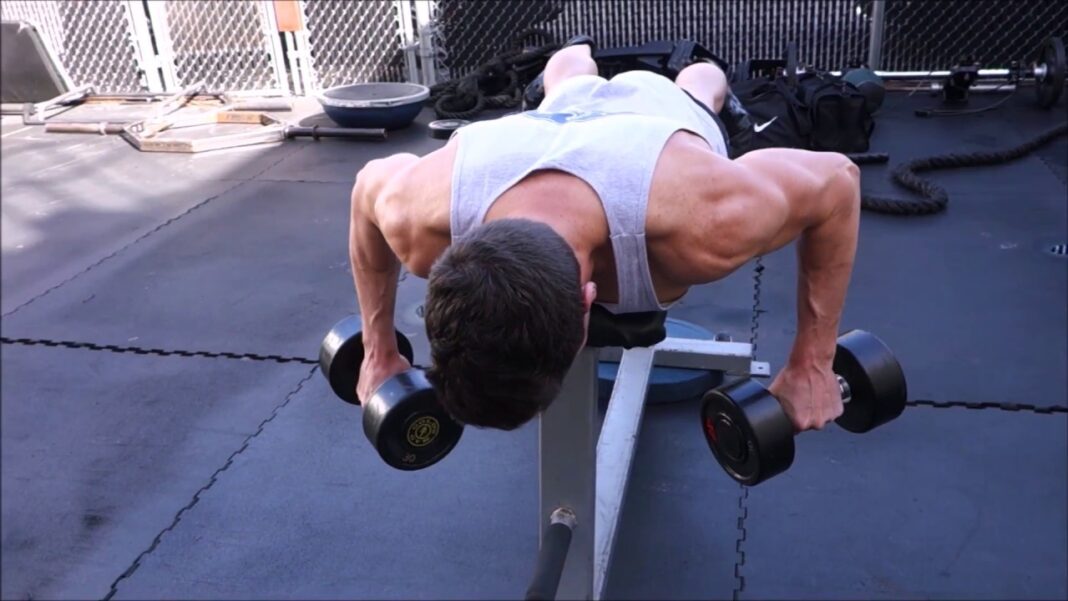
If your shoulders look great from the front but disappear when you turn sideways or hit a back pose, the culprit is usually underdeveloped rear delts.
The posterior deltoids are notoriously stubborn and often overshadowed by front and side delt work. Many lifters hammer dumbbell raises and rows yet still struggle to build round, 3D shoulders.
Here’s the missing piece: cables and machines. Free weights are excellent for strength and stability, but they don’t always provide the constant tension your rear delts need.
At the bottom of a dumbbell fly, the tension essentially disappears—something cables and machines fix by keeping your muscles under pressure through the full range of motion.
As a bodybuilder, I’ve personally used cable and machine variations to transform my shoulder development. They’re not replacements for dumbbells and rows, but they are the amplifiers that turn good rear delts into great ones.
This article breaks down:
- Why cables and machines are essential for rear delt growth.
- The best exercises for each.
- Sample workouts for mass, strength, and pump.
- Practical programming strategies for all levels.

Why Cables & Machines Work So Well for Rear Delts
Constant Tension
Rear delts are small and fatigue quickly. With dumbbells, tension fades at the bottom, giving them a “rest.” Cables and machines solve this by keeping tension constant, making every inch of the rep count.
Customizable Angles
Every lifter’s shoulder structure is different. Cables let you tweak angles to match your mechanics, maximizing activation while minimizing joint stress.
Stability and Support
Machines remove the balance element, letting you isolate the rear delts without worrying about momentum or form breakdown. This means safer sets, especially when training close to failure.
Volume-Friendly
Because they’re joint-friendly and stable, machines and cables let you pile on volume. High-rep sets and burnout finishers become safer and more effective.
Bottom line: Cables and machines don’t replace dumbbells—they enhance them. If you want your rear delts to grow, you need all three tools in your arsenal.
Best Cable Rear Delt Exercises
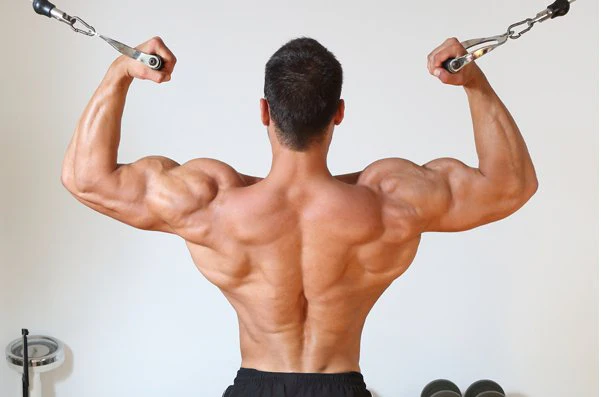
Cable Rear Delt Fly
- Setup: Use two low pulleys. Cross your hands over, grip the handles, and fly your arms outward in an arc.
- Cue: Lead with your elbows, not your hands. Keep the chest proud and avoid shrugging.
- Reps: 12–20.
- Why It Works: Constant resistance curve means no dead spots. Perfect for high-rep hypertrophy sets.
Cable Face Pull with External Rotation
- Setup: Rope attachment at upper-chest height. Pull towards your forehead while rotating hands outward at the top.
- Cue: Think about pulling apart as much as pulling back.
- Reps: 10–15.
- Why It Works: Builds rear delts and strengthens the rotator cuff for healthier shoulders.
Single-Arm Rear Delt Cable Row
- Setup: Attach D-handle to a low pulley. Row towards the upper chest with elbow flared outward.
- Cue: Focus on pulling with your shoulder blade and rear delt, not your lats.
- Reps: 8–12.
- Why It Works: Unilateral setup eliminates imbalances and keeps tension locked on the target muscle.
Best Machine Rear Delt Exercises
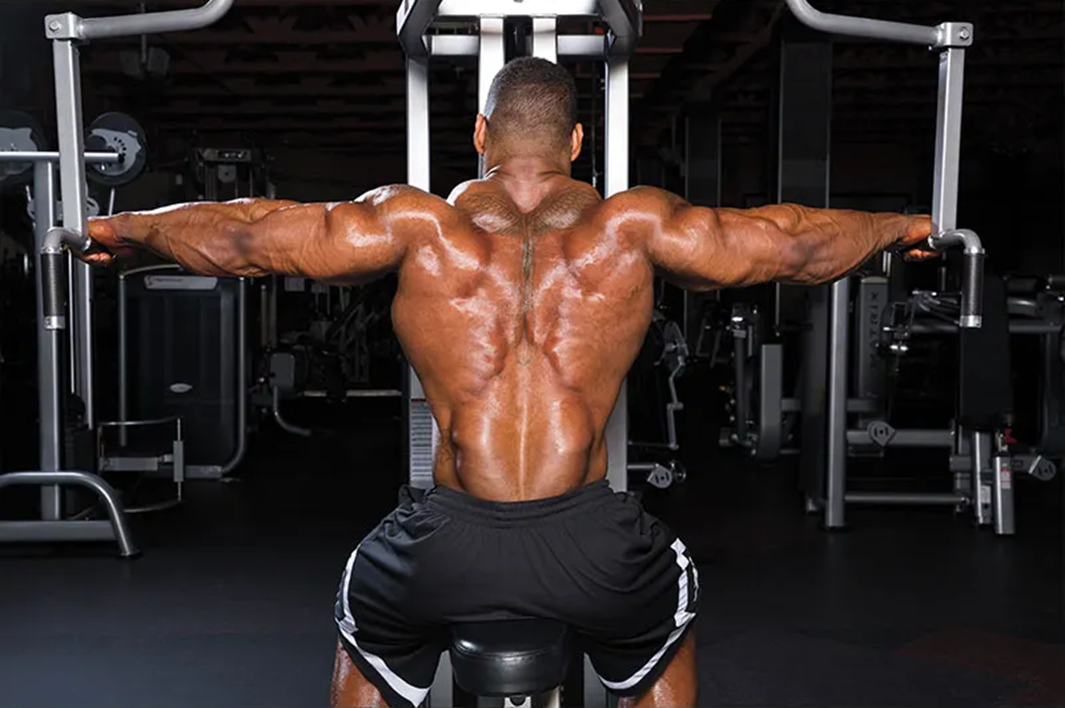
Reverse Pec Deck
- Setup: Sit facing the pad, set handles at shoulder height. Grip lightly and open arms in a wide arc.
- Cue: Squeeze with rear delts, not traps. Slow the negative for max tension.
- Reps: 12–15.
- Why It Works: Stability removes momentum, making this one of the purest rear delt isolators.
Machine Face Pull
- Setup: Some gyms have dedicated pulley/face pull setups or adjustable machines. Use a rope or straight bar.
- Cue: Keep chest tall, pull high, and rotate outward at the finish.
- Why It Works: Combines delt development with rotator cuff strength.
Rear Delt Row Machine (Assisted)
- Setup: Sit with chest support and grab handles with a wide grip. Row out and back.
- Cue: Drive elbows wide and avoid letting lats take over.
- Why It Works: Heavy loads with rear delt emphasis thanks to guided movement.
Rear Delt Cable & Machine Workout Examples
Hypertrophy (Mass-Building) Workout
- Cable Rear Delt Fly – 4×15–20
- Reverse Pec Deck – 3×12–15
- Cable Face Pull – 3×12–15
- Band Pull-Apart Finisher – 2×20–25
Why it works: High reps and controlled tension create maximum fiber recruitment and rear delt swelling—perfect for growth.
Strength-Biased (Compound Support) Workout
- Single-Arm Rear Delt Cable Row – 3×8–10
- Rear Delt Row Machine – 3×10–12
- Reverse Pec Deck – 3×12–15
Why it works: Heavier loads improve strength and stability, boosting pressing and pulling performance while still biasing the rear delts.
High-Volume Pump Day (Add-On)
Giant Set:
- Cable Rear Delt Fly → Reverse Pec Deck → Cable Face Pull → Band Pull-Aparts
- Perform 3 rounds, minimal rest.
Why it works: This is metabolic stress at its finest—flooding the rear delts with blood for growth and conditioning. Ideal as a finisher on shoulder or pull days.
Programming Tips for Rear Delt Growth
- Train 2–3x per week
- Once isn’t enough. Hit them multiple times with varying rep ranges and equipment.
- Prioritize Tension Over Weight
- The rear delts don’t need massive loads. They respond best to controlled tension and higher reps.
- Use Machines for Failure Sets
- Machines are safer for pushing limits since form breakdown is less of a risk.
- Balance With Free Weights
- Don’t ditch dumbbells or rows. Use them for heavy loading, then add cables/machines for precision work.
- Progressive Overload Still Applies
- Even in higher-rep isolation work, aim to gradually add weight, reps, or sets over time.
Training Strategies for Different Levels
Beginners
- Stick to 1 cable + 1 machine exercise per session.
- Focus on form, control, and mind-muscle connection.
- Start with 6–8 total sets per week.
Intermediate Lifters
- Add 3–4 movements per week (split across sessions).
- Mix rep ranges (8–12 for strength, 15–20 for pump).
- Push weekly sets to 10–12.
Advanced Bodybuilders
- Specialize with rear delt-focused days or add them early in workouts.
- Use giant sets, drop sets, and tempo manipulation for intensity.
- 12–15 weekly sets, with 50%+ from cables/machines.
Practical Takeaways
- Cables = tension king → Ideal for precise, controlled work with adjustable angles.
- Machines = volume king → Best for isolation, failure sets, and safe overload.
- If your rear delts lag, dedicate half your training volume to cables/machines.
- Pair with dumbbell and row variations for complete development.
- Treat rear delts like biceps or calves—a small muscle that thrives on frequent, targeted work.
Conclusion
If you want shoulders that look massive from the front and the back, you can’t afford to neglect your rear delts.
They’re not just a detail muscle—they complete your physique, improve pressing and pulling strength, and keep your shoulders healthy.
Cables and machines are game-changers because they deliver what dumbbells can’t: constant tension, customizable angles, and safe, high-volume isolation.
Add them into your program, balance them with free weight compounds, and your rear delts will finally grow into the round, 3D caps that set apart an average lifter from a bodybuilder.
Bottom line: Free weights build the base. Cables and machines carve the detail. Use both, and your rear delts will stop being a weak point—and start being a weapon.